
















Texas Border Business




By Joey Gomez
McALLEN, Texas – For South Texas College Cybersecurity student Athena Vallejo, presenting to high school students at one of the college’s signature events is an opportunity to show them a future they can build for themselves.
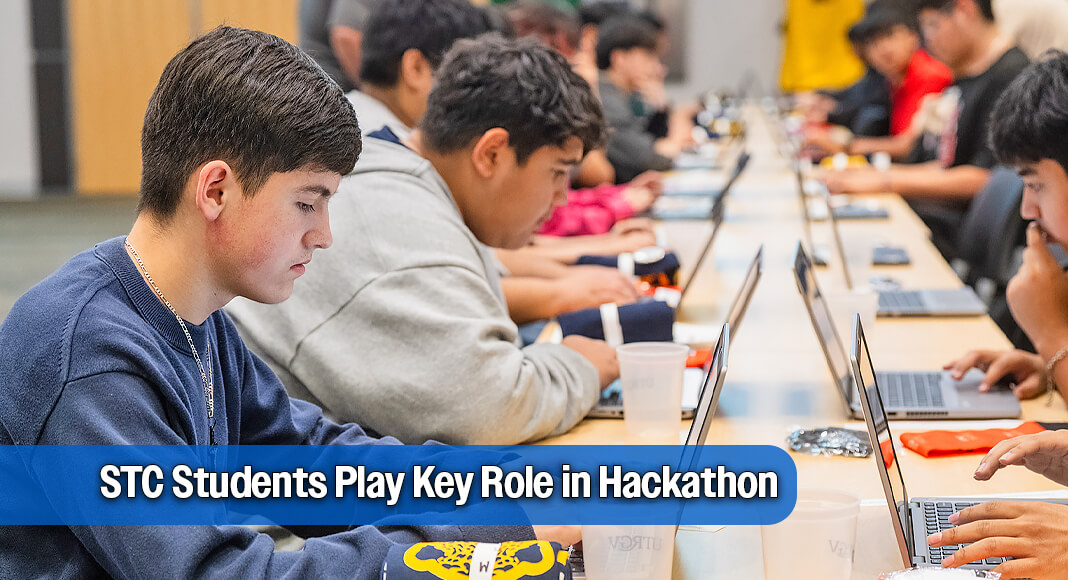
This is the type of connection that shaped STC’s 5th annual Cybersecurity Hackathon, which brought together more than 200 high school students from school districts across the region for hands-on activities as well as an introduction to Cybersecurity careers.




Only this year added a twist. Now, for the first time, students, like Vallejo, instead of faculty from STC’s Cybersecurity Clinic, led the event’s awareness presentations, sharing lessons they have already delivered to community members.
“I’m not that much older than some of these students,” Vallejo said. “I am an example of how they could also be in this position to contribute and teach others about all the opportunities available in this career field.”
Held this month to honor Cybersecurity Awareness Month, STC’s Hackathon features workshops, a simulated hacking competition, capture-the-flag challenges and so much more to expose students to the Cybersecurity profession.
Francisco Salinas, Cybersecurity department chair and assistant professor, said the new approach with the clinic allows college students to receive experience of leading a conference while helping younger students recognize online risks.
“They have been doing these presentations with the community since last semester,” Salinas said. “We feel they are very capable of bringing a really good presentation and sharing their unique knowledge with the high school students here.”
Launched in spring 2026, the Clinic connects students in STC’s Computer and Information Technologies bachelor’s degree program as well as its Cybersecurity associate degree and certificate programs with local businesses and nonprofit groups.
Supported by a $467,000 National Science Foundation (NSF) grant, the three-year initiative provides free cybersecurity services while giving students supervised experience with vulnerability assessments, awareness training and risk management.
Nicholas Hinojosa, assistant professor of Computer Science and clinic co-principal investigator, said students adapted their presentations for younger audiences while strengthening their communication skills.
“It gives students an opportunity to work on their presentation skills and work with the community,” Hinojosa said.
For Rodolfo Garcia, who is pursuing an associate degree in Cybersecurity, presenting at the Hackathon reinforced his own learning while helping visitors develop safer online habits.
Garcia said his central message was simple: “Think before you click”
“The fact that we are all students, I think it’s a learning experience for all of us,” Garcia said.
Ali Esmaeili, STC executive dean of Math, Science, Information Technology and Bachelor Programs, said students helping students creates opportunities for everyone to grow.
“They understand each other better,” Esmaeili said about Cybersecurity Clinic students at the Hackathon. “The whole purpose is that we grow together and also achieve our goals together.”
STC student Vallejo hopes visitors also recognize Cybersecurity as a career through which they can help others.
“Cybersecurity is so important in our modern society,” Vallejo said. “It’s constantly evolving, and we want these young kids to keep up and evolve with it.”
For more information on STC’s Cybersecurity program visit southtexascollege.edu/academics/cybersecurity/.