















Texas Border Business





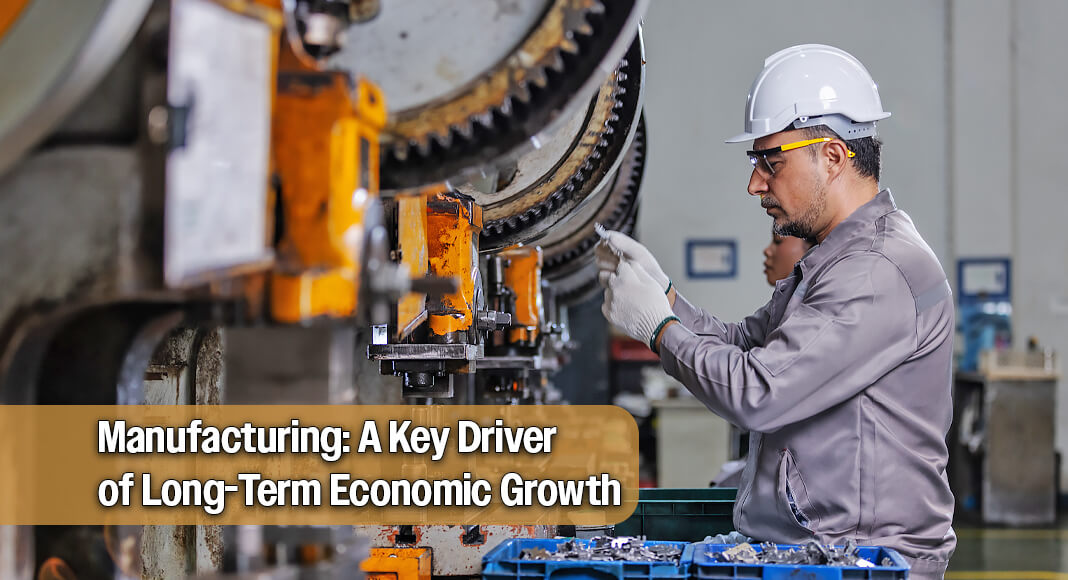
One of the most important economic sectors to long-term growth is manufacturing, which is the process of making stuff. Manufacturing is what economists call a “basic” (or export) industry, meaning that it is one that creates value and incomes in an area rather than supporting a population and using that income. It also leads to some of the largest dynamic or “ripple” effects through the economy, thus generating additional business activity.
In spite of all of the economy’s current challenges, from geopolitical conflict and oil price shocks to tariffs, manufacturing has improved noticeably in certain respects. The Institute for Supply Management (ISM) Manufacturing Purchasing Managers’ Index (PMI), which looks at various aspects of current expectations, is indicating expansion. The July reading rose to 55.6, the highest since May 2022. Any result over 50 indicates purchasing managers are seeing improving conditions, and the index has topped 50 for months now.
A major contributor to the growth is AI-related investment, and orders for semiconductors, computers, electrical equipment, and data-center infrastructure have been particularly strong. Any products related to defense or electric power are also in high demand. While some sectors are struggling (such as consumer-oriented products), neither is it a one-industry blip.



It is also significant that manufacturing employment is increasing, up about 6,000 from June 2025 to June 2026. While not a huge number, it is a notable positive at a time when many industries were down, including. wholesale and retail trade, leisure and hospitality, and government (among others). Job openings in manufacturing are also higher than a year ago, as are hires.
Investment in making things is also surging, with some $1.95 trillion being invested across the United States. Semiconductors and advanced technologies account for the lion’s share, with pharmaceuticals and biotech representing another significant slice. Texas is leading the way with $674.1 billion committed, which is more than twice as much as second-place Virginia ($311.8 billion). Investments in Texas include chip and tech facilities, as well as life sciences, automobiles, shipbuilding, food processing, and energy.
Current data suggest that US manufacturing is in its strongest position in years. The improvement appears to be driven by genuine investment, especially in AI and capital equipment, though it isn’t uniform across industries. Some of the recent surge could also reflect temporary and unsustainable factors such as tariff-related timing and inventory adjustments. The next few months of data releases will paint a clearer picture, with statistics such as industrial production, factory orders, and employment shedding additional light on whether the recent trend and related expectations develop into a longer-lasting expansion. There is little doubt, however, that the sheer magnitude of committed investment will propel future activity, especially in Texas. Stay safe!
_____________
Dr. M. Ray Perryman is President and Chief Executive Officer of The Perryman Group (www.perrymangroup.com), which has served the needs of more than 3,000 clients over the past four decades.