

















Texas Border Business



By Joey Gomez
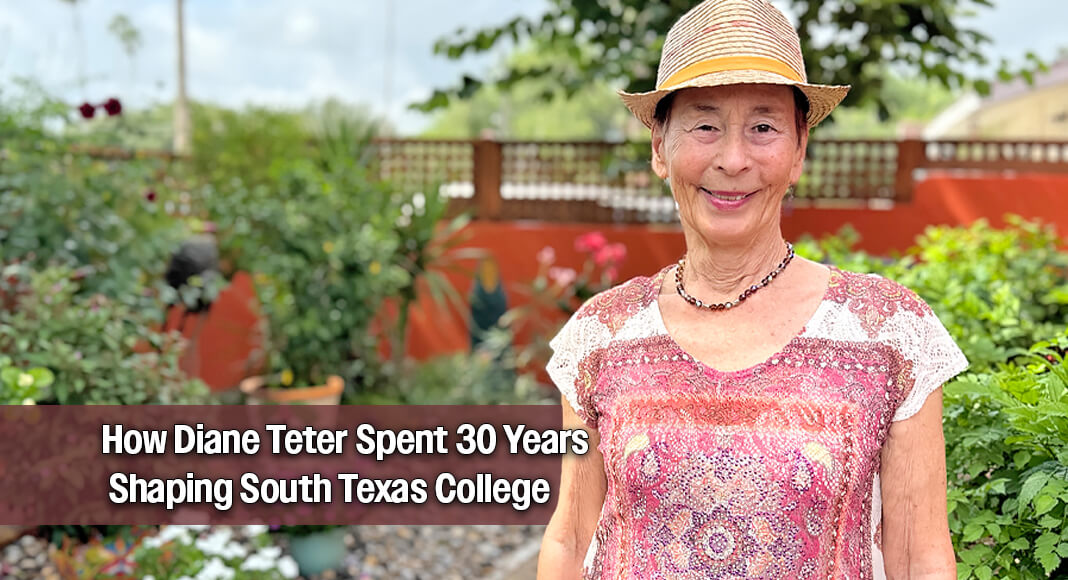
McALLEN, Texas – For South Texas College Professor Emeritus Diane Teter, being named among those legendary faculty that helped shape STC is not simply a reflection of the past, but a reminder of a mission that began more than 30 years ago, helping build stronger students and communities through the college.
Teter looks back at STC’s humble beginnings which coincided with her own start in teaching in 1996.





Now Teter is among only 10 retired faculty members to receive the title of professor emeritus, an honor recognizing exceptional service, leadership and dedication to the college.
“I still maintain a connection with STC,” said Teter, following her retirement from the college in 2019. “I’m still part of the college, just as much as it will always be a part of me. I still go back for science events, convocation and other activities because education never really ends.”
Coming from a ranching background, Teter said she and her husband operated cattle ranches in East Texas and Tamaulipas, Mexico, which exposed her to the region’s rich bicultural heritage and inspired them to settle in the Rio Grande Valley while pursuing graduate studies.
Originally studying Spanish before discovering a passion for biology, Teter earned a master’s degree and later completed coursework in English as a Second Language (ESL) while developing skills that would prove invaluable in the diverse classrooms she would one day lead.
Encouraged by a faculty mentor to consider teaching, Teter began as an adjunct instructor before joining STC full-time, just as the young institution was beginning significant expansion.
It was this growth that prompted faculty to often teach seven days a week from early morning until late at night, determined to meet the community’s growing demand for higher education.
Teter said she joined the STC Biology department when it consisted of only three faculty members, serving a rapidly growing student population across makeshift classrooms and satellite locations. The number of faculty grew to more than 40 by the time she retired, she said.
Laboratory instruction demanded equipment and materials that were often scarce during the college’s early years, and Teter said she worked alongside fellow faculty members to secure funding for laboratory improvement and develop strong science instruction as enrollment continued to climb.
She recalls teaching courses in portable classrooms while borrowing microscopes from neighboring institutions and collecting donated specimens from local businesses so her students could experience hands-on science.
Those moments now stand in stark contrast to the thriving institution STC has become, she said.
“All of us at that time were scrambling for resources in order to teach, but that was because we all knew we had to give students an excellent hands-on experience,” Teter said. “In the end, I think it helped bring faculty and administration together. We all wanted to move in the same direction for the benefit of students.”
It was this desire for unity among faculty that laid the foundation for the success of the college, according to Teter who said her own personal efforts extended well beyond the classroom.
Serving as Faculty Senate secretary, president-elect and eventually Faculty Senate president, Teter helped strengthen collaboration between faculty and administration while advocating for initiatives that continue benefitting faculty today. Among those efforts was helping move forward STC’s professor emeritus designation, ensuring retired faculty remain connected to the college long after retirement.
Now a designee of the distinction she helped foster, Teter says the professor emeritus title represents more than recognition for a career spent in the classroom. It symbolizes an enduring connection to the institution she helped build – connections that she still maintains even after her decades long journey in teaching.
“I believe learning is a lifelong experience,” she said. “What we learn in the classroom has to connect to what happens outside of the classroom. Education is important, and we all need to advocate for that.”
Information source; STC