
















Texas Border Business




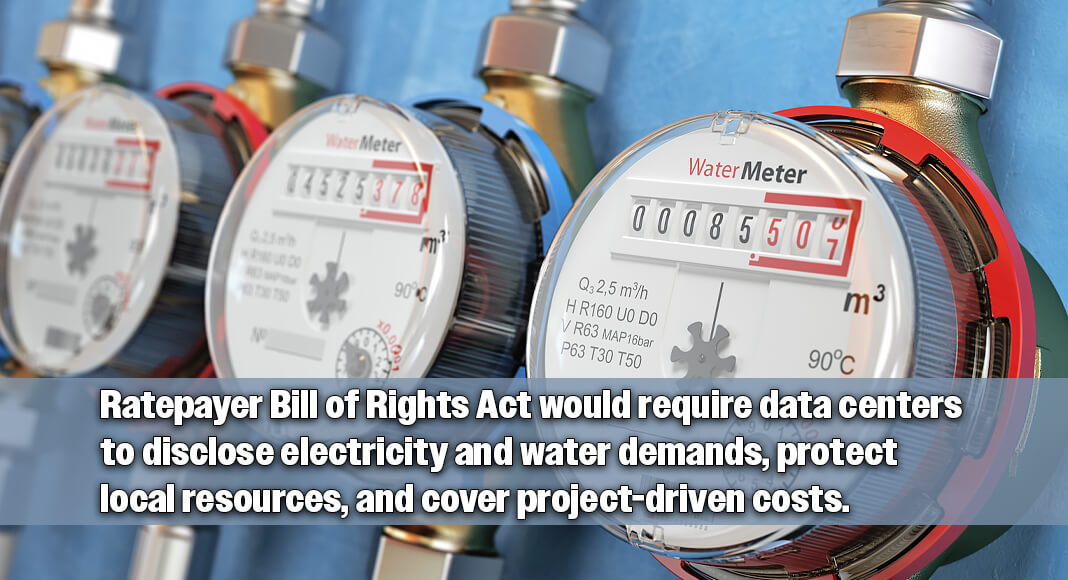
WASHINGTON – U.S. Congressman Henry Cuellar, Ph.D. (D-TX-28) introduced the Ratepayer Bill of Rights Act of 2026. Congressman Cuellar’s legislation would require data centers to disclose those demands, protect local water and electric services, and pay the costs created by data center construction and operations.
The legislation would establish ten rights for communities affected by these projects:
1. The Right to Know a Data Center’s Demands.



The public must be told how much electricity and water a covered project expects to use, where those resources will come from, and how demand may grow.
2. The Right to Know the Agreements, Infrastructure Costs, Rate Effects, and Public Support.
Communities must be able to see project agreements, infrastructure costs, possible rate effects, and any taxpayer or public support.
3. The Right to Not Pay a Data Center’s Costs.
Ratepayers cannot be charged for electricity, water, wastewater, infrastructure, mitigation, or related costs caused by a covered project.
4. The Right to Reliable and Affordable Community Water.
A new project cannot come at the expense of dependable and reasonably priced water for the people and businesses already there.
5. The Right to Protection of Rural Water, Aquifers, and Agriculture. Private wells, rural water systems, farmers, and ranchers must receive monitoring, notice, and fair compensation if a project harms their water supply.
6. The Right to Reliable Electricity and Disclosure of On-Site Power and Emissions. Electric reviews would have to confirm the project can be served without materially reducing reliability for existing customers.
7. The Right to Advance Notice, Local Information, and Public Input. Residents and ratepayers must receive advance notice, useful local information, and a public meeting before major commitments are finalized.
8. The Right to Public Information that Cannot be Hidden by Contract. A private agreement cannot conceal information the public is entitled to know. 9. The Right to Protection Against Loopholes and Evasion.
A company cannot avoid the law by dividing one project among separate entities, meters, tenants, parcels, or project phases.
10. The Right to Enforcement, Refunds, and Accountability. The rules must be enforceable and improper charges to ratepayers must be corrected.
“If a family in Laredo sees a higher utility bill because a billion-dollar project needs a new substation, or a farmer in South Texas loses dependable water without notice and protection, that’s not right,” said Congressman Cuellar. “If the project creates the cost, the project pays the cost. The family ratepayer does not.”
Under the legislation, covered data centers would be responsible for project-driven electricity, water, wastewater, infrastructure, mitigation, and other related costs. Those costs could not be passed on to families and other protected customers through higher utility rates or other charges. The legislation would require independent reviews of a project’s potential effects on local water supplies and electric reliability. Water reviews would consider impacts on households,agriculture, existing businesses, drought conditions, rural wells, and other existing water users. Electric reviews would examine issues including demand, grid reliability, outages, and necessary infrastructure upgrades.
Community members would be required to have ample opportunity to make their voices heard and see their opinions reflected in any project that receives their approval. Relevant information on resource use, costs, public assistance, and potential rate effects would be made available to the public.
“South Texas welcomes economic development and investment, but growth should not mean higher bills for working families or less dependable water for agriculture,” said Congressman Cuellar. “Tell the public what the project will use, protect our water and electric services, and pay the costs your project creates.”
Information source: The Office of Rep. Cuellar