
















Texas Border Business




by State Senator Juan “Chuy” Hinojosa, Dean Senator Judith Zaffirini, and State Senator César J. Blanco
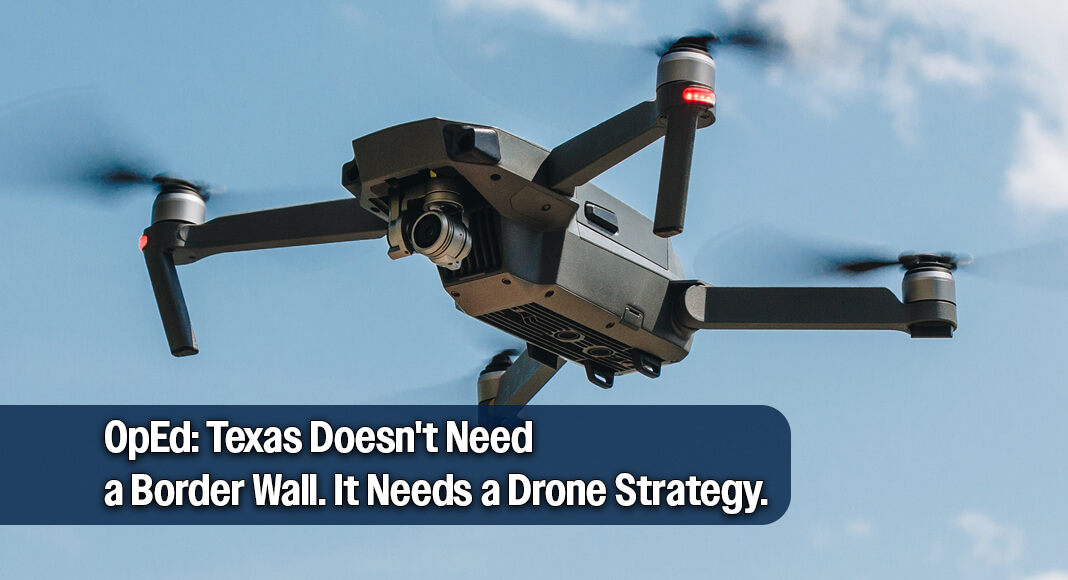
At the state and federal levels we keep pouring billions of dollars into an ancient solution while a 21st Century threat flies over our heads unchecked.
Since 2021 the Texas Legislature has appropriated $2.5 billion to build a border wall. Those funds were enough to install a barrier of only 82.2 miles of the 1,254 miles along the Texas-Mexico border. In 2025, at the Trump administration’s request, Congress added almost $47 billion more. That’s close to $50 billion spent on concrete and steel—money that could be building real security for Texas, but instead poured into a plan that doesn’t match the real danger we face.





In 2021 the three of us outlined a border security plan that opposed funding for a border wall and instead called for investing in a virtual or smart wall supported by technology and drones. Together, we called for funds to bolster real-time monitoring, detection and response, along with funds to help bridge the digital divide for law enforcement along the border.

The wall being constructed is expensive and ineffective at stopping real security threats. It’s being built through some of the most beautiful and fragile land in our state. Construction crews are working in the Big Bend region, an area where crossings are low and a wall is unnecessary. It’s cutting through Bentsen State Park and the National Butterfly Center in Mission, home to some of the richest wildlife and plant life in the country. It also threatens the Santa Ana National Wildlife Refuge, one of the most important wildlife sanctuaries we have. Those projects are permanently damaging land we can never get back, for a wall that doesn’t make us safer and only pads the pockets of the contractors building it.
Meanwhile, the real threat flies over our heads, largely unchecked.
Earlier this month the Texas Senate Select Committee on Homeland and Border Security heard testimony that should worry every Texan. Drones you can buy today are doing things that only militaries could do 15 years ago. Cartels and other criminal organizations have noticed. They use drones to spy on law enforcement and smuggle drugs, and one day they could use them to attack infrastructure or public events.
Reports indicate some cartel drone pilots get paid large sums for repeated runs across the border, and they keep improving their tactics—jamming signals, spoofing systems and interfering with equipment. We thank Lt. Governor Dan Patrick for tasking the committee to address this issue.
Here’s the hard truth: The Mexican cartels and drone operators trained in modern conflicts such as the war in Ukraine are more advanced than we are. They have better equipment, sharper skills, and more real-world experience using drones than the people trying to stop them. That gap should bother every Texan, and it won’t close on its own. It definitely won’t close by building a wall through the Big Bend region or our butterfly sanctuary.
Texas is not as ready as it should be to respond to this threat. The state has only approximately 10 certified drone mitigation experts who were trained through one exclusive FBI course. Federal law keeps most of the power to stop drones out of state and local hands, so responders mostly rely on “pilot interdiction,” physically finding and confronting the person flying the drone. That works, but it’s slow, costly, and often impossible when the pilot is on the other side of the border, beyond U.S. reach.
The people doing this work every day are raising the alarm. DFW Airport and El Paso Police report thousands of drone detections every month and constant strain on their teams. They are held back by federal rules that stop them from using tools they already have and by the slow pace at which the federal government rolls out training and guidelines. Detecting drones effectively across large areas takes millions of dollars that most local governments don’t have, and poor coordination among local, state, and federal law enforcement makes it worse.
Think about where we would be if the money spent bulldozing through Big Bend or Bentsen State Park instead had gone toward the real threat. Even a small share of the nearly $50 billion spent on the wall could pay for detection systems, training, and a real statewide response team. We already could have the trained experts, technology, and coordination Texas lacks.
It’s time to halt the construction of a wall that does not protect us, hurts our natural resources and wastes taxpayers money that could be spent more wisely. Congress and the Texas Legislature should instead redirect those funds toward the problems we actually have. What we need is a statewide, flexible counter-drone task force with real authority, meaningful funding, and a streamlined path to certifying more operators.
We need state leaders to press our Congressional delegation for expanded legal authority to act quickly against drone pilots, along with stronger penalties for the most dangerous drone activity. We need the kind of regional coordination the El Paso CUAS Task Force has already shown can work—replicated and scaled across the state; and we need to invest more in our Texas Anti-Gang Centers, expand the number of Fusion Centers across the state and increase state support for our local law enforcement agencies.
The warning to the committee was clear: Without quick action, a serious drone attack on infrastructure or a big public event in Texas isn’t only possible—it’s likely. We have to make the decision now: Will more of our taxpayer dollars be wasted—sacrificing some of our most beautiful land to build a wall, or will they instead be invested in smart solutions to fight real threats?
Information source: Office of Senator Hinojosa