
















Texas Border Business




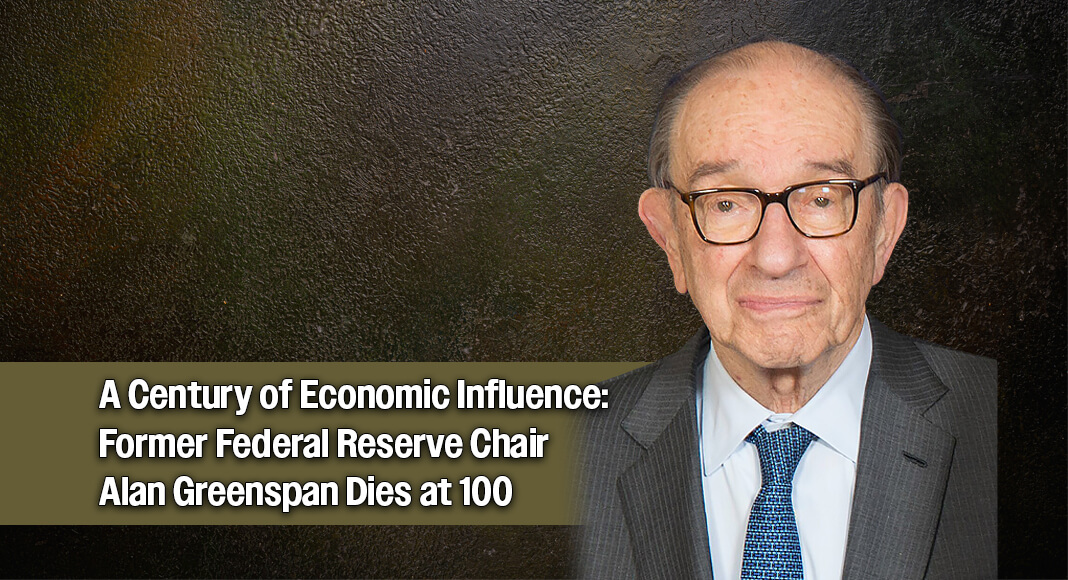
The economic and financial world was recently saddened by the loss of Alan Greenspan, probably the most influential voice on matters of the market in recent memory, at the age of 100. Although his manner was quiet and subdued in public, the impact of his words was volcanic. On one memorable occasion in 1996, his use of the phrase “irrational exuberance” in an evening speech led to an immediate selloff in the Asian markets halfway around the world, with the Dow Jones Industrial Average falling by almost 4% over the ensuing two weeks. (Unfortunately, the effect did not last, and his concern over the emerging dot.com bubble that he was referring to became all too real a few years later.)
He served as Chair of the Federal Reserve System from 1987 through 2006, the second-longest tenure in history which encompassed five appointments by Presidents from both parties. He dominated the global marketplace and firmly entrenched the notion of an independent monetary authority. Just a few weeks after his appointment in 1987, he steered the investment community through a major stock market meltdown. He organized the bailout of Mexico during the peso crisis in the mid-1990s and helped to restore confidence in the financial system during the immediate aftermath of 9/11. His economics was generally conservative and his policies accommodative, yet he praised the focus of President Clinton on long-term growth and sustainability.
He certainly was not without his critics on all sides (including me at times), and his relatively loose reins on the money supply no doubt contributed to the mortgage meltdown and Great Recession of 2008 (two years after his retirement from the Fed). He recognized and acknowledged this linkage.



I first met Alan in the mid-1970s, when he was Chairman of the Council of Economic Advisors under President Ford and I was a baby economist. He was cordial, engaging, and encouraging from the outset. Much of my early academic research focused on the measurement and characterization of monetary actions, which brought me into his sphere of influence. His quiet manner belied a great sense of humor (I have a cherished picture of him laughing at one of my lame jokes).
One element of his legacy, which is rarely noted, should not be overlooked. Alan was a passionate advocate of greater investment in public elementary and secondary education, believing it to be the best mechanism to narrow the widening inequality gap in the US and secure sustainable prosperity. He believed it to be the most important element of future economic policy, and he couldn’t be more right. If those ideals come to fruition, it will be more than ample cause for exuberance (the rational kind). Stay safe!
_________________________
Dr. M. Ray Perryman is President and Chief Executive Officer of The Perryman Group (www.perrymangroup.com), which has served the needs of more than 3,000 clients over the past four decades.