









Texas Border Business




Texas Border Business
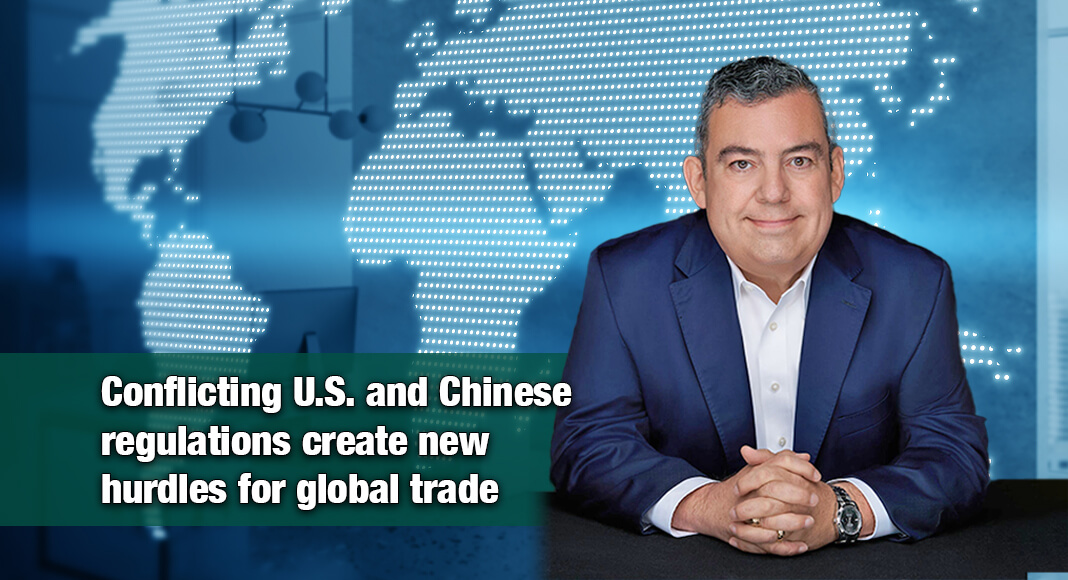
U.S. importers are facing growing compliance challenges as U.S. forced labor requirements and Chinese restrictions on supply chain information create competing legal obligations, according to Jorge Torres, president and founder of Interlink Trade Services.
Torres said the U.S. Uyghur Forced Labor Prevention Act (UFLPA) requires importers to ensure that products entering the United States are not made with forced labor. At the same time, he said China has “very strict rules regarding the availability of information and the ability to conduct reviews, visits, and audits of Chinese factories,” making compliance with U.S. requirements “very difficult, if not impossible.” The Uyghurs are a predominantly Muslim ethnic group native to the Xinjiang Uyghur Autonomous Region in northwestern China.

According to Torres, the law can affect daily operations when U.S. Customs and Border Protection identifies a shipment as potentially non-compliant. He said CBP may request documentation proving that imported goods were not produced with forced labor, and that “this process can take days and even weeks.”
Torres said importers affected by Chinese restrictions may have to depend on voluntary disclosures from manufacturers or conduct internal assessments using information from other sources. He said that information “might not be sufficient for CBP to substantiate that the goods were not produced using forced labor” and added, “This is very complicated.”
Asked which industries face the greatest risk, Torres said “textiles, minerals, and any other industry that relies on labor-intensive production” are the most affected by the conflicting regulations.
Torres said the financial and operational effects of denied shipments can be significant. He said importers can miss delivery deadlines, leading to canceled orders and possible production line shutdown costs. He also said companies may incur carrier cargo delay charges and warehouse storage costs.
“Companies are trying to diversify their sourcing to other countries without strict rules like China,” Torres said. He added that the situation creates an opportunity for Mexico and “might force companies (even Chinese companies) to establish operations in Mexico.”
To reduce compliance risks, Torres said importers should establish “robust sourcing processes focused on UFLPA compliance.” He said purchasing teams need a clear understanding of the requirements and that “internal communication between trade compliance and purchasing is a must” to reduce the risk of shipments being detained or refused.
Looking ahead, Torres said the regulations will have a lasting effect on global supply chains. “Most definitely,” he said when asked whether they will permanently reshape sourcing strategies. He said the United States will continue increasing scrutiny of imports from countries considered at high risk for forced labor.
Torres also said there is “a current Section 301 investigation for forced labor in 60 countries, including China, Mexico, and Canada.” He said potential tariffs under the investigation range from 10% to 12.5% and that implementation details are expected by the end of July. He added that Mexico and Canada, while included in the investigation, “will not be assessed tariffs on USMCA-compliant goods.”