















Texas Border Business



AMERICAN RED CROSS – Major disasters are happening more often now, about once every two weeks. Add on the smaller emergencies that happen every day ─ like a fire in someone’s home ─ and it’s more important than ever for everyone to get their households prepared.
At the same time, as prices continue to climb on just about everything, getting prepared for a disaster can feel out of reach, too much of a financial burden. But the American Red Cross, Texas Gulf Coast Region, has a few simple, low-cost or no-cost steps everyone can take to help them get prepared.
“September is National Preparedness Month, the perfect time to get ready for emergencies large and small,” said Edward Blanchard, Regional Disaster Officer, Texas Gulf Coast Region, American Red Cross. “Disasters can happen anywhere, at any time and getting your household ready for them doesn’t have to break the bank. Try a few of these low-cost or no-cost steps and get started protecting your loved ones.”





STEPS TO PREPAREDNESS
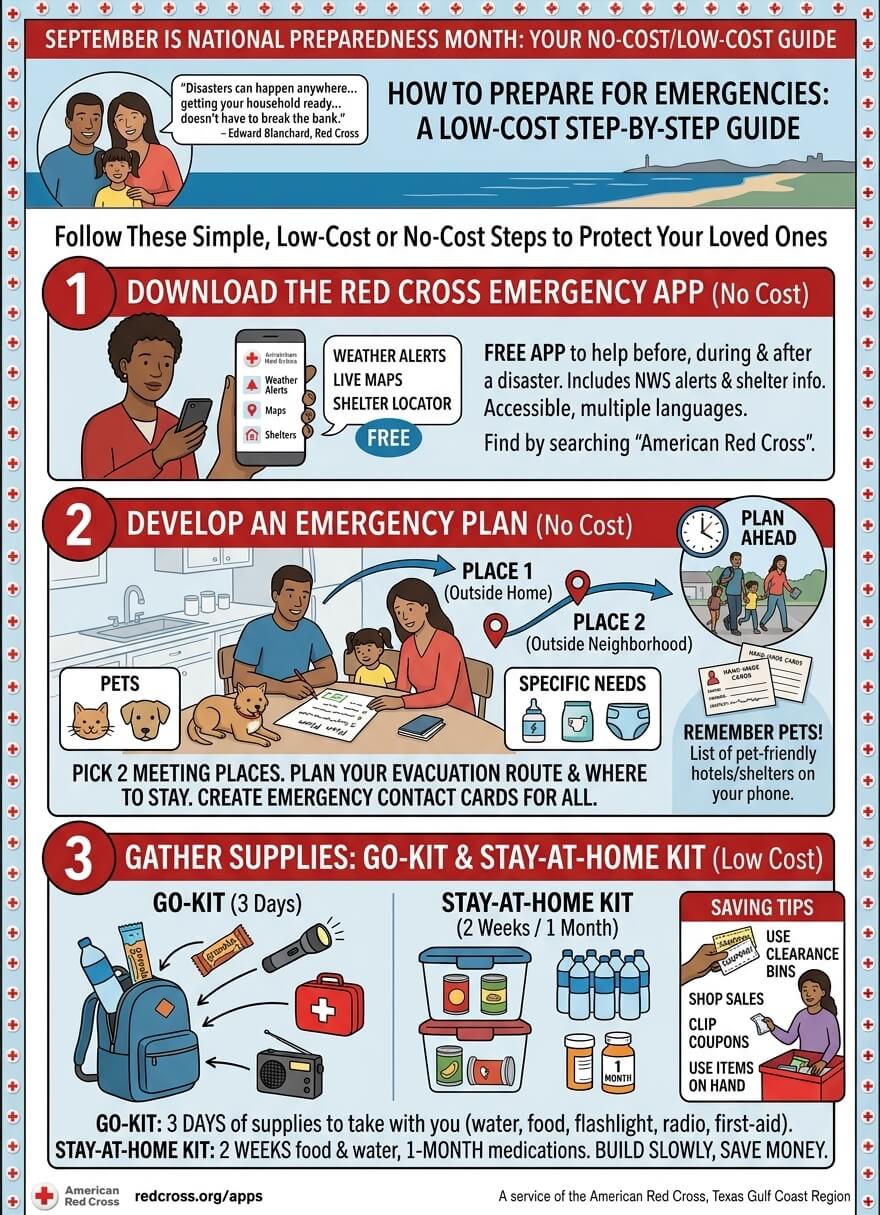
Download the Red Cross Emergency app which helps you and your loved ones before, during, and after a disaster. The app includes guides to help you prepare, National Weather Service alerts, live weather maps and help locating Red Cross shelters. And best of all ─ it’s free to all users, available in English and Spanish, and designed with accessibility in mind. Find it by searching for ‘American Red Cross’ in your app store or visiting redcross.org/apps.
Develop an emergency plan for your household ─ a great way to get started, and it won’t cost a thing. Pick two places to meet ─ right outside your home or a place outside your neighborhood in case you can’t get home or have to evacuate. Plan how you will evacuate. Think about where you will go, how you will get there, where you will stay and what you’ll take with you. Plan well in advance if you’ll need help leaving or use public transportation.
Don’t forget your pets. Keep a phone list of pet-friendly hotels/motels and animal shelters on your phone. Customize your kit to meet your household’s specific needs. If you have young children, don’t forget formula and diapers. If you have pets, include leashes, carriers, food, bowls and litter. Make up emergency contact cards for the whole family in case the internet is down and save the information on everyone’s phone. Don’t forget the number for your children’s school or daycare
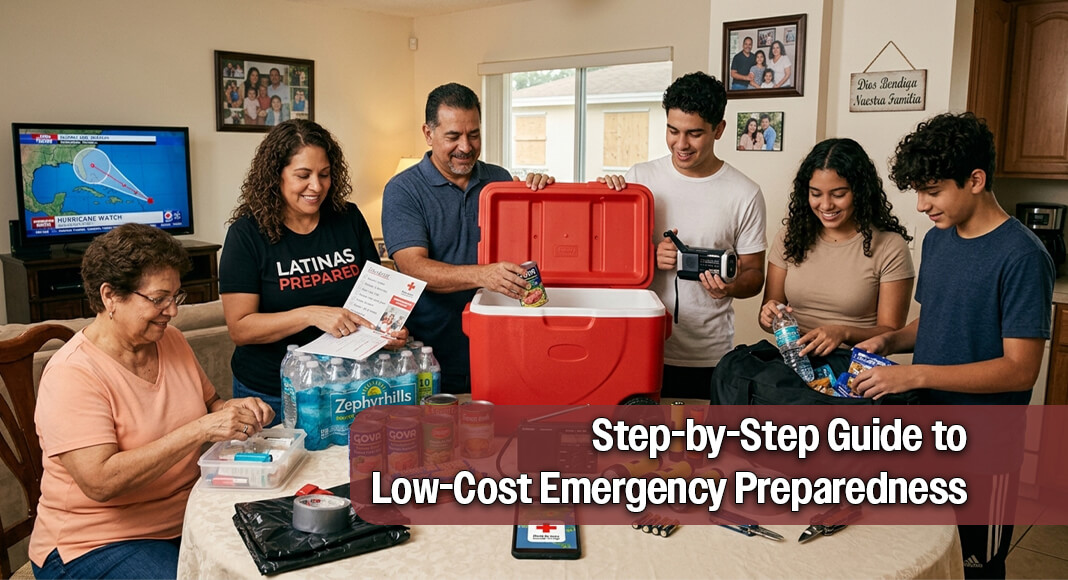
Gather supplies for a go-kit and a stay-at-home kit ─ use items you already have on hand to keep the cost down. Build your kit slowly, perhaps buying an item every time you shop. Look for sales ─ buy one, get one free, clearance bins, clip coupons, shop discount stores.
Your go-kit should include three days of supplies that you can take with you. Your stay-at-home kit should have two weeks of food and water and a one-month supply of medications, if possible. Other items could include a flashlight, a first aid kit, a battery or hand-crank radio.
Make sure to include backup batteries and chargers for your devices (flashlight, cell phone, CPAP, wheelchair, etc.) and critical personal records. You might also want to include sanitation and personal hygiene items, extra cash, maps of the area, pet supplies, baby supplies, matches, N95 masks, a manual can opener, extra car and house keys, towels, work gloves, a multi-purpose tool, blankets and sleeping bags.
If you own a business or are part of a school or organization, it’s critical you are prepared, that you know what to do should an emergency happen. The Red Cross has a free service ─ Ready Rating Program ─ that provides tools, resources and information for improving your group’s ability to withstand disaster, maintain operations, and protect lives and property.
“Disasters don’t wait for the ‘right time’ ─ they can happen in the middle of the night, while you’re at work or your kids are at school,” Blanchard said. “Being prepared is your best defense. Whether it’s a fire in someone’s home or a storm that destroys an entire town, these emergencies can change lives in just minutes. During National Preparedness Month, set aside a little time to get you and your loved ones ready. Take these few easy steps and start your trip toward readiness.”
Information source: American Red Cross