















Texas Border Business



Mexico’s Día de Muertos, or Day of the Dead, honors deceased relatives through offerings, food, and grave visits, blending Indigenous traditions with Catholic observances established after Spanish colonization, according to UNESCO and Mexico’s cultural authorities.
Observed mainly on Nov. 1 and 2, the tradition centers on the belief that departed loved ones return temporarily to visit their families. UNESCO describes the Indigenous observance as commemorating “the transitory return to Earth of deceased relatives and loved ones.”
Its roots reach back to ceremonies practiced before the Spanish arrived in the sixteenth century. However, the present celebration developed through the meeting of Indigenous religious practices and European Catholic traditions, rather than beginning on a single documented date.




Mexico’s Culture Secretariat says observances for the dead moved to Nov. 1 and 2 following the arrival of the Spanish. These dates correspond to All Saints’ Day and All Souls’ Day in the Catholic calendar.
A historical explanation published by Mexico’s Embassy in Austria cites manuscripts by sixteenth-century friar Diego Durán describing separate Aztec ceremonies for deceased children and adults. Those ceremonies occurred in different months from today’s November observances.
Durán later recorded offerings for children on All Saints’ Day and adults the following day, according to the embassy’s account. That history places the blending of the traditions in the colonial period, about 500 years ago, while their Indigenous roots extend further back.
In much of Mexico, Nov. 1 is traditionally associated with deceased children and Nov. 2 with adults, the embassy explains. The observance’s timing and practices differ among communities; UNESCO notes that Indigenous festivities extend from late October into early November.
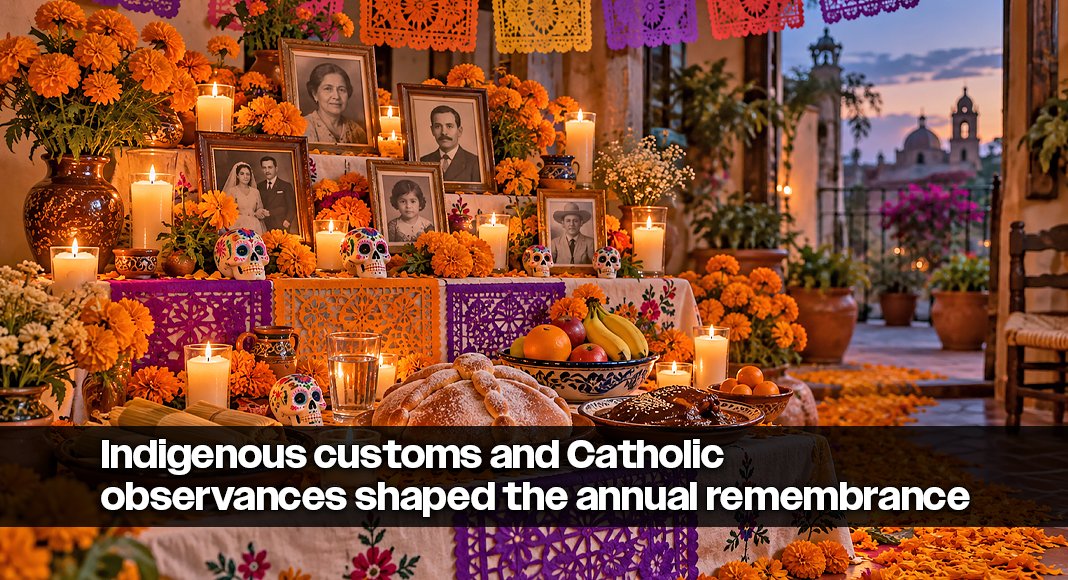
A central practice is preparing an ofrenda, an offering arranged for the deceased. According to Mexico’s Culture Secretariat, these displays can include water, candles, fruit, favorite dishes, incense, sugar skulls, and pan de muerto, a bread prepared for the season.
Each item has a purpose within the tradition. Water is offered to satisfy the visitors’ thirst, while candles help guide the souls. Cempasúchil flowers, commonly known as marigolds, decorate altars, and their petals can form a path toward the offering.
Food can include mole, tamales, rice or beans, depending on what the deceased enjoyed, the secretariat says. Paper cutouts add decoration. Families also take flowers, candles, and food to cemeteries, maintaining a connection with relatives through these acts of remembrance.
UNESCO notes that the Indigenous celebrations coincide with the end of the annual maize cultivation cycle. The observance therefore also reflects agricultural traditions and the place of ancestors within community life.
UNESCO recognized the Indigenous festivity dedicated to the dead in 2003, and it entered its Representative List of the Intangible Cultural Heritage of Humanity in 2008. That designation recognizes a living cultural practice in Mexico’s Indigenous communities whose ceremonies unite remembrance, religious belief, and family relationships through an annual encounter between the living and the dead across generations and communities.