














Texas Border Business



By Roberto Hugo González / Texas Border Business
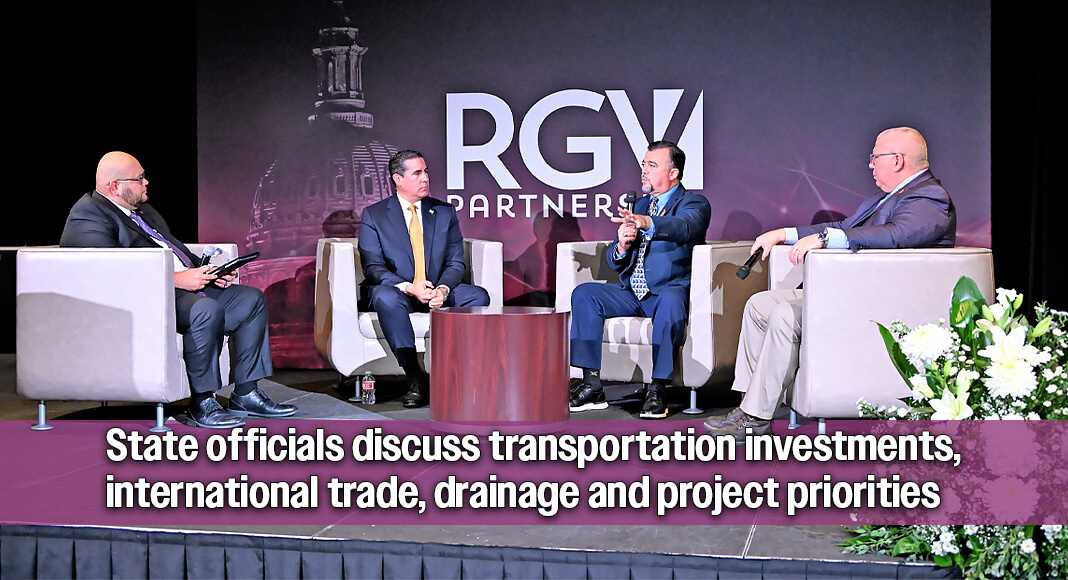
MISSION, Texas — Texas transportation officials urged Rio Grande Valley leaders to strengthen regional cooperation, establish shared priorities and prepare infrastructure projects for funding during an October 20, 2026, summit at the Mission Event Center.
The event, organized by the Rio Grande Valley Partnership, brought together Texas Transportation Commissioner Alex Meade, Texas Department of Transportation Deputy Executive Director for Program Delivery Brian Barth, and Pharr District Engineer Pedro “Pete” Alvarez.




Paco Sanchez, president and CEO of the Rio Grande Valley Partnership, moderated the discussion, emphasizing the importance of transportation infrastructure to economic development across Cameron, Hidalgo, Starr and Willacy counties.
Meade said regional cooperation has helped the Valley compete for transportation funding, particularly following the 2019 consolidation of three metropolitan planning organizations into one regional organization.
“Finding funding is easy. Finding consensus is hard,” Meade said, adding that disagreements among local governments can prevent projects from advancing.
He reported that transportation funding for the Pharr District increased from approximately $596 million in 2015 to $1.9 billion in 2019, with subsequent increases.
Barth credited the regional planning consolidation with strengthening the Valley’s ability to identify priorities and compete for funding.
He explained that TxDOT evaluates projects using four principal criteria: safety, connectivity, congestion relief and economic development.
Alvarez emphasized the importance of connecting international bridges, seaports, airports and highways to support commercial transportation.
He identified U.S. highways 77 and 281, Interstate 2, the 365 Tollway, International Bridge Trade Corridor and State Highway 68 among projects and corridors important to regional connectivity.
Alvarez also addressed flooding, explaining that roadway construction must account for drainage beyond individual project boundaries.
“If we’re building roads, we’re affecting drainage,” Alvarez said.
He cited State Highway 68 as an example of the challenges posed by the Valley’s flat terrain and existing flooding conditions.
The panel also discussed corridors for oversized and overweight commercial vehicles. Meade said TxDOT and the Texas Department of Public Safety are reviewing regulatory challenges affecting freight transportation.
Alvarez urged local governments to consider where commercial shipments originate, their destinations and whether existing roads can accommodate heavier vehicles.
Officials emphasized that projects with completed engineering, environmental reviews, right-of-way acquisition and utility relocation have greater opportunities to receive construction funding.
Meade said TxDOT’s statewide 10-year transportation program totals approximately $138 billion, but regional competition requires local governments to demonstrate readiness and cooperation.
Asked what Valley leaders should prioritize over the next five years, Alvarez recommended comprehensive master planning.
Meade emphasized regional agreement.
“Consensus is the number one thing,” he said.
Sanchez concluded by thanking the panelists and encouraging continued collaboration to address the Valley’s transportation needs.