
















Texas Border Business




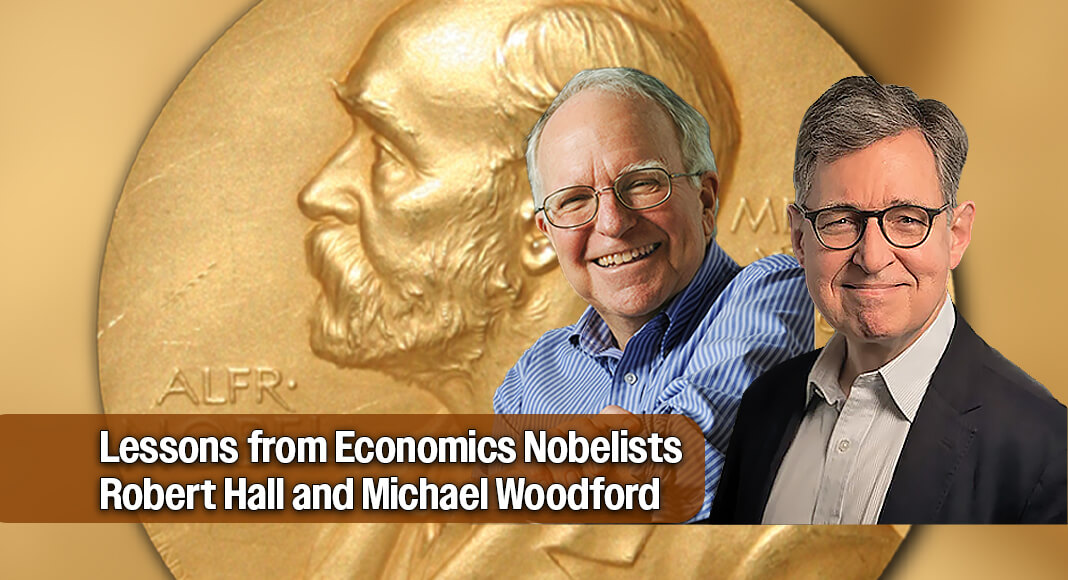
Dr. Vivienne Malone-Mayes, the iconic civil rights activist and pioneering Baylor mathematics professor, was an early mentor and later a dear friend. She taught me many things about mathematics – and life. One of her most frequent lessons was that, when you face a particularly challenging problem, it is often useful to set aside the incremental work that has been done previously and go back to the very origins of the issue you are seeking to address. The work of Robert Hall and Michael Woodford, this year’s Nobel Laureates in Economics, is the embodiment of that principle. You may not be aware of their achievements, but you are much the better for them.
Each year, the Royal Swedish Academy of Sciences awards the Prize in recognition of groundbreaking ideas and research that increase our understanding of critical issues that, directly or indirectly, affect our prosperity and wellbeing. The 2026 laureates demonstrated the ways in which past economic models could be reconstructed to inform stabilization policy, giving central banks and governments an enhanced ability to manage economic shocks.
Dr. Hall and Dr. Woodford’s work investigates why stabilization policies proposed by John Maynard Keynes in the 1930s worked for fluctuations in the economy until the major oil crises in the 1970s, when they did not reduce unemployment and helped to precipitate spiraling inflation, low growth, and high joblessness. The Keynesian models had provided guidance on monetary and fiscal policy for decades, but the economy of the 1970s did not seem to follow prior patterns.




Dr. Hall and Dr. Woodford demonstrated how the Keynesian models could be adjusted and reconstructed to take granular information into account, rather than relying only on aggregate inflation, production, and consumption measures. The 2026 honorees’ work examined the basics of how individual households and businesses make decisions about spending and pricing. They determined that these economic actors are forward-looking and benefit from communication by central banks and governments regarding what to expect from future policy.
Expectations for future income influence consumer spending, Dr. Hall found, illustrating the importance of reliable information from central banks surrounding rate changes. Similarly, Dr. Woodford found that businesses make decisions about pricing based on expectations for future rates. Forward guidance by central banks likely contributed to better stabilization after the 2009 global financial crisis, when the banks assured households and businesses that borrowing costs would remain low for an extended period of time.
In recent years, major economic events including the Covid-19 pandemic and energy crises have caused fluctuation in markets, but using the framework generated by Dr. Hall and Dr. Woodford has enabled central banks and governments around the world to restore stability in a timelier and more efficient manner. Stay safe!
__________
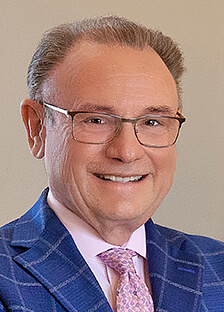
Dr. M. Ray Perryman is President and Chief Executive Officer of The Perryman Group (www.perrymangroup.com), which has served the needs of more than 3,000 clients over the past four decades.