







Texas Border Business

By Roberto Hugo González / Texas Border Business
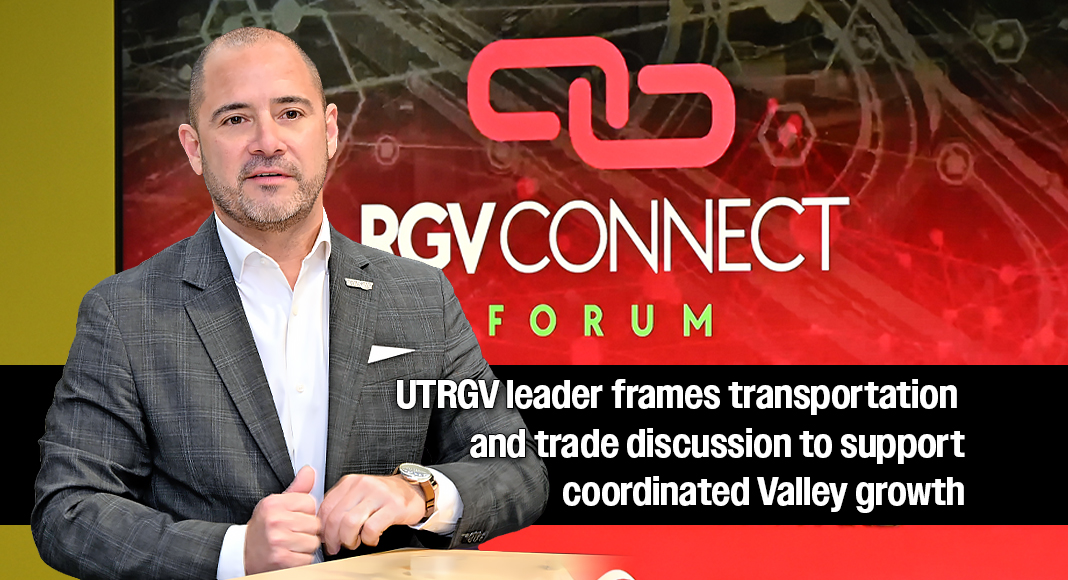
At the RGV Connect Transportation and Trade session, Ron Garza served as moderator, guiding a discussion focused on infrastructure, trade, and regional coordination across the Rio Grande Valley. Garza, senior associate vice president for Workforce and Economic Development at UT-RGV, led the panel by framing key issues and directing conversation among local leaders.
Garza opened the session by emphasizing the importance of regional collaboration in shaping priorities. He said the role of the Rio Grande Valley Partnership includes “formulating those regional priorities” and ensuring that local efforts align when advocating at the state and federal levels. He noted that while each jurisdiction has its own needs, “there’s some that rise to the surface,” pointing to shared infrastructure challenges.

Throughout the discussion, Garza focused on connecting transportation issues to economic outcomes. He said many residents experience congestion in daily travel, but the larger impact lies in how infrastructure affects trade and growth. “Transportation is one thing with our personal vehicles, but how that really influences trade and the economy is really where this infrastructure and these assets really shine,” he said.
Garza directed questions that highlighted the relationship between logistics systems and economic activity, asking panelists to explain how ports, bridges, and corridors contribute to regional development. His approach encouraged detailed responses about fuel distribution, cargo movement, and cross-border trade, helping to clarify how infrastructure supports both local consumption and international commerce.
He also emphasized the importance of understanding the scale of existing assets in the Valley. Introducing the Port of Harlingen, Garza said it is “a treasure that we may not know about,” reinforcing the need for greater awareness of regional infrastructure and its economic role.
Garza kept the discussion focused on future planning by steering panelists toward funding priorities and project needs. He asked participants to identify their top infrastructure priorities and explain how those investments would benefit the region. This line of questioning highlighted projects such as bridge expansions, trade corridors, and rail improvements, while reinforcing the need for coordinated advocacy.
Drawing on his experience in workforce and economic development, Garza connected infrastructure planning to long-term regional growth. His background includes leadership roles at the city, regional, and state levels, including serving as city manager of Edinburg, executive director of the Lower Rio Grande Valley Development Council, and more than 17 years with the Texas Workforce Commission.
Garza also highlighted the importance of public transportation and future mobility options. He noted that increased use of existing transit systems could help justify future investments, including passenger rail. He encouraged residents to consider using current services to demonstrate demand. “If we do want rail collectively… ” It’s a call for everybody,” he said, adding that higher ridership would support the case for expanded systems.
As moderator, Garza maintained a steady pace throughout the session, using follow-up questions to clarify technical points and keep the discussion focused on outcomes. His role supported the objective of RGV Connect, which is to bring together leaders and stakeholders to align priorities and strengthen the region’s voice.
The session reflected Garza’s emphasis on linking infrastructure, workforce, and economic development. By guiding the conversation toward practical needs and shared goals, he reinforced the importance of coordinated planning as the Rio Grande Valley continues to grow.
See related stories: