















Texas Border Business



By David Vergun, Pentagon News | US DOW
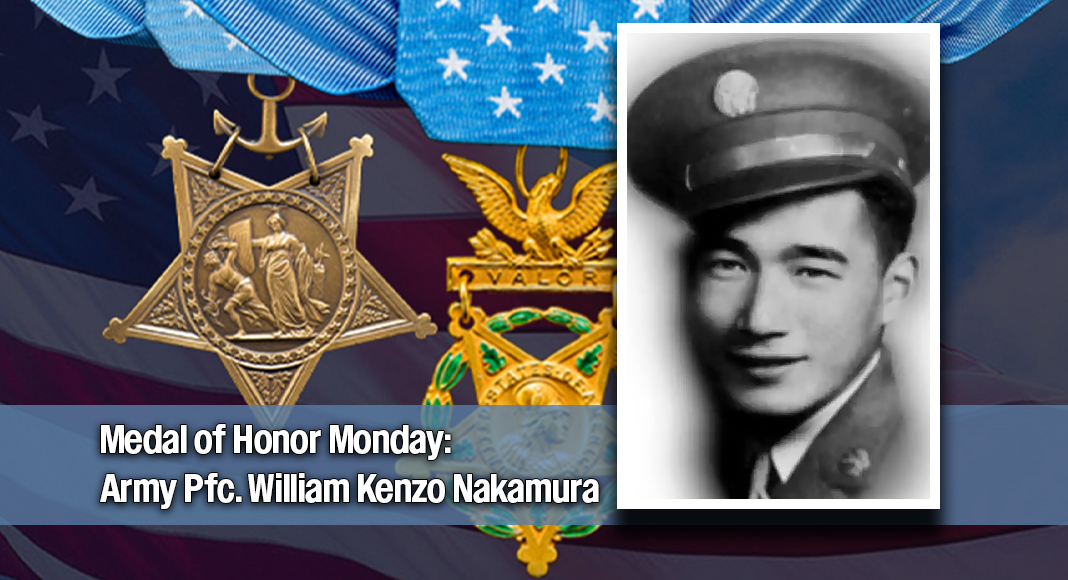
Army Pfc. William Kenzo Nakamura was a World War II hero. He received the Medal of Honor for risking his life to save his platoon during combat in Italy, July 4, 1944.
Nakamura was born in Seattle, Jan. 21, 1922, and grew up with a brother and a sister. His parents worked as barbers in Seattle after immigrating from Japan.



After graduating from Garfield High School in 1939, he attended the University of Washington.
His mother died of cancer in January 1942, two months before Japanese Americans living in the Puget Sound area were moved to relocation centers.
Nakamura and the rest of his family arrived at the Minidoka War Relocation Center in Jerome County, Idaho, Aug. 21, 1942, according to the final accountability roster from the War Relocation Authority.
His father and sister remained in the center until 1945, but Nakamura and his brother left the center for military service in July 1943.
On the day of his Medal of Honor action, Nakamura was assigned to Company G, 442nd Regimental Combat Team, in the hilly countryside near Castellina, Italy.
According to his Medal of Honor citation, his platoon became pinned down by enemy machine-gun fire from a concealed position during a firefight. On his own, he crawled 20 yards toward the hostile position with enemy machine-gun fire barely missing him.
After getting within 15 yards of the enemy, he threw four grenades, killing or wounding at least three of them. With their weapons silenced, Nakamura crawled back to his platoon, which was able to continue its advance thanks to his courageous action.
Later, his company withdrew from their position so a mortar barrage could occur. However, Nakamura remained in position to cover his comrades’ withdrawal.
While moving toward the safety of a wooded area, his platoon again became pinned down by machine-gun fire. Nakamura acted quickly, crawling to a point where he could fire on the enemy. He engaged and pinned them down, allowing his platoon to withdraw safely.
Nakamura was not so lucky, he was killed during this heroic stand.
In the years after the war, only one Japanese American soldier received the Medal of Honor: Army Pfc. Sadao Munemori, who died in battle. Nakamura instead posthumously received the Distinguished Service Cross, the nation’s second-highest military award for valor.
During the war, the approximately 14,000 Japanese American soldiers who served in the 442nd received 18,143 awards, including seven Presidential Unit Citations.
In 1996, legislation sponsored by Sen. Daniel Akaka of Hawaii led to an official review of the many Distinguished Service Crosses received by Japanese Americans for their heroics during World War II, despite the discrimination they faced at the time. The review resulted in the military upgrading 19 of the 52 Distinguished Service Crosses to Medals of Honor, as well as one Silver Star Medal.
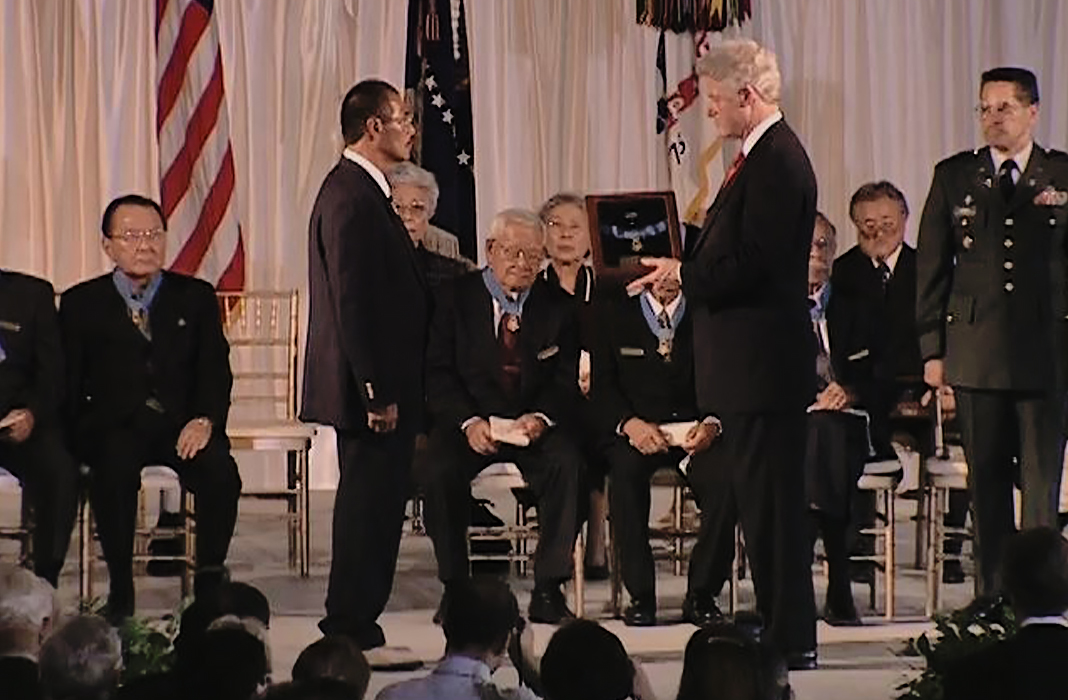
The Medal of Honor was awarded to several Japanese American soldiers assigned to the 100th Infantry Battalion and the 442nd Regimental Combat Team during a June 21, 2000, White House ceremony.
June Oshima, Nakamura’s sister, was at the ceremony to accept the medal on his behalf from President Bill Clinton.
She gave an interview to the Longview Daily News newspaper, which was published in the May 29, 2000, issue.
They, Nakamura and his brother, “thought if they joined, they could get rid of the prejudice,” she said. “They wanted to show that Japanese Americans were not the enemy. It makes me sad to think of it.”
Decades since Nakamura’s brave actions, tributes have continued. In 2000, Congress voted unanimously to pass legislation officially naming the Seattle federal courthouse the William Kenzo Nakamura United States Courthouse. There’s also a memorial for him at the University of Washington.
Nakamura is buried at Evergreen Washelli Memorial Park in Seattle