







- McAllen Lowers Tax Rate as Property Values Rise: City Commission’s Strategic Budget Approach
- McAllen Among the Safest Cities in the U.S.: Inside the City’s Public Safety Strategy
- Building the Workforce of the Future: McAllen Partners with UTRGV and Local Businesses
- $60 Million in 33 Days: Cross-Border Shoppers Drive McAllen’s Economy
- Boeye Reservoir: McAllen’s Next Big Mixed-Use Destination
- McAllen Rising: How a Visionary City is Redefining Growth, Innovation, and Leadership in South Texas
- City Manager Isaac “Ike” Tawil Outlines a Bold Vision for McAllen’s Future
- McAllen Invests $300 Million in Water Desalination to Secure Its Future
- McAllen Doubles Down on Recreation: Sports, Nature, and Culture as Economic Engines
- McAllen’s New Development Code Paves the Way for Smart Growth and Urban Renewal
By Roberto Hugo González | Texas Border Business

You’re reading one of 12 exclusive stories from the McAllen City Manager’s Update—brought to you by Texas Border Business. Discover the projects, people, and progress shaping McAllen’s future. Subscribe for FREE today and enjoy the complete series!
The City of McAllen has completed a comprehensive update to its Unified Development Code (UDC), a major step toward modernizing how the city manages growth, zoning, and redevelopment. The new code is designed to encourage mixed-use projects, streamline permitting, and integrate environmental best practices, reflecting the city’s commitment to innovation and sustainable urban planning.

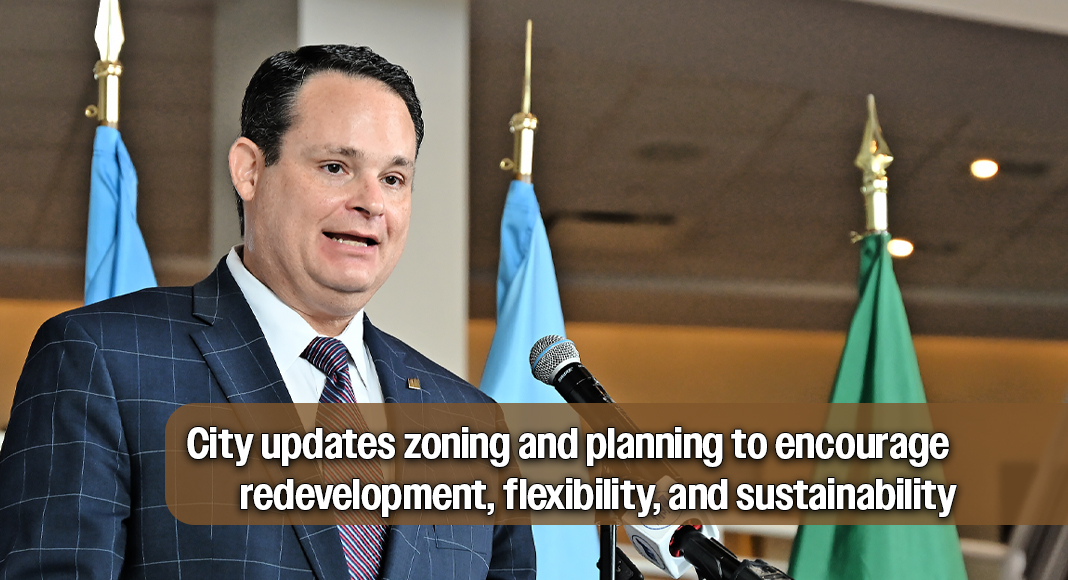
City Manager Isaac J. “Ike” Tawil highlighted the update during his remarks at the McAllen Chamber of Commerce’s Government Affairs Series, crediting the city’s planning and development team for their leadership. “Under the direction of Deputy City Manager Michelle Rivera, our planning department worked hard to rewrite what development looks like in McAllen,” Tawil said. “This process should now be much more streamlined, efficient, and reflective of modern trends.”
The Unified Development Code serves as the foundation for how cities guide construction, land use, and design. McAllen’s previous code, while effective for decades, was written for a different era—one focused primarily on traditional subdivisions and automobile-oriented design. The updated version takes into account the city’s changing demographics, economic growth, and demand for more flexible spaces that combine residential, commercial, and recreational uses.
“The new code is a reflection of where McAllen is heading,” Tawil said. “It’s designed to support mixed-use developments, adaptive reuse, and projects that bring vibrancy to older areas of the city.”
According to Tawil, one of the key improvements is the ability for developers to pursue creative projects without being hindered by outdated regulations. “Requirements are going to reflect modern realities,” he explained. “For example, parking ratios are being adjusted. When I was younger, the first thing I wanted was a car, but today’s generation is different—they prefer ride-sharing and walkable neighborhoods.”

The city’s updated regulations also place new emphasis on environmental design. “We’re being mindful of light pollution, energy efficiency, and aesthetics,” Tawil said. “There are built-in sensitivities to make sure we have proper shielding for outdoor lighting, so we preserve the look and feel of our neighborhoods.”

Deputy City Manager Michelle Rivera said the UDC update is intended to make the city more responsive to both residents and investors. “We heard from developers who wanted more clarity and flexibility,” Rivera said. “The new code provides that, while still protecting the character and safety of our community.”
To support redevelopment, McAllen has also begun city-led rezoning efforts to align older areas with the new regulations. “We’re going back through and rezoning a lot of the city,” Tawil said. “If we haven’t gotten to your area yet, there’s an opportunity to participate. And the fees get waived because it’s part of the citywide rezoning effort.”

The new code is expected to accelerate mixed-use and infill development in central McAllen, helping revitalize older corridors and underused properties. Former Mayor Jim Darling praised the effort, calling it a “smart, forward-thinking approach” that makes McAllen more competitive for investment.
City officials say the goal is not only to make it easier to build but also to ensure growth aligns with McAllen’s long-term vision. “Smart growth means balancing flexibility with responsibility,” Rivera said. “We’re creating a framework that encourages innovation while maintaining the standards that make McAllen a great place to live.”
Tawil emphasized that the updated code reflects a broader philosophy of government working in partnership with residents and business owners. “This is about removing unnecessary barriers and encouraging people to reinvest in McAllen,” he said. “We want development that enhances our community, strengthens our economy, and prepares us for the future.”
With the new UDC now in place, McAllen is poised for a new phase of urban renewal—one that blends modern planning principles with the city’s tradition of growth, innovation, and community pride.