















Texas Border Business




By Roberto Hugo González / Texas Border Business
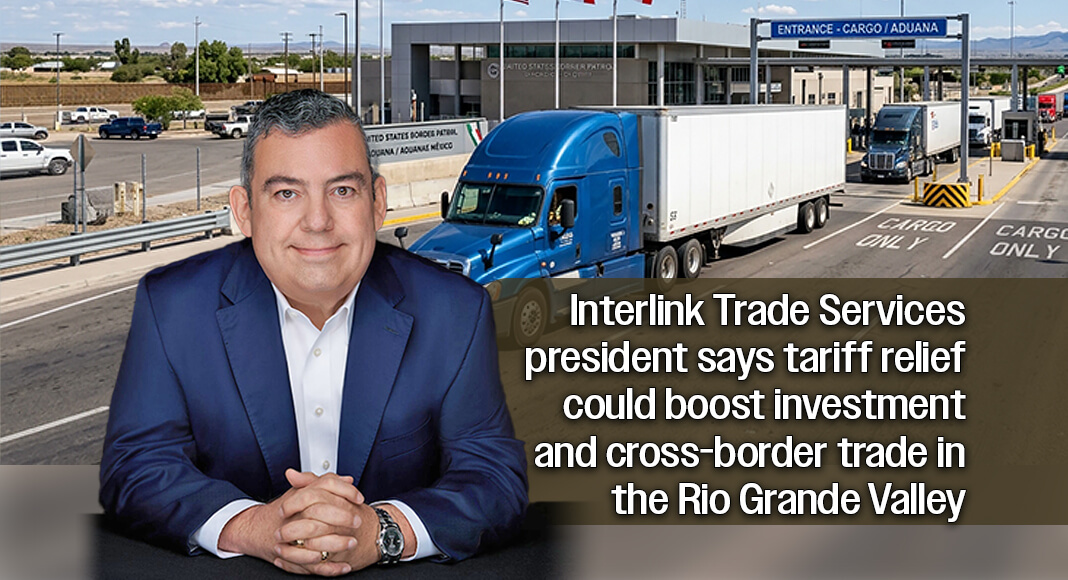
McALLEN, Texas — As the United States and Mexico prepare for another round of high-level trade negotiations, Jorge Torres, president of Interlink Trade Services, says the discussions could provide something businesses on both sides of the border urgently need: greater certainty.
U.S. and Mexican officials have been conducting bilateral negotiations connected to the review of the United States-Mexico-Canada Agreement, or USMCA. The Office of the U.S. Trade Representative said after the third round in July that discussions included steel and aluminum, automobiles, economic security, labor, agriculture and other issues, with a fourth round planned for Washington in September.



Torres considers the timing significant because negotiations are occurring ahead of the Nov. 3 U.S. midterm elections.
“This fourth round of negotiations is critical since it will be happening right before the midterm elections in the U.S.,” Torres said, adding that he believes the Trump administration is seeking a clearer pathway toward the continuity of USMCA.
Reuters reported Sept. 11 that U.S. and Mexican officials were accelerating negotiations ahead of the elections, with tariff relief and automotive content among the major issues under discussion.
Torres said companies considering expansion or additional manufacturing capacity have been particularly affected by uncertainty surrounding tariffs and the future trading relationship.
“Until things settle, the uncertainty will continue, and projects will be put on hold,” he said.
One potentially important development, Torres said, would be relief for Mexico from Section 232 tariffs affecting products such as steel, aluminum and automobiles.
“If Mexico can negotiate with the U.S. to at least lower Section 232 tariffs compared to other countries, Mexico will position itself as an excellent option for industrial development,” Torres said.
He added that increased Mexican industrial development could also benefit U.S. companies supplying raw materials and equipment.
Automotive rules remain another significant issue. The existing USMCA generally requires 75% North American regional value content for passenger vehicles and light trucks. Torres said proposals for substantially greater regional and U.S. content could reshape supply chains and encourage suppliers currently outside North America to relocate production.
China is also part of the broader discussion. Torres said Mexico’s actions involving tariffs on Chinese-origin products could influence negotiations with Washington. Reuters has reported that Chinese investment and automotive supply chains are among the issues under consideration in the current U.S.-Mexico discussions.
For the Rio Grande Valley, Torres believes greater certainty could affect more than manufacturing.
Investments in new and expanded capacity, he said, would increase cross-border trade and consequently generate additional business for “trucking companies, customs brokers, warehouses and international bridges.”
Torres cautioned, however, against viewing the upcoming negotiations as the final resolution of the broader trade relationship.
“We will probably not see clarity on the continuity of USMCA or a bilateral agreement between the U.S. and Mexico until 2027,” he said.
For now, Torres views the negotiations as an opportunity to address immediate tariff issues while establishing the environment for the larger decisions still ahead.
“We all hope for USMCA to continue,” Torres said, adding that he sees support for continuity within both the public and private sectors.