







Texas Border Business

By Roberto Hugo González / Texas Border Business
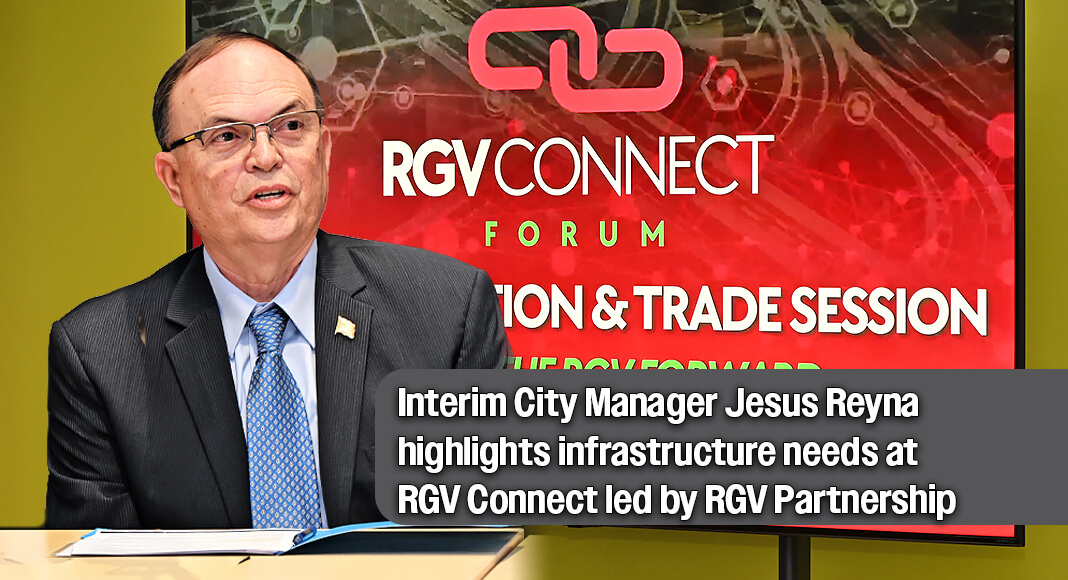
At the RGV Connect Transportation and Trade session, Jesus Reyna, interim city manager for the City of Donna, outlined key infrastructure projects aimed at improving mobility and supporting economic growth in the Rio Grande Valley. Speaking at the forum organized by the Rio Grande Valley Partnership under the leadership of President and CEO Paco Sanchez, Reyna emphasized the need for regional coordination and investment in transportation corridors.
Reyna, who said he has “approximately 35 years” of experience in finance working with various entities, described Donna as a central point for movement across the Valley. “All roads speak through Donna,” he said, explaining that travel between major areas such as McAllen and the coast often passes through the city. “We consider ourselves the heart of the Valley,” he added.

He said the city is experiencing growth and increased investor interest, particularly due to available land for expansion on the south side. Among the major projects underway is the expansion of the Donna-Rio Bravo International Bridge. Reyna said the project represents an “$80 million investment” and is designed with future capacity in mind. “It is one of the widest bridges that will hold six lanes for commercial northbound traffic,” he said.
Reyna explained that the bridge was built to accommodate long-term demand and incorporate advanced technology to improve efficiency. He said incoming traffic will be scanned to reduce delays. “Time is money, and we need them to turn around, come back and continue that process,” he said, referring to cross-border commercial activity.
He also stressed the importance of completing supporting infrastructure, particularly the International Bridge Trade Corridor. Reyna said the IBTC project is intended to connect the Donna bridge area to the expressway system and provide a dedicated route for heavy commercial traffic. “It would be a bypass to alleviate the traffic for the semis, the trucks, heavy equipment,” he said.
According to Reyna, separating commercial freight from passenger vehicles is critical to improving traffic flow and safety. He said the corridor would allow for a “separation of the privately owned vehicles… from the traffic” associated with trade, reducing congestion on existing roads.
However, Reyna noted that progress has been slowed by funding challenges. He said environmental studies and planning have already been completed, but the project is waiting for financial support. “The funds have to be reallocated,” he said, calling attention to the need for regional advocacy.
He said the bridge itself is positioned to handle increased trade volumes once the second phase is completed. Currently, operations are limited, but the expansion is expected to allow full commercial capacity. Reyna said the project is designed to support long-term growth in cross-border trade and logistics.
Throughout his remarks, Reyna emphasized that Donna’s efforts are part of a larger regional system. He expressed support for collaboration across cities and counties and said infrastructure planning must reflect shared needs. “We need to be advocates for this region,” he said.
He also highlighted the importance of overweight corridors and coordinated planning to efficiently handle cargo movement. Reyna said there must be “a massive plan in place… for the entire region” to ensure that trade routes function effectively and support economic development.
The RGV Connect forum, led by Sanchez, was created to bring together leaders from across the Rio Grande Valley to discuss priorities and align strategies for state and federal advocacy. Reyna said the opportunity to share information and learn from other jurisdictions is essential as the region prepares for continued growth.
See related stories: