














Texas Border Business





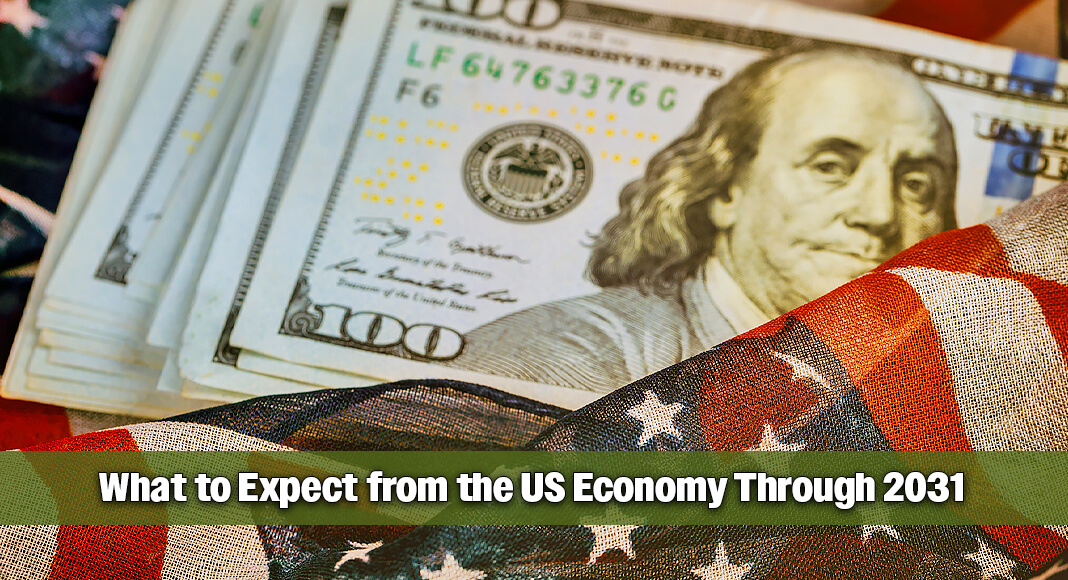
Although indicators are somewhat mixed, the US economy generally continues to demonstrate modest growth even when confronted with significant challenges. Labor market performance has remained relatively stable, and capital investment continues (particularly in data centers and AI). Let’s explore some of the patterns shaping our outlook for the next five years.
Conflicts in the Middle East and elsewhere are having multi-faceted effects on the economy. In addition to increasing uncertainty, oil supplies have dropped and prices have jumped. While consumers focus on the cost of gasoline, petroleum is embedded throughout the economy. The longer the conflict persists, the more damaging the fallout for the global economy could become.
Inflation continues to affect Federal Reserve decisions regarding potential interest rate movements. In addition to the ongoing energy shocks, the world is becoming more fragmented, which contributes to higher prices (as does tariff policy). The recent wholesale price index spike has raised particular concerns.


Underlying demographic trends and immigration policy are contributing to constraints on labor supply. There are shortages in many occupations, including skilled trades, mechanics, and hands-on health care workers. While AI may temporarily reduce demand in some sectors, it will not eliminate the deficiencies in many areas (and certainly not on a permanent basis). Over the next few years, workforce pressures may intensify.
Major capital deployment for data centers and other necessary infrastructure for AI is a major reason for the US economy’s resilience. Businesses are investing heavily in automation, data support, and AI-driven processes. From construction to consulting, deploying AI is generating substantial business activity. Simultaneously, numerous companies have announced layoffs, and there will continue to be dislocations as firms adjust. Overall effects will likely be positive and could bring a substantial increase in potential economic growth through productivity enhancements.
In normal times, consumer spending accounts for about 70% of economic activity, and household financial health is an important factor in overall expansion. While aggregate consumption has remained relatively strong, it has been largely driven by higher-income households, which have been benefiting from a rising stock market and higher home prices. In contrast, lower-income households have been more affected by inflation and overall consumer sentiment indicators are at or near record lows. If spending drops significantly, the pace of expansion will be materially diminished.
On balance, our latest projections call for moderate growth for the US economy (though we expect unevenness over time and across industries). Real gross domestic product is forecast to expand at a 2.55% annual pace over the next five years, while total employment is projected to rise by approximately 11.4 million. The initial period will be difficult but, once current uncertainties dissipate, the economy should again expand at a healthy pace. Stay safe!
___________________
Dr. M. Ray Perryman is President and Chief Executive Officer of The Perryman Group (www.perrymangroup.com), which has served the needs of more than 3,000 clients over the past four decades.