
















Texas Border Business





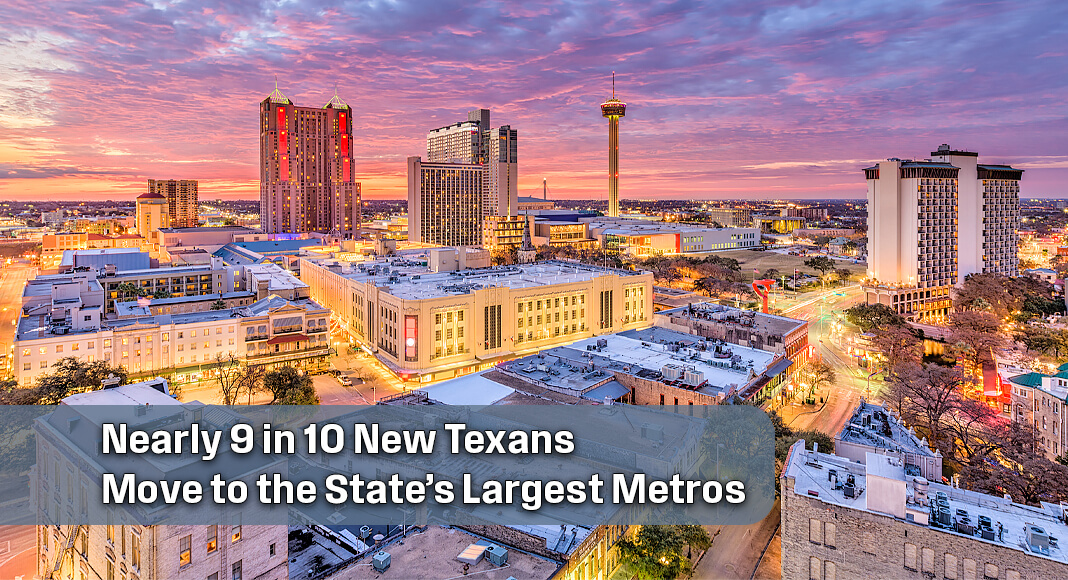
People continue to come to Texas, and the state’s largest Metropolitan Statistical Areas (MSAs) are where most of them are landing (almost 88% in the top four alone). I wrote about Texas population growth in a prior column when the state data was released, and the gist is that while the pace of expansion slowed markedly due to reduced domestic and international in-migration, the increase was far larger than any other state at more than 391,240 – about 1,072 new Texans every day. The state’s 1.25% rate of increase was substantially above the national pace of 0.52%.
The opportunities in Texas continue to draw new residents, and our younger population tends to have a higher birthrate than many areas. It’s no coincidence that the places they are choosing to live are also seeing some of the fastest job growth rates (a topic for another day).
Four of the top 10 MSAs for the largest gain in the nation were in the Lone Star State, based on the new estimates from the Census Bureau for July 1, 2025. Texas had the first, second, sixth, and ninth place MSAs. (These results refer to increases over the July 1, 2024 to July 1, 2025 period.)



The fastest growing MSA in the nation was Houston-Pasadena-The Woodlands, up over 126,700. A close second was Dallas-Fort Worth-Arlington, which saw an increase of almost 123,600. Austin-Round Rock-San Marcos expanded by about 53,800 (sixth) and San Antonio-New Braunfels (ninth) was up by 38,400. The numbers shrink quickly from there, and about 80 MSAs lost population, with the worst being Los Angeles-Long Beach-Anaheim which was down almost 62,500 over the year.
A number of other Texas MSAs ranked in the top 150 (out of 391), including McAllen-Edinburg-Mission, Killeen-Temple, Midland, Lubbock, Odessa, Tyler, Sherman-Denison, Amarillo, and Waco. That’s particularly notable given the fact that some of these population centers are relatively small.
We have become accustomed to Texas being a leader in various categories of expansion, but some areas of the US are declining. People (and companies) are exiting due to issues such as, among others, high costs of living and taxes, slow job creation and labor shortages, crime, wildfires, and overregulation. As noted, greater Los Angeles lost substantial numbers over the year, and many other very large MSAs barely expanded. For example, greater San Antonio (population 2.8 million in 2025) added more residents over the year than New York-Newark-Jersey City (population 20.1 million in 2025).
Looking back over five years, the same four large Texas MSAs were in the top 10 (though the order changed slightly). The state has notable challenges to address to ensure sustainable progress over an extended horizon, but the overall pattern is impressively positive. Stay safe!
_________________________
Dr. M. Ray Perryman is President and Chief Executive Officer of The Perryman Group (www.perrymangroup.com), which has served the needs of more than 3,000 clients over the past four decades.