













Texas Border Business



By Joey Gomez
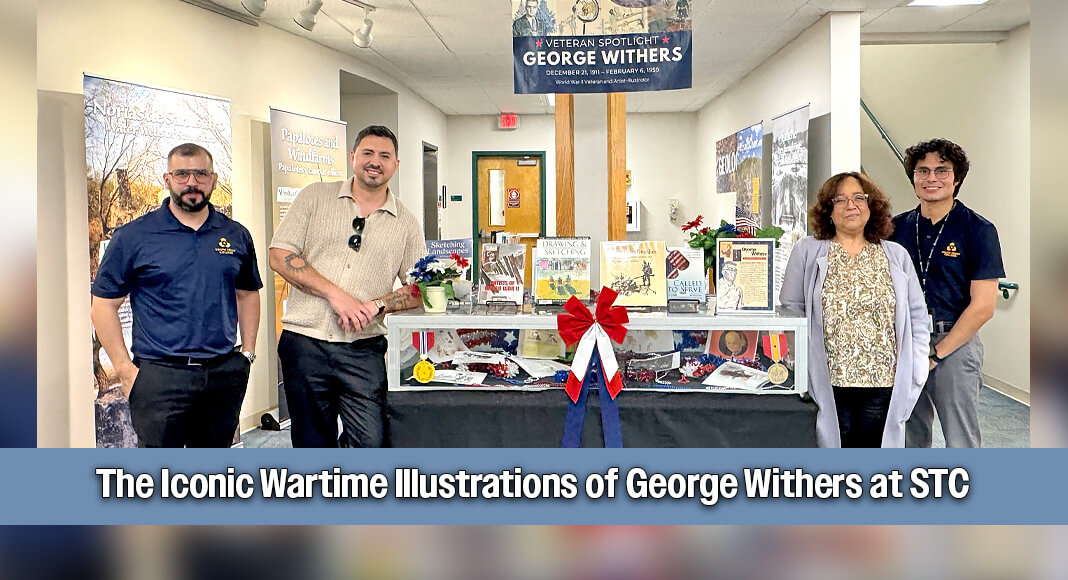
McALLEN, Texas – South Texas College’s Veterans Affairs Office, together with Library Services at STC’s Pecan Campus is honoring the legacy of World War II veteran and illustrator George Withers through a special exhibit highlighting both the power of art and the often-unseen struggles veterans face after war.
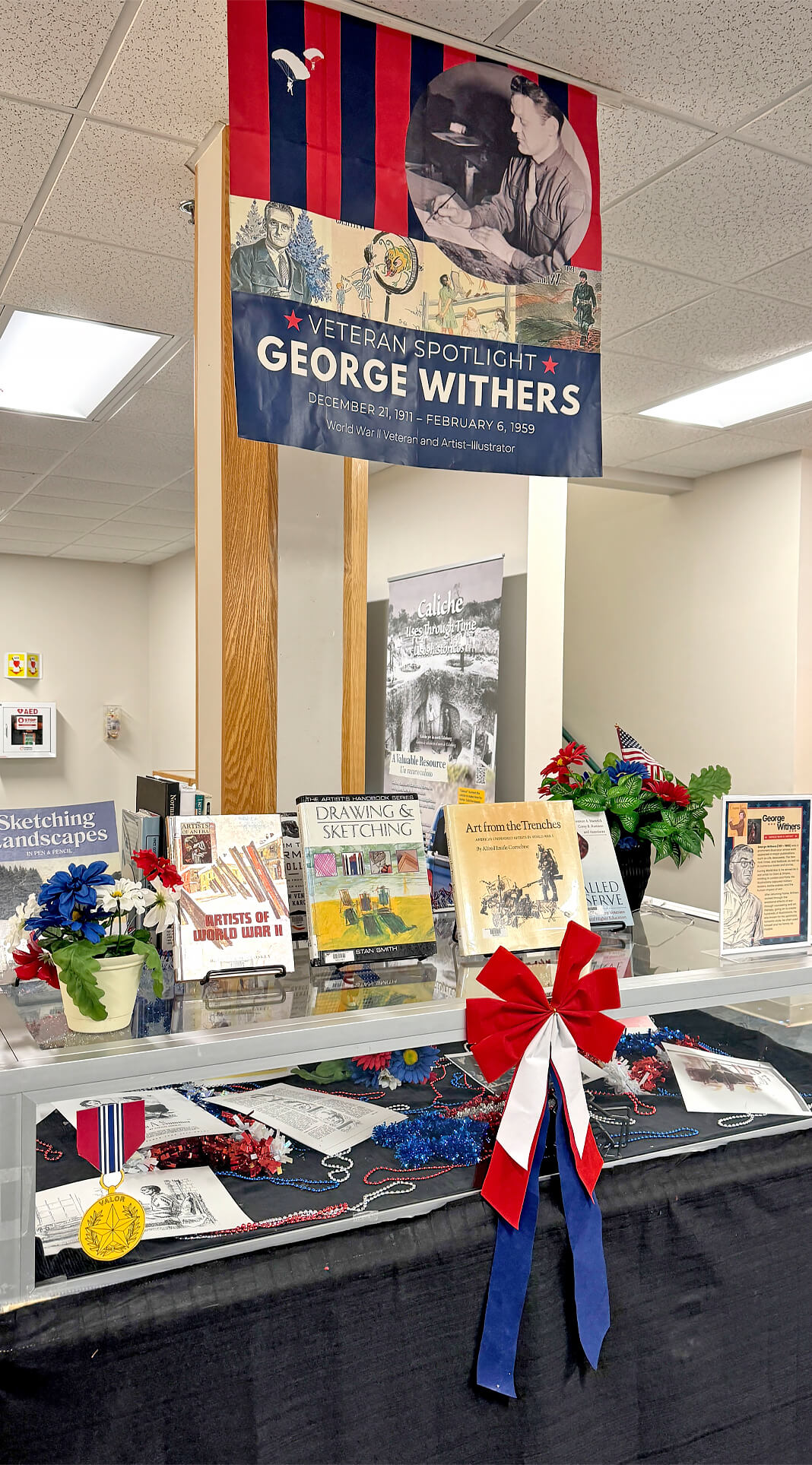
Organized just ahead of Memorial Day on May 25, the exhibit features illustrations and military artwork created by Withers during and after his service. The exhibit also offers students and visitors a glimpse into the experiences of a veteran who artwork captured both the realities of combat and the emotional toll it carried long after the war ended.



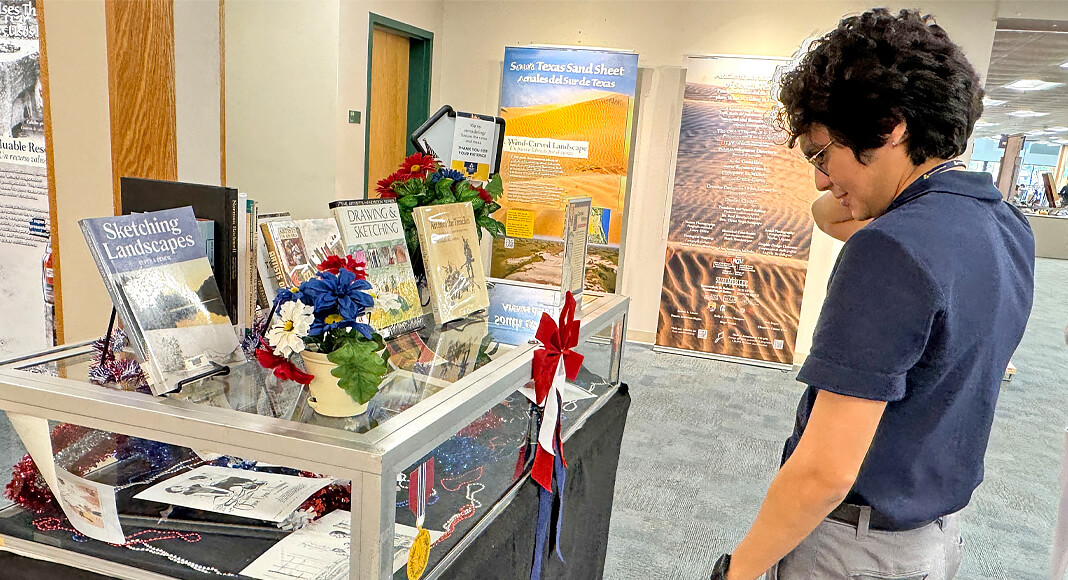
For STC Library Technician Elijah Trevino, who helped coordinate the exhibit, the journey of healing through creativity is one of the most important messages conveyed.
“I think it’s really important to show veterans that despite the realities of war and the things they experience, there is something really beautiful that can be created from that,” Trevino said.
The exhibit came to STC after Wither’s son, Brian, who resides in New York, reached out directly to the college’s Veterans Affairs office and donated prints of his father’s work in hopes of supporting veterans and their families.
According to Brian, his father struggled emotionally after returning home from war, particularly after illustrating some of its darkest moments, including the liberation of concentration camps across Europe.
“I do it because I love my dad, but I also do it to help those who served deal with their struggles,” Brian said. “I have heard from many who have told me that they struggle with post traumatic stress disorder (PTSD) or that they or someone they know is thinking of suicide. Veterans are really up against it.”
Withers, who passed away in 1959, was a nationally recognized illustrator whose work appeared in major publications including Life, Newsweek, the New York Times and Redbook.
During World War II, he served as a war artist for Stars and Stripes, the U.S. military’s daily newspaper, working in London and Paris while illustrating battle scenes, military leaders and the human impact of war.
Brian explained that his father eventually sought counseling and participated in art therapy while recovering from PTSD. Through treatment and his continued work as an artist, he said his father rediscovered his sense of humor, imagination and optimism.
“You can see in the artwork that his sense of humor returned,” Brian said. “He became healthy again.”
Patricia Sotelo, librarian at STC’s Pecan Campus, said the exhibit is part of an ongoing effort to ensure veterans feel seen, represented and welcomed throughout the college community.
“We want our veterans to come and feel welcomed here knowing that there is a little part of them here at the library,” Sotelo said. “We want them to know that everyone is included here.”
As a Gold Veterans Education Excellence Recognition Award (VEERA) recipient by the Texas Veterans Commission as well as a Silver Military Friendly and Military Spouse Friendly institution, STC serves more than 800 veterans, active-duty service members and their dependents through the college’s Office of Student Veterans Affairs.
STC Veterans Affairs leadership say they hope the exhibit serves not only as a tribute ahead of Memorial Day, but also as a reminder that healing, connection and understanding remain an important part of supporting veterans long after their service ends.
Javier Cardenas, STC Veterans Affairs certifying official and outreach specialist, said the exhibit was made possible through a rare and meaningful connection initiated by Brian himself.
“It’s not every day that someone calls you and says, ‘Hey, I want to be a part of what you all are doing,’’’ Cardenas said. “Once we got the prints in the mail, we knew we had an opportunity to create something truly meaningful.”
STC Veteran and Recruitment and Engagement Coordinator Javier Guajardo said the exhibit goes beyond highlighting military service and instead helps tell the personal stories behind the veterans themselves.
“Most of the time, we don’t see the other side of veterans, like what they are passionate about or their stories,” Guajardo said. “We don’t want to stop at just providing services. We also want to put a spotlight on the veteran population here in the Rio Grande Valley.”