














Pharr EDC Panel Examines Shift Toward Strategic Trade in North America

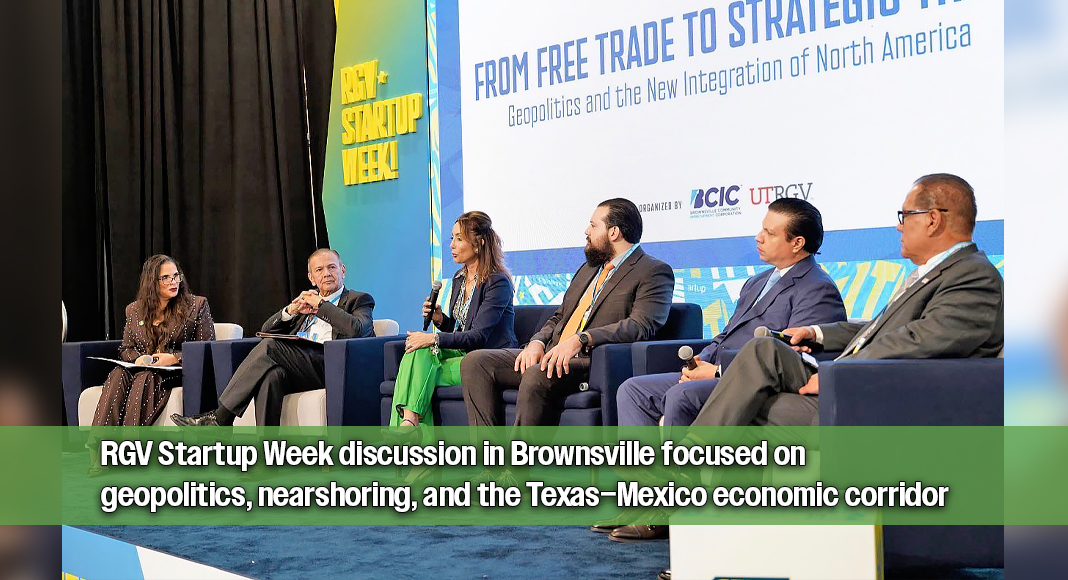
RGV Startup Week discussion in Brownsville focused on geopolitics, nearshoring, and the Texas–Mexico economic corridor

Translate text to Spanish or other 102 languages!

- Advertisement -
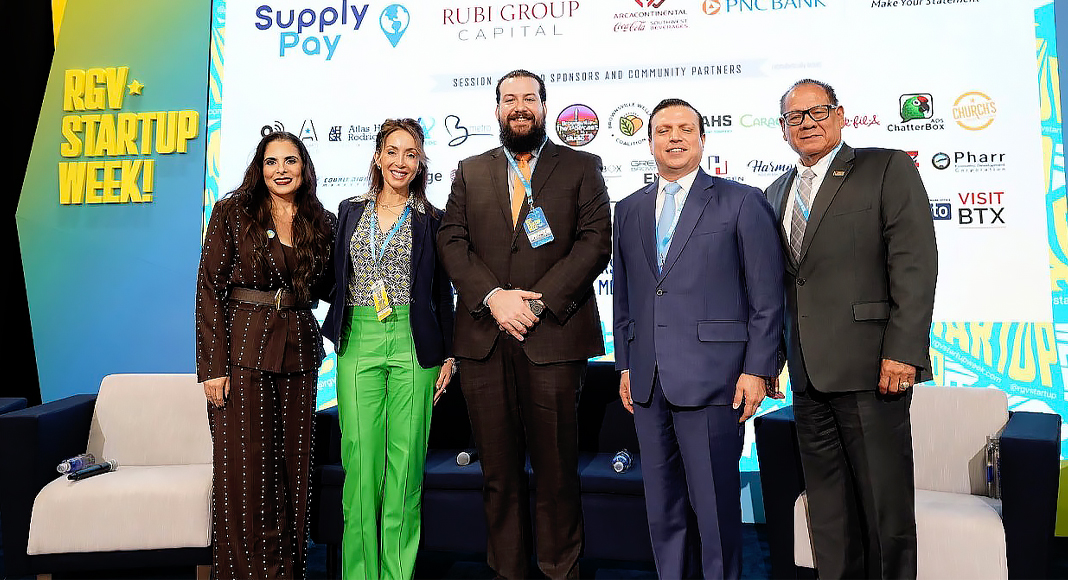
Panelists at the RGV Startup Week discussion titled “From Free Trade to Strategic Trade: Geopolitics and the New Integration of North America” gather in Brownsville on April 28, 2026. Pictured, from left, are Lilvette Santos, moderator and Economic Business Development Director at PEDC; Jesus Cano, Deputy Consul of the Mexican Consulate in McAllen; Dr. Valerie Segovia, Vice President of Investor Relations at TxEDC; Cristobal Cardenas, Director of Investment in Technology and Innovation at the Secretaría de Economía of Nuevo León; State Rep. Sergio Muñoz Jr. of District 36; and Victor Perez, President and CEO of PEDC. The panel, hosted by the Pharr Economic Development Corp., examined the shift toward strategic trade, nearshoring, and North American economic integration. Courtesy image
Panelists at the RGV Startup Week discussion titled “From Free Trade to Strategic Trade: Geopolitics and the New Integration of North America” gather in Brownsville on April 28, 2026. Pictured, from left, are Lilvette Santos, moderator and Economic Business Development Director at PEDC; Jesus Cano, Deputy Consul of the Mexican Consulate in McAllen; Dr. Valerie Segovia, Vice President of Investor Relations at TxEDC; Cristobal Cardenas, Director of Investment in Technology and Innovation at the Secretaría de Economía of Nuevo León; State Rep. Sergio Muñoz Jr. of District 36; and Victor Perez, President and CEO of PEDC. The panel, hosted by the Pharr Economic Development Corp., examined the shift toward strategic trade, nearshoring, and North American economic integration. Courtesy image
- Advertisement -

Texas Border Business

The Pharr Economic Development Corp. hosted a panel discussion during RGV Startup Week on Tuesday, April 28, 2026, in Brownsville, Texas, focused on how global trade is shifting from a model centered on cost efficiency to one shaped by geopolitics, security, and regional integration.

Titled “From Free Trade to Strategic Trade: Geopolitics and the New Integration of North America,” the panel was moderated by Lilvette Santos, Economic Business Development Director at PEDC. The discussion brought together leaders from government, diplomacy, and economic development to examine how trade patterns are changing across North America.

- Advertisement -
Moderator and panelists at the RGV Startup Week discussion titled “From Free Trade to Strategic Trade: Geopolitics and the New Integration of North America” stand together in Brownsville on April 28, 2026. Pictured, from left, are Lilvette Santos, moderator and Economic Business Development Director at PEDC; Jesus Cano, Deputy Consul of the Mexican Consulate in McAllen; Dr. Valerie Segovia, Vice President of Investor Relations at TxEDC; Cristobal Cardenas, Director of Investment in Technology and Innovation at the Secretaría de Economía of Nuevo León; State Rep. Sergio Muñoz Jr. of District 36; and Victor Perez, President and CEO of PEDC. The panel, hosted by the Pharr Economic Development Corp., explored how global trade is shifting from a cost-driven model to one shaped by geopolitics, supply chain resilience, regional integration, and nearshoring opportunities across the Texas–Mexico corridor. Courtesy image

Panelists included Jesus Cano, Deputy Consul of the Mexican Consulate in McAllen; Dr. Valerie Segovia, Vice President of Investor Relations at TxEDC; Cristobal Cardenas, Director of Investment in Technology and Innovation at the Secretaría de Economía of Nuevo León; State Rep. Sergio Muñoz Jr. of District 36; and Victor Perez, President and CEO of PEDC.

According to the discussion, a central theme was that trade is no longer defined solely by efficiency, but increasingly by resilience, proximity, and trust. Panelists said companies are shifting priorities from low-cost production toward supply chain security, speed to market, and geopolitical alignment.

The panel highlighted the growing importance of the Texas–Mexico corridor, particularly the Rio Grande Valley, as a strategic location for nearshoring and advanced manufacturing. Participants identified Nuevo León’s ability to attract investment, Texas’ business climate, and the region’s binational connectivity as competitive advantages.

Panelists also addressed challenges facing the region, including infrastructure capacity, energy reliability, workforce readiness, and the need for stronger coordination between Texas and Mexico. According to the discussion, there was consensus that the opportunity for economic growth is significant but time sensitive.

- Advertisement -

A key takeaway from the panel was that North America is entering a new phase of integration in which collaboration between Texas and Mexico will shape the region’s ability to compete globally. The discussion concluded with a forward-looking assessment that, if regional stakeholders act with urgency and alignment, the Texas–Mexico border could emerge as one of the world’s most important economic corridors.


- Advertisement -
- Advertisement -
- Advertisement -

Latest News

More Articles Like This

- Advertisement -