







Home Blog Page 509

US Senator Cornyn Discusses Tax Cut Extensions with Small Business Owners

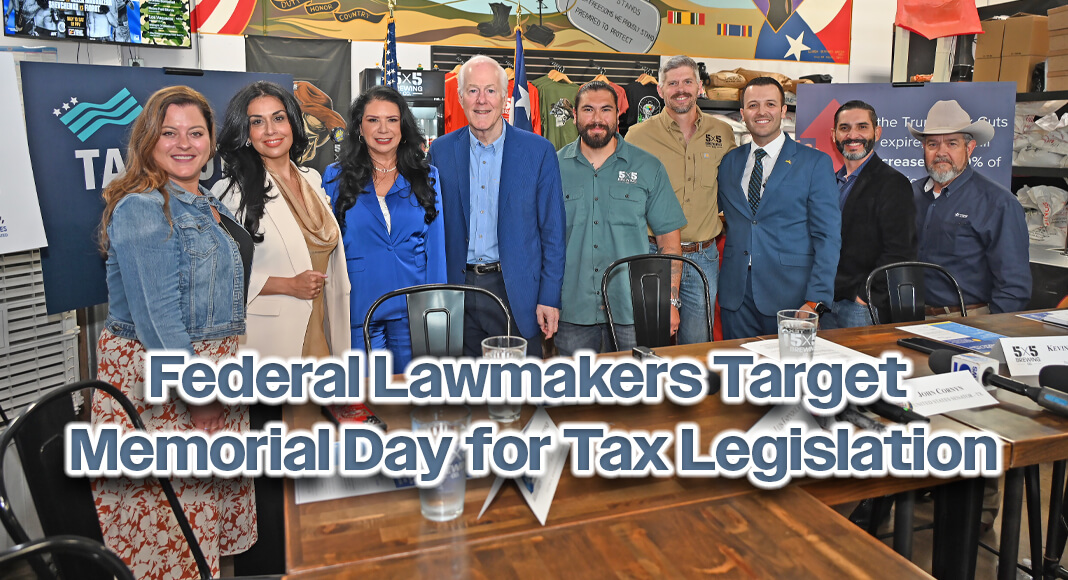
U.S. Senator John Cornyn (R-TX) and small business operators from the RGV. Photo by Roberto Hugo González

By Roberto Hugo González

MISSION, Texas — On April 24, 2025, U.S. Senator John Cornyn (R-TX), a member of the Senate Finance Committee, held a roundtable discussion with small business owners and local economic stakeholders at 5×5 Brewing Company in Mission, Texas. The meeting focused on the Tax Cuts and Jobs Act (TCJA) of 2017 and its scheduled expirations at the end of the year.

The Tax Cuts and Jobs Act, signed into law in December 2017, implemented changes to the federal tax code. Key provisions of the TCJA set to expire on December 31, 2025, include the reduced individual income tax rates, the expanded standard deduction, the increased Child Tax Credit, and the 20% deduction for qualified income from pass-through entities. These scheduled expirations have prompted active legislative discussions in Washington about whether to extend or revise the provisions.

Sarah Hammond, Owner, Atlas Electrical Air Conditioning, Refrigeration & Plumbing Services, Jessica Delgado, Owner, Delgado Collective, Hortencia L. Camargo, Owner, C4 Transport, LLC, and Kevin Jackson, Co-Owner, 5×5 Brewing Co. Photos by Roberto Hugo González

Senator Cornyn met with several small business owners from the Rio Grande Valley region during the roundtable. Participants included Luis Espindola and Kevin Jackson of 5×5 Brewing Company, Sarah Hammond of Atlas Electrical Air Conditioning, Refrigeration & Plumbing Services, Jessica Delgado of Delgado Collective, and Hortencia L. Camargo of C4 Transport, LLC. Other attendees included the event moderator, Jorge Martinez, Texas Strategic Director for the LIBRE Initiative; Dante Galeazzi, CEO and President of Texas International Produce; and Travis Richard, Executive Vice President of Texas Regional Bank.
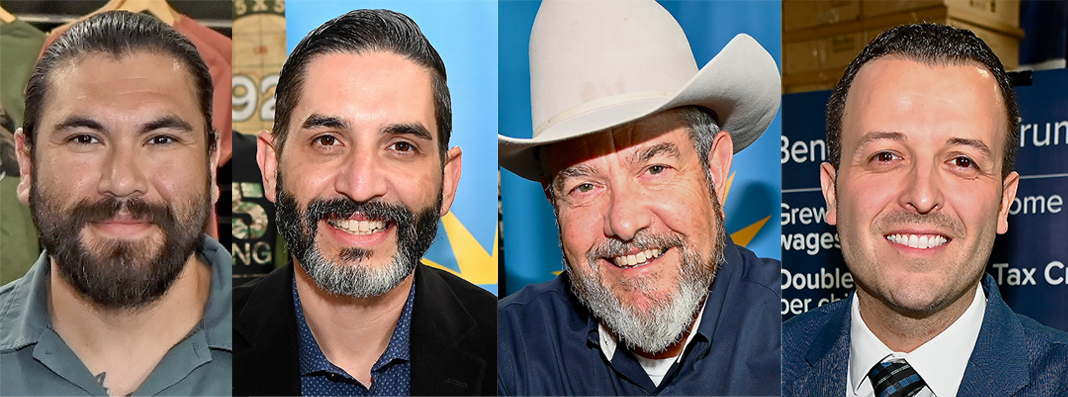
Luis Espindola, Co-Owner, 5×5 Brewing Co., Dante Galeazzi, CEO/President, Texas International Produce, Travis Richard. EVP Texas Regional Bank, and Jorge Martinez, Texas Strategic Director, LIBRE Moderator. Photos by Roberto Hugo González

Each business owner shared firsthand accounts of how the Tax Cuts and Jobs Act impacted their operations. According to their statements during the meeting, the tax reform provided financial relief, allowing them to reinvest in their businesses, hire more employees, and increase employee compensation. These benefits were described as impacting company growth and local employment opportunities.

Following the discussion, Senator Cornyn toured 5×5 Brewing Company, which is located on the grounds of the City of Mission’s Center for Education and Economic Development (CEED). The visit included observing daily operations and engaging with store employees. 

Senator Cornyn has consistently supported the TCJA and was instrumental in its passage during his tenure as Senate Majority Whip. He used the event in Mission to reiterate his support for extending the act’s tax provisions, stating that doing so would help maintain benefits for families and small businesses across Texas.

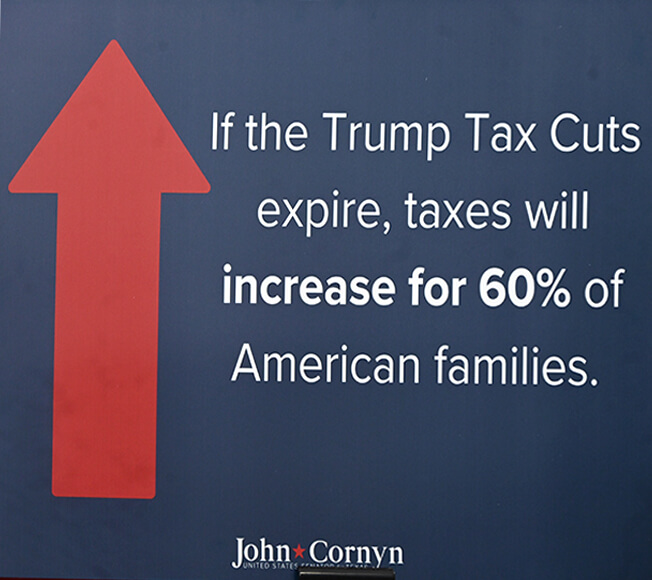
According to Sen. Cornyn, if Congress does not extend the expiring provisions of the TCJA, tax rates will increase for most American families. Estimates show that 62% of families would face higher tax bills starting in 2026, with average increases of $3,000 for Texas households. The Child Tax Credit would be reduced by half, and the standard deduction would revert to pre-2018 levels.
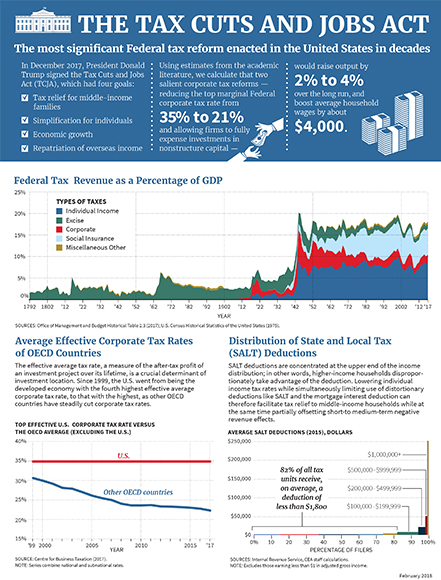
The TCJA included reducing the top corporate tax rate from 35% to 21%, immediate expensing of certain capital investments, and reforms to international tax rules. These provisions were designed to enhance U.S. competitiveness, promote economic growth, and simplify the tax code. According to federal economic data from the two years following the TCJA’s enactment, real wages and median household income rose, and unemployment rates declined.

As of April 24, 2025, Congress has not yet scheduled a definitive vote on extending the expiring provisions of the Tax Cuts and Jobs Act (TCJA). However, legislative groundwork is underway. The House and Senate passed a concurrent budget resolution in early April, enabling the budget reconciliation process to advance tax legislation with a simple majority vote, bypassing the Senate filibuster.

TCJA remains in effect for now, but the potential expiration of several of its core provisions has become a central issue in tax policy discussions. 

The roundtable in Mission, Texas, provided a platform for direct communication between a U.S. Senator and small business leaders, individuals often described as the driving force behind the American economy. Their participation offered localized insight into how federal tax policy affects day-to-day business decisions and community-level growth.

Courtesy image

Eagle Pass CBP Officers Seize More Than $10 Million in Liquid Meth

Buckets containing nearly 1,149 pounds of liquid methamphetamine seized by CBP officers at Eagle Pass Port of Entry. USCBP image

EAGLE PASS, Texas — U.S. Customs and Border Protection, Office of Field Operations officers assigned to the Eagle Pass Port of Entry seized alleged liquid methamphetamine that totaled more than $10 million in street value.

“Our frontline CBP officers maintained strict vigilance, utilized high tech tools and took down a significant amount of liquid methamphetamine,” said Port Director Pete Beattie, Eagle Pass Port of Entry. “Seizures like these illustrate perfectly CBP’s ongoing commitment to upholding CBP’s border security mission and protecting our communities.”

The seizure occurred on April 20 at the Eagle Pass International Bridge when a CBP officer referred a 46-year-old female Mexican citizen driving a 2000 Dodge pickup for secondary inspection. Following a thorough examination that included a nonintrusive inspection system scan, CBP officers discovered a total of nearly 1,149 pounds of alleged liquid methamphetamine within an external fuel tank.

The narcotics have a street value of $10,562,320.

CBP seized the narcotics and the vehicle. Homeland Security Investigations special agents arrested the driver and initiated a criminal investigation. 

Violent Fugitives on Texas’ 10 Most Wanted List Nabbed

The Texas Department of Public Safety (DPS) announces two of Texas’ 10 Most Wanted Fugitives are off the streets following their recent arrests in South and North Texas. Photo: Texas DPS

AUSTIN – The Texas Department of Public Safety (DPS) announces two of Texas’ 10 Most Wanted Fugitives are off the streets following their recent arrests in South and North Texas. Fugitives Hector Padilla Jr. and Rondarrius Evans—who was just added to the List earlier this month—were taken into custody on April 20 and 22, respectively. A Crime Stoppers reward will not be paid in either case.

Hector Padilla Jr., 35, was arrested by DPS Special Agents at an apartment complex in Laredo on Sunday. Padilla has a lengthy and violent criminal history out of Webb Co., including multiple convictions for aggravated assault with a deadly weapon.

Padilla had been wanted out of Webb Co. since December 2024 for a probation violation stemming from a prior conviction for aggravated assault with a deadly weapon. More information on Padilla’s capture can be found here.

Rondarrius Davon Idae Evans, 21, was taken into custody in Downtown Dallas on Tuesday. Working off investigative information, DPS Special Agents, in coordination with DPS’ Special Response Team (SRT), the Mesquite Police Department, City of Dallas Fire Marshal’s Office and the Dallas Co. Marshal’s Office, located and arrested him.

Evans had been wanted out of Bowie Co. since August 2024 for two counts of capital murder for his alleged involvement in a double homicide that occurred on July 6, 2024, in New Boston. Additionally, on March 14, 2025, a warrant was issued out of Titus Co. for his arrest for failure to appear in court for a prior drug-related offense. More information on Evans’ capture can be found here.

Funded by the Governor’s Public Safety Office, Texas Crime Stoppers offers cash rewards to any person who provides information that leads to the arrest of one of Texas’ 10 Most Wanted Fugitives, Sex Offenders or Criminal Illegal Immigrants. So far in 2025, DPS and other agencies have arrested 25 Texas 10 Most Wanted Fugitives, Sex Offenders and Criminal Illegal Immigrants, including six sex offenders and nine criminal illegal immigrants—with $25,000 in rewards being paid for tips that yielded arrests.

To be eligible for cash rewards, tipsters MUST provide information to authorities using one of the following three methods:

  • Call the Crime Stoppers hotline at 1-800-252-TIPS (8477).
  • Submit a web tip through the DPS website by selecting the fugitive you have information about, then clicking on the link under their picture.
  • Submit a Facebook tip by clicking the “SUBMIT A TIP” link (under the “About” section).

All tips are anonymous—regardless of how they are submitted—and tipsters will be provided a tip number instead of using a name.

DPS investigators work with local law enforcement agencies to select fugitives for the Texas 10 Most Wanted Fugitives, Sex Offenders and Criminal Illegal Immigrants Lists. You can find the current lists—with photos—on the DPS website.

Do not attempt to apprehend these fugitives; they are considered armed and dangerous.

###(HQ 2025-043)

The Tomato Suspension Agreement with Mexico Faces Termination

Dante Galeazzi, CEO/President, Texas International Produce Association, Hidalgo County Precinct 4 Commissioner Ellie Torres, and Roma City Manager Alejandro Barrera. Photos by Roberto Hugo González

By Roberto Hugo González

The Tomato Suspension Agreement (TSA), originally established in 1996 between the United States and Mexico, has long served as a critical framework regulating the importation of Mexican tomatoes. It has provided economic stability, enforceable trade conditions, and a year-round supply of fresh tomatoes to the U.S. market. In early April 2025, the U.S. Department of Commerce announced its intent to terminate the agreement, a decision set to go into effect on July 14, 2025, introducing a 20% tariff on imported Mexican tomatoes.

Key stakeholders across Texas—Commissioner Ellie Torres (Hidalgo County, Pct. 4), Dante Galeazzi (CEO/President, Texas International Produce Association), and Alejandro Barrera (City Manager, Roma, TX)—have voiced urgent opposition. Their unified message is clear: Terminating the TSA would trigger widespread economic harm, disrupt supply chains, raise consumer prices, and erode decades of trade progress. The call to action is for policymakers and citizens to advocate for the agreement’s preservation or modernization, rather than its dissolution.

Commissioner Ellie Torres stated, “We are here to discuss a critical issue that affects not only our local economy, but also the livelihoods of thousands of Texans.” Speaking about her recent testimony before the Texas legislature in support of House Committee Resolution 108, Torres emphasized, “This agreement has been a cornerstone of fair trade and economic stability and its potential termination poses a significant threat to our community.” According to Torres, the imposition of a 20% tariff on Mexican tomatoes will have a “devastating impact on the region, particularly in the Rio Grande Valley, where 50% of Mexican tomatoes enter the U.S. through ports of entry in Pharr, McAllen, Roma, and Laredo.”

The tomato trade supports over 32,000 jobs in Texas and contributes more than $4 billion to the state’s economy. Commissioner Torres highlighted anticipated consumer impacts, stating, “We anticipate that with this tariff, the price of tomatoes will increase up to about 50%,” which would affect numerous food items and raise the cost of living, especially in South Texas. Torres added, “The potential loss of these jobs and the disruption to our agricultural economy will be catastrophic from growers and packers to transporters and retailers.”

Dante Galeazzi, CEO and President of the Texas International Produce Association, also emphasized the long-standing importance of the agreement. “Since 1996, the tomato suspension agreement has been an absolute success,” he said, pointing to its role in establishing floor prices, ensuring quality inspections, and setting standards for distressed produce. Galeazzi referred to an economic analysis released by Texas A&M University, which found that Mexican tomato imports generate $8.33 billion in economic activity in the U.S. annually. “Every $1 of Mexican tomatoes imported into our country produces $2.67 of economic return,” Galeazzi stated.

Galeazzi also addressed job impacts, noting that “more than 47,000 jobs in the United States” are directly connected to tomato imports, with “more than 30,000 of those jobs here in Texas.” He stressed the importance of the agreement to border communities and said that removing it would put entire towns at risk. Galeazzi explained that last year, Texas processed 2.19 billion pounds of fresh tomatoes from Mexico, amounting to over 47% of all fresh tomatoes consumed in the U.S. “Texas is crucial to tomato trade,” he said.

Alejandro Barrera, City Manager for Roma, Texas, described the agreement’s relevance to local economic development. “This agreement is not just a distant policy issue. It is a direct, tangible lifeline for our local economy, our workforce, and our future,” Barrera said. Roma’s port of entry, the Roma-Miguel Aleman International Bridge, sees around 200 commercial trucks cross into the U.S. daily, and nearly 60% of imports through the port are produce. “Of that, approximately 20% are tomatoes,” he noted.

Barrera reported that Roma processes approximately 50,000 commercial shipments annually and has experienced exponential growth. The city’s new industrial park was developed under the assumption that international produce trade would continue. “The removal of the tomato suspension agreement will not only disrupt this growth, it will reverse it,” he said. According to Barrera, “Thousands of shipments and the jobs and the revenue tied to them would be at risk,” including customs brokers, warehouse operators, logistics teams, and inspectors.

In response to questions regarding domestic production capacity, Galeazzi addressed the issue of year-round supply. “We do have tomato industry here in the U.S., but the problem is we can’t grow the tomatoes year-round here in the U.S. We simply don’t have the weather, nor do we have the resources, labor, water, or infrastructure,” he said. Galeazzi emphasized that Mexico has invested billions of dollars in greenhouses and infrastructure that allow for production volumes and varieties not possible in the U.S. “We really need the production of Mexico alongside U.S. production to be able to ensure tomatoes are here in the U.S. marketplace year-round,” he stated.

Galeazzi also reported ongoing discussions with federal leaders. “We are speaking directly to the Department of Commerce. We’re also engaging with our senators and congressional representatives,” he said. He confirmed that state and municipal leaders, including those from Pharr and Roma, are actively participating in these efforts.

All three speakers called on the public to reach out to their elected officials. “I urge all of you to call your U.S. representative and senators and tell them to support the Tomato Suspension Agreement,” Commissioner Torres said. Barrera concluded, “Roma’s proud to be a key player in this trade network. We’re ready to grow, but we need the foundation of this agreement to remain in place.”

High-Ranking Tren De Aragua Member in Custody on Terrorism & International Drug Distribution Charges

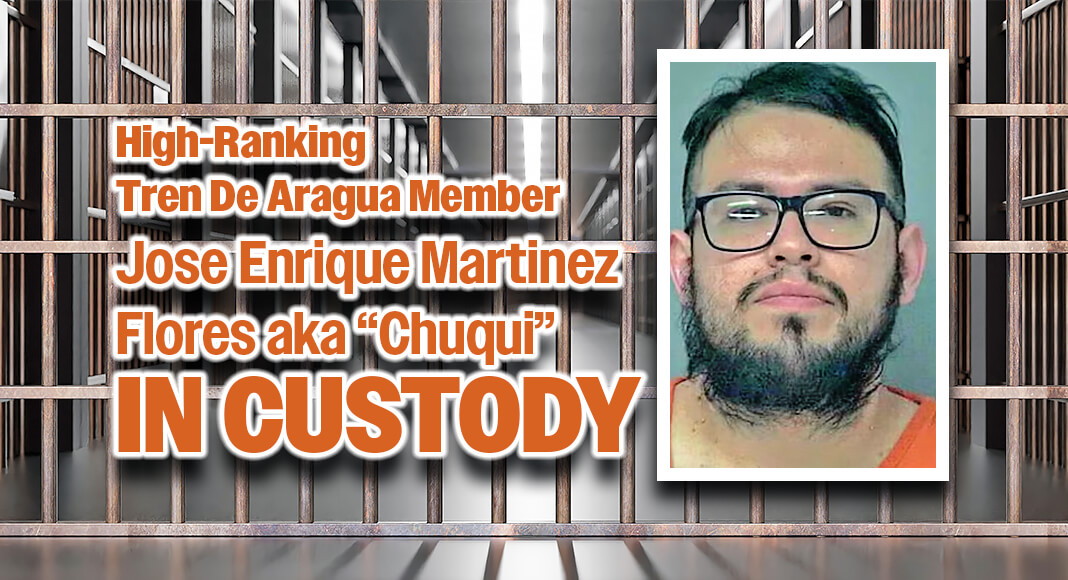
Jose Enrique Martinez Flores aka “Chuqui,” 24, is charged in the Southern District of Texas (SDTX) with conspiring to provide and providing material support to a designated foreign terrorist organization as well as conspiracy and distribution of cocaine in Colombia intended for distribution in the United States. Image: Public Domain. Bgd for illustration purposes

U.S. Attorney’s Office, Southern District of Texas

HOUSTON – A five-count superseding indictment has been unsealed charging a Venezuelan national and alleged high-ranking member of the designated foreign terrorist organization Tren de Aragua (TdA).  

Jose Enrique Martinez Flores aka “Chuqui,” 24, is charged in the Southern District of Texas (SDTX) with conspiring to provide and providing material support to a designated foreign terrorist organization as well as conspiracy and distribution of cocaine in Colombia intended for distribution in the United States.

“TdA is not a street gang – it is a highly structured terrorist organization that put down roots in our country during the prior administration,” said Attorney General Pamela Bondi. “Today’s charges represent an inflection point in how this Department of Justice will prosecute and ultimately dismantle this evil organization, which has destroyed American families and poisoned our communities.”

“For the past few years, foreign gangs like TdA have more or less been able to enter our country with impunity, coming here to distribute deadly drugs and terrorize American citizens. That ends now. This Department of Justice is committed to uprooting this terrorist gang, dismantling its criminal operations, and either imprisoning its members or removing them from the country. SDTX is proud to lead this fight,” said U.S. Attorney Nicholas J. Ganjei.”

“TdA is a direct threat to our national security, to our communities, and to Americans,” said FBI Director Kash Patel. “Together with our law enforcement partners, the FBI continues in our pursuit to eliminate this violent terrorist organization from our streets, and today’s announcement makes it clear that these criminals, especially the leaders of these cartels, have no place in our country.”

“This joint Drug Enforcement Administration (DEA) – FBI operation – alongside partners in the U.S. and Colombia – is further evidence that we must continue to focus our efforts on members of TdA who continue to pump poison into our communities,” said DEA Acting Administrator Derek Maltz. “This is another example of DEA’s tenacity to hunt these networks down, wherever they operate, and crush their evil grip on American lives.”

Colombian authorities arrested Flores in Colombia March 31 pursuant to a provisional arrest warrant the United States had requested. He remains in custody in Colombia pending further proceedings. 

A federal grand jury in Houston returned the superseding indictment April 8. 

According to the allegations, Flores is charged with one count of conspiring to provide material support to TdA in the form of personnel (including himself) and services and one count of providing material support to TdA. The indictment also alleges one count of international drug distribution conspiracy based on his involvement in the distribution of five kilograms of cocaine or more and two substantive counts of international drug distribution.

The Department of State designated TdA as a foreign terrorist organization and Specially Designated Global Terrorist Feb. 20. 

According to information presented to the court, Flores is a high-ranking TdA leader in Bogota, Colombia, and is part of the inner circle of senior TdA leadership. 

Flores also allegedly caused the delivery of approximately five kilograms or more of cocaine for international distribution, proceeds that were used to further TdA’s criminal goals.

If convicted, he faces up to life in prison and a possible $10 million fine. 

The FBI and DEA conducted the investigation with the assistance of the Houston Police Department, Harris County Sheriff’s Office, Colombian National Police and the Colombian Attorney General’s Office (Fiscalía General de la Nación). The Justice Department’s Office of International Affairs and the Criminal Division’s Narcotic and Dangerous Drug Section’s Office of Judicial Attaché in Bogotá, Colombia, provided significant assistance. 

Assistant U.S. Attorneys Casey N. MacDonald and Anibal J. Alaniz of the SDTX are prosecuting the case along with Deputy Director David C. Smith from the Department of Justice’s Joint Task Force Vulcan (JTFV). 

JTFV was created in 2019 to eradicate MS-13 and now expanded to target TdA and is comprised of U.S. Attorney’s Offices across the country. Those include SDTX; Southern and Eastern Districts of New York; Northern District of Ohio; Districts of New Jersey, Utah, Massachusetts, Nevada and Alaska; Eastern District of Texas; Southern District of Florida; Eastern District of Virginia; Southern District of California; and the District of Columbia, as well as the Department of Justice’s National Security Division and the Criminal Division. Additionally, the FBI; DEA; Immigration and Customs Enforcement – Homeland Security Investigations; Bureau of Alcohol, Tobacco, Forearms and Explosives; U.S. Marshals Service; and Federal Bureau of Prisons have been essential law enforcement partners with JTFV.

This case is also a part of Operation Take Back America, a nationwide initiative that marshals the full resources of the Department of Justice to repel the invasion of illegal immigration, achieve the total elimination of cartels and transnational criminal organizations and protect our communities from the perpetrators of violent crime. Operation Take Back America streamlines efforts and resources from the Department’s Organized Crime Drug Enforcement Task Forces and Project Safe Neighborhood.

An indictment is merely an allegation. All defendants are presumed innocent until proven guilty beyond a reasonable doubt in a court of law.

Updated April 23, 2025

Former U.S. Army Intelligence Analyst Sentenced for Selling Sensitive Military Information to Chinese Government

Korbein Schultz, 25, of Wills Point, Texas, pleaded guilty in August 2024 to conspiring to collect and transmit national defense information, unlawfully exporting controlled information to China, and accepting bribes in exchange of sensitive, non-public U.S. government information. Image for illustration purposes

U.S. Attorney’s Office, Middle District of Tennessee

WASHINGTON, DC – A former U.S. Army intelligence analyst was sentenced today to 84 months in prison for conspiring to collect and transmit national defense information, including sensitive, non-public U.S. military information, to an individual he believed was affiliated with the Chinese government.

Korbein Schultz, 25, of Wills Point, Texas, pleaded guilty in August 2024 to conspiring to collect and transmit national defense information, unlawfully exporting controlled information to China, and accepting bribes in exchange of sensitive, non-public U.S. government information.

“This defendant swore an oath to defend the United States — instead, he betrayed it for a payout and put America’s military and service members at risk,” said Attorney General Pamela Bondi. “The Justice Department remains vigilant against China’s efforts to target our military and will ensure that those who leak military secrets spend years behind bars.”

“This sentencing is a stark warning to those who betray our country: you will pay a steep price for it,” said FBI Director Kash Patel. “The People’s Republic of China is relentless in its efforts to steal our national defense information, and service members are a prime target. The FBI and our partners will continue to root out espionage and hold those accountable who abandon their obligation to safeguard defense information from hostile foreign governments.”

“Those who collaborate with America’s foreign adversaries put our country, and those who defend it, at grave risk and we will do whatever it takes to hold them accountable for their crimes,” said Acting U.S. Attorney Robert E. McGuire for the Middle District of Tennessee. “We will proudly stand in support of our men and women in uniform and work diligently to protect them from people like the defendant who would sell them out for a few bucks.”

“Protecting classified information is paramount to our national security, and this sentencing reflects the ramifications when there is a breach of that trust,” said Brigadier General Rhett R. Cox, Commanding General of the Army Counterintelligence Command. “This Soldier’s actions put Army personnel at risk placing individual gain above personal honor. Army Counterintelligence Command, in close collaboration with the Department of Justice, the Federal Bureau of Investigation, and the Intelligence Community, remains steadfast in our commitment to safeguarding our nation’s secrets and urges all current and former Army personnel to report any suspicious contact immediately.”

According to court documents, between May 2022 until his arrest in March 2024, Schultz engaged in an ongoing conspiracy to provide dozens of sensitive U.S. military documents — many containing export-controlled tactical and technical information — directly to a foreign national residing in the People’s Republic of China. Despite clear indications that this individual, who is referenced in the Indictment as Conspirator A, was likely connected to the Chinese government, the defendant continued the relationship in exchange for financial compensation. In exchange for approximately $42,000, Schultz provided documents and data related to U.S. military capabilities, including:

His Army unit’s operational order before it was deployed to Eastern Europe in support of NATO operations;

Lessons learned by the U.S. Army from the Ukraine/Russia conflict applicable to Taiwan’s defense;

Technical manuals for the HH-60 helicopter, F-22A fighter aircraft, and Intercontinental Ballistic Missile systems;

Information on Chinese military tactics and the People’s Liberation Army Rocket Force;

Details on U.S. military exercises in the Republic of Korea and the Philippines;

Documents concerning U.S. military satellites and missile defense systems like the High Mobility Artillery Rocket System (HIMARS) and Terminal High Altitude Area Defense (THAAD).

Tactics for countering unmanned aerial systems in large-scale combat operations.

Conspirator A first contacted the defendant through a freelance web-based work platform shortly after the defendant received his Top Secret/Sensitive Compartmented Information (TS/SCI) clearance. Masquerading as a client from a geopolitical consulting firm, Conspirator A solicited the defendant to produce detailed analyses on U.S. military capabilities and planning, particularly in relation to Taiwan and the Russia-Ukraine conflict.

As the relationship progressed, Conspirator A’s demands grew increasingly specific and sensitive — requesting technical manuals, operational procedures, and intelligence assessments. Conspirator A made explicit his interest in materials that were not publicly available and encouraged the defendant to seek out higher levels of classification, emphasizing “exclusiveness” and “CUI and better.”  Schultz agreed to obtain higher levels of classified information for Conspirator A in exchange for money.

The defendant, fully aware of the grave national security implications, used his position and access to restricted databases — including closed U.S. government computer networks — to download and transmit at least 92 sensitive U.S. military documents.

The case also revealed attempts by the defendant to recruit his friend and fellow Army intelligence analyst into the conspiracy. At the time, Schultz’s friend was assigned to the U.S. Department of Defense’s Indo-Pacific Command (INDOPACOM), which is the combatant command that covers China and its regional areas of influence. Schultz and Conspirator A discussed the need to recruit another person into their scheme who had better access to classified material. They agreed that such recruitment needed to be done in a “nice and slow fashion.”

The FBI’s Nashville Field Office investigated the case, with valuable assistance from the U.S. Army Counterintelligence Command and the Department of Defense.

Assistant U.S. Attorney Josh Kurtzman for the Middle District of Tennessee and Trial Attorneys Adam Barry and Christopher Cook of the National Security Division’s Counterintelligence and Export Control Section prosecuted the case.

Former CIA Official Pleads Guilty to Acting as a Foreign Agent and Mishandling Classified Material

Dale Britt Bendler, 68, of Miami, Florida, pleaded guilty today to, while being a public official at the Central Intelligence Agency (CIA), acting as a foreign agent required to register under the Foreign Agents Registration Act and removing classified material. Images: Public Domain via Wikimedia Commons

U.S. Department of Justice

Dale Britt Bendler, 68, of Miami, Florida, pleaded guilty today to, while being a public official at the Central Intelligence Agency (CIA), acting as a foreign agent required to register under the Foreign Agents Registration Act and removing classified material, classified up to the SECRET//NOFORN level, from authorized locations without authority and with the intent to retain such material at an unauthorized location.

As described in the plea agreement, starting in 2014, Bendler began working as a full-time contractor at the CIA with a Top Secret/Sensitive Compartmented Information (TS/SCI) security clearance. Before he was a CIA contractor, Bendler spent over 30 years working for the CIA as an intelligence officer and retired as a member of the Senior Intelligence Service in 2014. Beginning in July 2017 and continuing through at least July 2020, while a full-time CIA contractor and TS/SCI clearance holder, Bendler worked with a U.S. lobbying firm and engaged in unauthorized and hidden lobbying and public relations activities on behalf of foreign national clients. As described in the plea agreement, Bendler’s undisclosed lobbying activities included an attempt to use his position and access at the CIA to influence a foreign government’s embezzlement investigation of one of Bendler’s foreign national clients and a separate attempt to use his position and access at the CIA to influence the U.S. government’s decision as to whether to grant a U.S. visa to another of Bendler’s clients, who was alleged to be associated with terrorism financing. In exchange for his unauthorized outside activities, Bendler was paid hundreds of thousands of dollars.

During the course of Bendler’s unauthorized lobbying and public relations activities, Bendler also abused his access to CIA resources and personnel by, among other things, searching classified CIA systems for any information related to his private lobbying clients, improperly storing and disclosing non-public, sensitive, and classified U.S. government information to people not authorized to receive such information, and lying to the CIA and the FBI about his status as a foreign agent and his unauthorized lobbying and public relations activities. The CIA terminated Bendler’s contract and access in September 2020.

In addition to pleading guilty, Bendler consented to the forfeiture of $85,000. Bendler faces a maximum penalty of seven years in prison – two years for acting as a foreign agent while being a public official and five years for mishandling classified material. Bendler is scheduled to be sentenced on July 16.

Sue Bai, head of the Justice Department’s National Security Division, U.S. Attorney Erik S. Siebert for the Eastern District of Virginia, Assistant Director Roman Rozhavsky of the FBI’s Counterintelligence Division and Assistant Director in Charge Steven J. Jensen of the FBI Washington Field Office made the announcement.

The FBI’s Washington Field Office investigated the case.

Trial Attorney Adam P. Barry and Senior Trial Attorney Heather M. Schmidt of the National Security Division’s Counterintelligence and Export Control Section and Assistant U.S. Attorney Gordon D. Kromberg of the U.S. Attorney’s Office for the Eastern District of Virginia are prosecuting the case. Chief Jennifer Kennedy Gellie of the Counterintelligence and Export Control Section provided substantial assistance in this investigation in her prior role as a trial attorney. 

Updated April 23, 2025

Secretary of Education’s Statements on President Trump’s Education Executive Orders

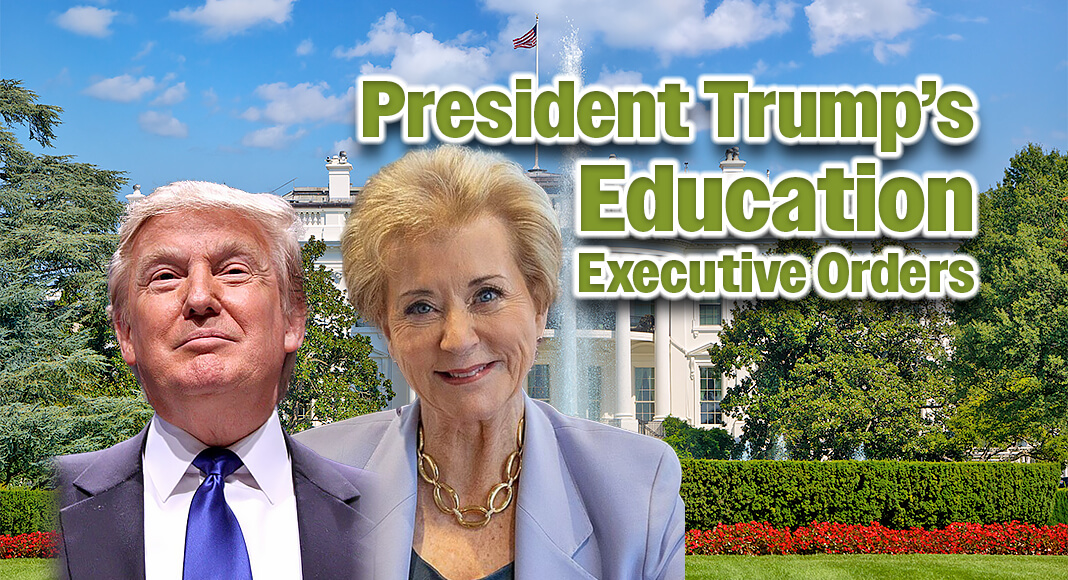
U.S. Department of Education Secretary Linda McMahon released statements in response to President Trump’s six education-related Executive Orders to strengthen our nation’s education system and workforce. Images; Public Domain via Wikimedia Commons. Bgd for illustration purposes

U.S. Department of Education Secretary Linda McMahon released the following statements in response to President Trump’s six education-related Executive Orders to strengthen our nation’s education system and workforce.

Statement on President Trump’s Executive Order to Reform and Strengthen Accreditation

“America’s higher education accreditation system is broken. A small number of institutional accreditors – private, nongovernment entities – decide which institutions and their programs qualify to receive over $100 billion annually in Pell Grants, federal student loans, and other taxpayer-subsidized higher education funding. The existing accreditation monopoly raises costs, contributes to the ever-increasing tuition and fees faced by American families, favors legacy four-year institutions, blocks new accreditors from the market, interferes with states’ governing board decisions, and pushes universities in ideological directions when they should be focused on core subjects. The result is more bureaucracy, less innovation, sprawling DEI administrative complexes, and burdensome oversight by unaccountable accreditors rather than state education leaders and duly appointed governing board members. 

President Trump’s Executive Order will bring long-overdue change by accelerating the recognition of new accreditors and refocusing existing accreditors on helping member institutions improve the student outcomes families care most about. Instead of pushing schools to adopt a divisive DEI ideology, accreditors should be focused on helping schools improve graduation rates and graduates’ performance in the labor market. The Department of Education will create a competitive marketplace of higher education accreditors, which will give colleges and universities incentives and support to focus on lowering college costs, fostering innovation, and delivering a high-quality postsecondary education.” 

Statement on President Trump’s Executive Order to End Harmful Foreign Influence at American Universities

“Colleges and universities have a legal duty to report foreign gifts and contracts and, in President Trump’s first term, the Department of Education held them to it. Unfortunately, in the last four years, the Biden Administration undermined the structures the President built to do this critical work, allowing nations like China and Qatar to funnel billions of dollars to U.S. universities with little to no oversight. This financial infiltration enabled foreign governments to steal taxpayer-funded intellectual property and reshape how our elite campuses teach about Israel and the Middle East. 

President Trump’s Executive Order will safeguard American interests on campus and protect students. The Department of Education will ‘follow the money,’ put a stop to malign foreign infiltration, secure the research enterprise, and restore American campuses to marketplaces of ideas rather than hosts for foreign propaganda.” 

 Statement on President Trump’s Executive Order to Reinstate Commonsense School Discipline Policies 

“A student’s success in adulthood starts with how they perform in a classroom, and we should teach our kids to discern right and wrong from a young age. Yet, under the Biden-Harris Administration, schools were forced to consider equity and inclusion when imposing discipline. Their policies placed racial equity quotas over student safety – encouraging schools to turn a blind eye to poor or violent behavior in the name of inclusion. Today, President Trump is taking historic and commonsense action to boost school safety standards. Disciplinary decisions should be based solely on students’ behavior and actions.” 

Statement on President Trump’s Initiative to Promote Excellence and Innovation at Historically Black Colleges and Universities 

“The White House initiative highlighted today reinforces President Trump’s commitment to supporting and elevating America’s HBCUs. The Department will work with the Initiative and HBCUs to expand partnerships and share best practices for institutions to become hubs of opportunity and economic engines for local industries and employers. I am eager to elevate and support America’s HBCUs, including in my role on the President’s Board of Advisors for the White House Initiative on HBCUs.” 

Statement on President Trump’s Executive Order to Advance Artificial Intelligence Education for American Youth

“Education should prepare students for success in life, which means that American classrooms must better align their activities to meet the demands of accelerating innovation and a rapidly changing workforce. As Artificial Intelligence (AI) reshapes every industrial sector, it is vitally important that the next generation of students is prepared to leverage this technology in all aspects of their professional lives. The Trump Administration will lead the way in training our educators to foster early and responsible AI education in our classrooms to keep up American leadership in the global economy.” 

Statement on President Trump’s Executive Order to Prepare Americans for High-Paying, Skilled Trade Jobs of the Future 

“Today’s Executive Order is a significant step in ensuring every American can live their American Dream. Not every student needs to attend a four-year university to enter a family-sustaining career. The Trump Administration will support communities across the country that are offering career-aligned programs like apprenticeships and dual enrollment to best meet the needs of their workforce. Our goal is to build on their success and align resources across the country to equip the next generation of American workers.” 

RFK Jr. Announces Plan to Ban Synthetic Food Dyes

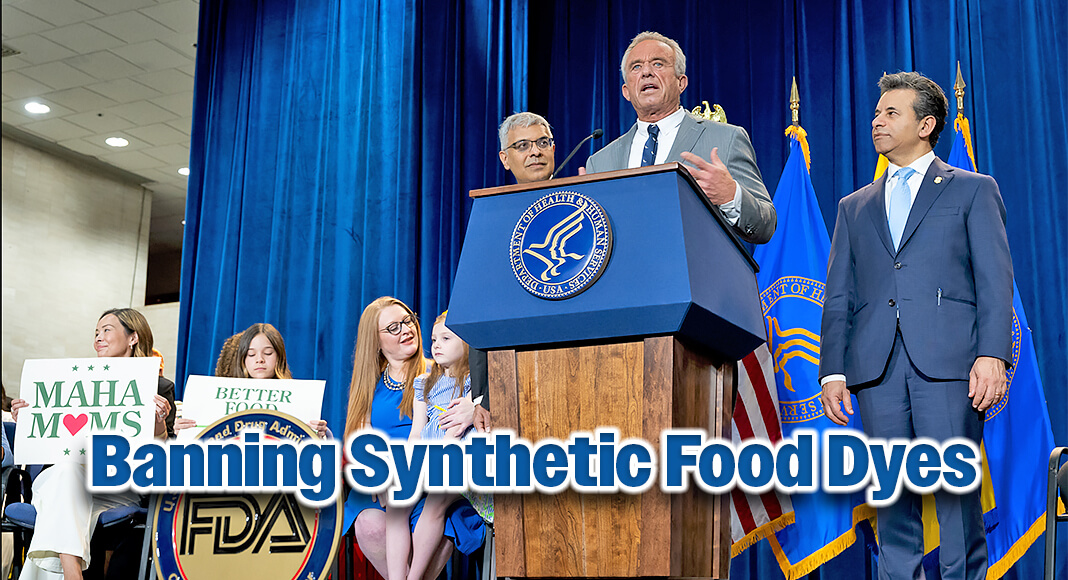
Health and Human Services Secretary Robert F. Kennedy Jr. announced Tuesday that eight government-approved synthetic food dyes will be banned from the U.S. food supply within two years. FDA image

On April 22, 2025, U.S. Health and Human Services Secretary Robert F. Kennedy Jr. announced a plan to phase out eight synthetic food dyes from the American food supply by the end of 2026. The initiative, developed in collaboration with the Food and Drug Administration (FDA), targets petroleum-based dyes, including Red 3, Red 40, Yellow 5, Yellow 6, Blue 1, Blue 2, Green 3, and Orange B. The FDA intends to revoke authorization for Citrus Red No. 2 and Orange B in the coming weeks and work with the food industry to eliminate the remaining dyes voluntarily. 

Synthetic dyes are commonly found in candies, cereals, beverages, baked goods, frostings, and snacks. To facilitate the transition from synthetic dyes, the FDA is expediting the evaluation of natural color alternatives, including calcium phosphate, Galdieria extract blue, gardenia blue, and butterfly pea flower extract.  

During the same press conference, Secretary Kennedy addressed the issue of added sugar in the American diet. He referred to sugar as “poison” and recommended that Americans consume “zero” added sugar. Kennedy acknowledged that the federal government is unlikely to eliminate sugar from food products but emphasized the need for better labeling and new nutrition guidelines advising people to avoid added sugar entirely.  

Kennedy stated, “For too long, some food producers have been feeding Americans petroleum-based chemicals without their knowledge or consent,” said HHS Secretary Robert F. Kennedy, Jr. “These poisonous compounds offer no nutritional benefit and pose real, measurable dangers to our children’s health and development. That era is coming to an end. We’re restoring gold-standard science, applying common sense, and beginning to earn back the public’s trust. And we’re doing it by working with industry to get these toxic dyes out of the foods our families eat every day.”

The FDA’s plan does not currently include formal regulations but relies on voluntary cooperation from the food industry. Some companies, such as W.K. Kellogg, have already committed to reformulating products to remove synthetic dyes.

The following eight petroleum-based synthetic food dyes will be removed from the American food supply by the end of 2026:

  1. FD&C Red No. 40
  2. FD&C Yellow No. 5
  3. FD&C Yellow No. 6
  4. FD&C Blue No. 1
  5. FD&C Blue No. 2
  6. FD&C Green No. 3
  7. Citrus Red No. 2
  8. Orange B

The FDA will initiate the process to revoke authorization for Citrus Red No. 2 and Orange B in the coming months. The remaining six dyes will be eliminated through voluntary cooperation with the food industry.  

Synthetic dyes are commonly found in products such as candies, cereals, beverages, baked goods, frostings, and snacks. To facilitate the transition away from synthetic dyes, the FDA is expediting the evaluation of natural color alternatives, including calcium phosphate, Galdieria extract blue, gardenia blue, and butterfly pea flower extract.

This initiative builds upon a prior FDA ban of Red Dye No. 3, set to be removed from ingestible products by 2027 and 2028. Source: https://www.fda.gov/news-events/press-announcements/hhs-fda-phase-out-petroleum-based-synthetic-dyes-nations-food-supply

Trump Administration Considers Birth Incentives During Falling Fertility Rates

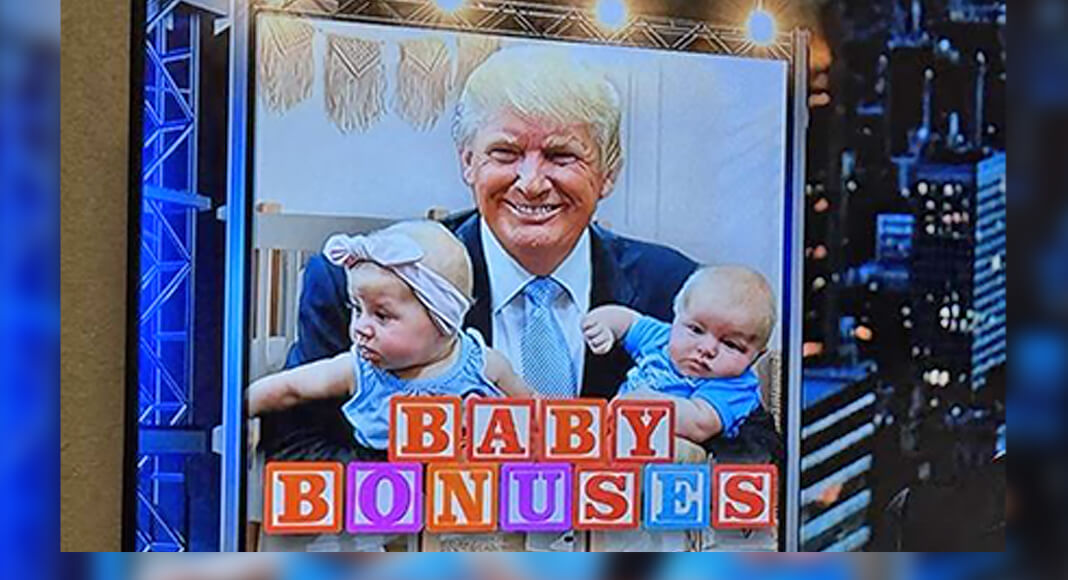
A $5,000 baby bonus per child has been proposed as a financial incentive to encourage childbirth.  Image: Screenshot from Fox News
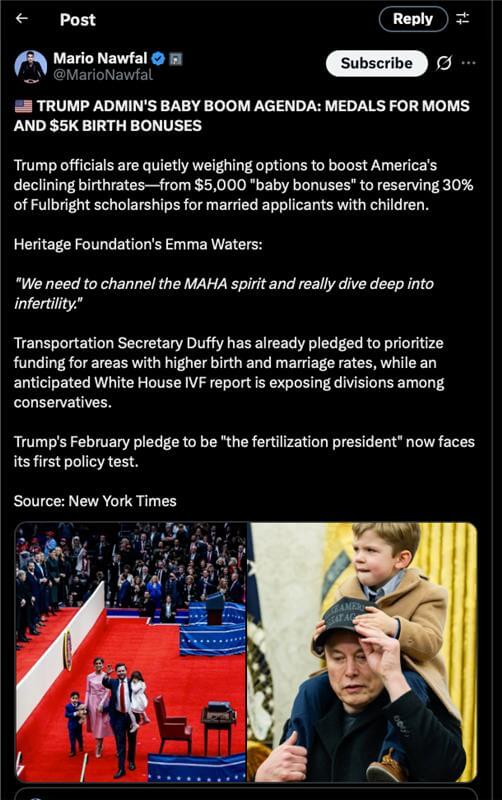
A $5,000 baby bonus per child has been proposed as a financial incentive to encourage childbirth. Image: Screenshot from Fox News

Texas Border Business

The Trump administration is evaluating policy options to increase the national birth rate following a continued decline in U.S. fertility.

According to data released in 2024, the U.S. fertility rate dropped to 54.5 births per 1,000 women aged 15–44 in 2023, the lowest level recorded. This is less than half of the 1957 peak of 122.9.

A $5,000 baby bonus per child has been proposed as a financial incentive to encourage childbirth. A revision of Fulbright scholarship eligibility is under discussion. One proposal suggests reserving up to 30 percent of awards for married applicants with children. Federal infrastructure funding priorities may also be adjusted to favor regions with higher birth and marriage rates, as Transportation Secretary Sean Duffy stated.

On January 29, 2025, Transportation Secretary Sean Duffy issued an Order announcing that the U.S. Department of Transportation (DOT) would prioritize issuing grants, loans, and contracts to communities with “marriage and birth rates higher than the national average.” Source: https://www.wiley.law/alert-DOT-Order-Links-Federal-Transportation-Funds-to-Marriage-and-Birth-Rates?utm_source=chatgpt.com

The White House is preparing a report on in vitro fertilization access and fertility treatments. This report is expected to outline policy considerations related to infertility. The Heritage Foundation, a conservative think tank, has published commentary and recommendations addressing declining fertility and related family policies. Emma Waters, a fellow at the foundation, has called for increased attention to infertility issues.

In February 2025, President Trump stated during a public appearance that he aimed to be the “fertilization president” regarding policy efforts to promote higher birth rates.

The U.S. birth rate has declined for decades, with notable decreases since 2007. Several government agencies and advisory groups are considering demographic and policy responses.

No legislation related to these measures has been passed as of this report.

Image: X

See relates tory: