






Texas Border Business

By Roberto Hugo González / Texas Border Business
Mexico has begun releasing water from key reservoirs as part of its efforts to comply with long-standing delivery obligations to the United States under the 1944 Water Treaty, following months of political pressure from U.S. officials and explicit tariff threats from President Donald Trump.
Under the treaty, Mexico is required to deliver an average of 1.75 billion cubic meters of water, or about 1.42 million acre-feet, to the United States every five years through the Rio Grande’s tributaries. U.S. officials say Mexico has fallen behind in the current cycle, which ends in 2025.
In early December, President Trump said Mexico owed the United States roughly 986 million cubic meters of water, about 799,000 acre-feet. He warned that if at least 246 million cubic meters, or approximately 199,000 acre-feet, were not delivered by December 31, the United States would impose a new 5% tariff on Mexican imports starting in January. Trump said the shortfall was “very unfair” to U.S. farmers, particularly in Texas.
Federal pressure intensified after months of advocacy by Texas lawmakers. Representative Monica De La Cruz said the water deficit had caused “serious harm” to communities in the Rio Grande Valley. In March 2025, she met with President Trump and later said Mexico needed to be held accountable for treaty compliance. In December, she stated that Mexico had agreed to release additional water and described the move as “progress,” while adding that enforcement efforts would continue.
Senators Ted Cruz and John Cornyn also pressed the issue throughout 2024 and 2025. Both warned publicly that Mexico was “significantly behind” on deliveries and urged the U.S. State Department to take more decisive diplomatic action. In November 2024, they introduced the Ensuring Predictable and Reliable Water Deliveries Act, legislation intended to create interim benchmarks and allow diplomatic or economic responses if treaty obligations are not met.
The U.S. State Department later called on Mexico to deliver “the maximum possible amount” of water before the end of the cycle. At the same time, the U.S. Department of Agriculture said treaty compliance was critical for American farmers affected by water shortages.

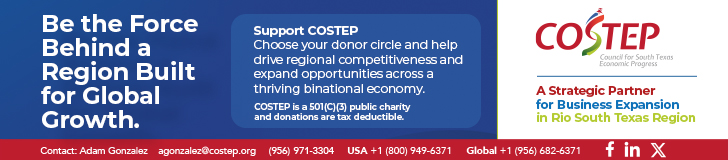
On December 22, Mexico opened the floodgates of the El Cuchillo–Solidaridad Dam in the state of Nuevo León. The dam is one of the primary water sources for the Monterrey metropolitan area and releases water into the San Juan River, a major tributary of the Rio Grande. Federal authorities said about 150 million cubic meters of water, roughly 122,000 acre-feet, or 11% of the dam’s volume, would be released.
Local governments issued warnings following the release. Officials in the municipality of China, Nuevo Leon, Mexico, urged residents to stay away from the river because of rising water levels. At the same time, authorities in General Bravo, Nuevo Leon, Mexico, said a floodgate would be opened shortly after midnight and warned of a possible overnight surge in the San Juan River.
Juan Ramon de la Fuente, Mexico’s Ministry of Foreign Affairs, confirmed that water deliveries to the United States were underway but did not specify the total volume or the delivery schedule. The administration of President Claudia Sheinbaum said the releases were coordinated with state governors and designed to have “minimal impact” on local users. The government also said agricultural use inside Mexico would remain a priority.
Mexican officials have repeatedly pointed to prolonged drought and limited reservoir levels as constraints on water deliveries. U.S. officials, however, argue that the treaty requires Mexico to manage its supplies to meet its commitments over the five-year cycle.
As of late December, the tariff threat remained in place, though U.S. officials acknowledged that the water releases represented a step toward reducing the deficit. Whether the measures will be sufficient to avert trade penalties entirely remains unclear, as both governments continue to assess delivery volumes and treaty accounting before the end-of-year deadline.