
















Texas Border Business




By Roberto Hugo González / Texas Border Business
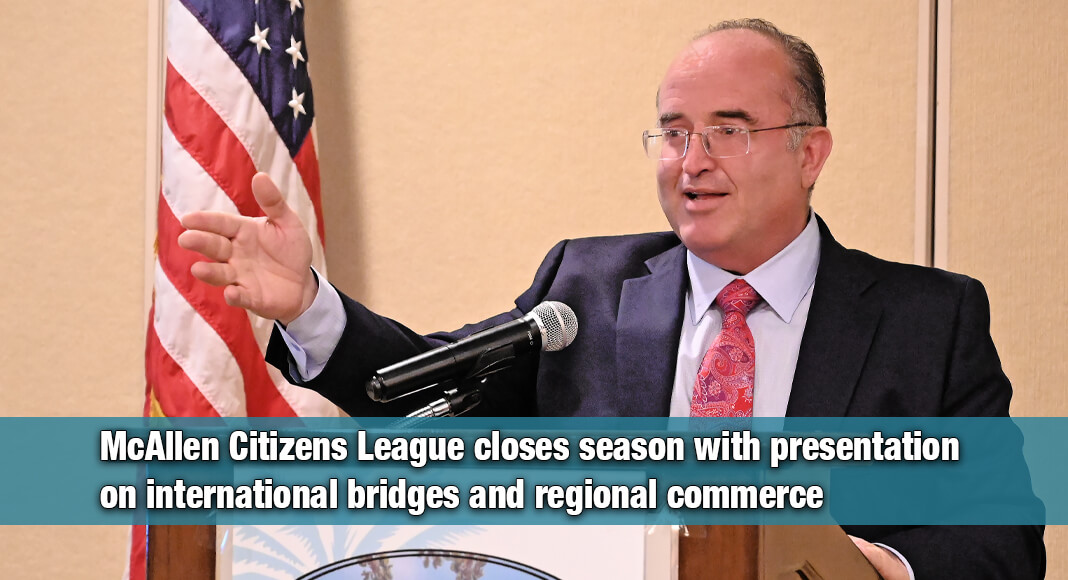
McALLEN, Texas – The McAllen Citizens League held its final program of the season before its summer break at the DoubleTree Suites Hotel in McAllen, where members heard a presentation on the role of the city’s international bridges in trade and regional economic activity.
Opening the event, organizers recognized officers and board members for planning the organization’s programs, including Vice President-Treasurer Elva M. Cerda, board members Rebecca Olaguibel and Annette Franz, Secretary Irma Murray, and Program Chair Ernie Aliseda.




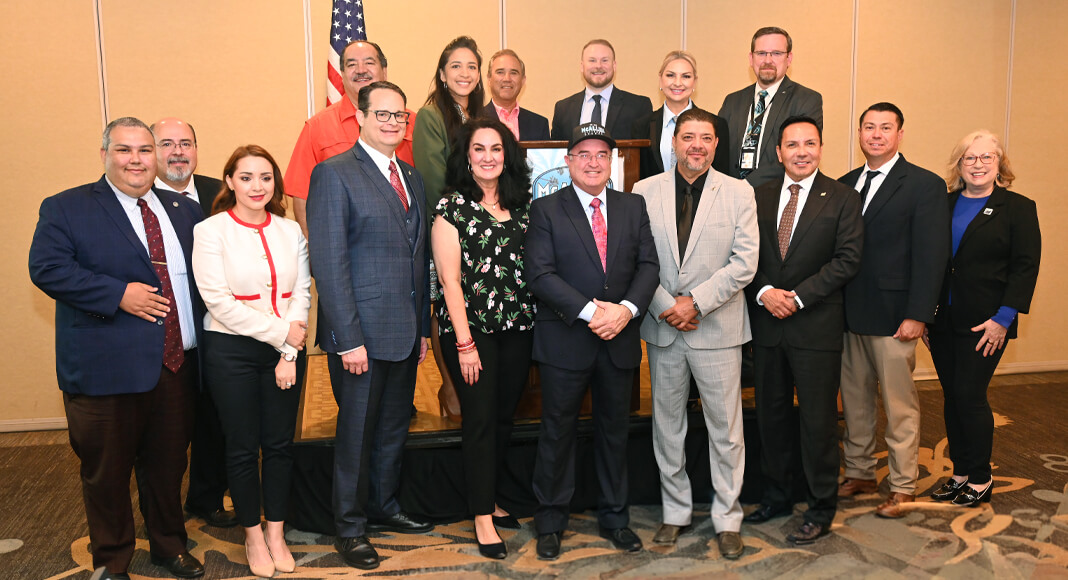
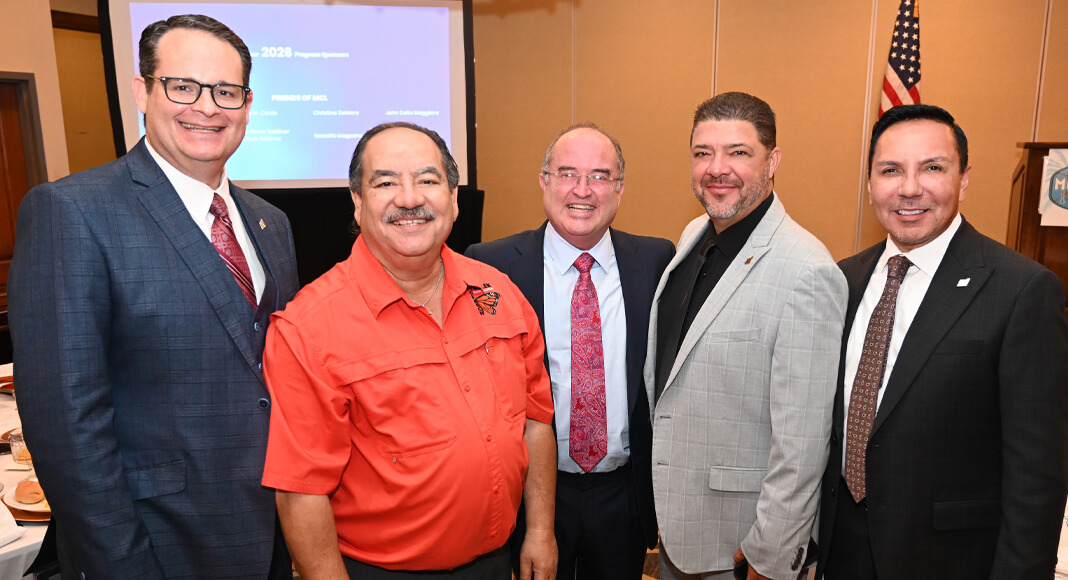
The May 21 program, titled Where Borders Meet Business: The Power of McAllen’s Bridges, featured Juan Olaguibel, assistant city manager of McAllen and superintendent of McAllen Bridge Systems. Organizers said the presentation focused on the role international bridges play in cross-border commerce, logistics, tourism, and regional cooperation.
“Unique in South Texas, McAllen owns and operates its own international bridge system, placing the city at the heart of cross-border commerce, tourism, logistics, and regional cooperation,” organizers said in introducing Olaguibel.
During his presentation, Olaguibel reviewed the history of the McAllen-Hidalgo International Bridge, stating that operations began on July 10, 1926. He said the bridge sustained hurricane damage in 1933 and was rebuilt in 1939. A second bridge span was later added in 1988.
“This year we marked 100 years of operations at the McAllen Hidalgo International Bridge,” Olaguibel said.
Olaguibel described the McAllen-Hidalgo International Bridge as a key crossing because it connects directly to downtown Reynosa. According to Olaguibel, approximately 250,000 vehicles and 120,000 pedestrians cross the bridge monthly. He said it is the only pedestrian bridge in the region and includes a dedicated SENTRI lane for expedited travel into the United States.
McAllen owns and operates both the McAllen-Hidalgo International Bridge and the Anzalduas International Bridge, Olaguibel said. He reported that approximately 125,000 vehicles cross the Anzalduas Bridge each month.
Olaguibel also detailed the city’s $85 million full cargo expansion project at the Anzalduas International Bridge. He said the project was financed through a combination of funding sources, including a loan from the North American Development Bank, state funding, and a grant from the U.S. Department of Transportation.

“This project was an $85 million project,” Olaguibel said. “We are now working with the federal government to start operations here in September of this year through their UCP program.”
Olaguibel said the Unified Cargo Processing program, known as UCP, would allow Mexican customs operations to temporarily function on the U.S. side while facilities are completed in Mexico.
He said the cargo facility is 99% complete and includes 30 loading docks. According to Olaguibel, the crossing will be the first in the nation dedicated exclusively to Customs Trade Partnership Against Terrorism (CTPAT)- certified cargo.
“The idea is that this bridge becomes the fastest bridge in the entire country,” Olaguibel said. “There’s not going to be any other bridge in the country with this type of certification.”
Olaguibel said businesses participating in the CTPAT program undergo pre-vetting and are subject to fewer inspections, allowing cargo to move more efficiently through customs.
He also discussed the strategic location of the Anzalduas bridge and its access to industrial areas in Reynosa and Monterrey. Olaguibel said the bridge is approximately two hours from Apodaca, Nuevo Leon, which he described as a major industrial center with more than 600 industrial parks.
“Once we open for full cargo operations, the impact will go far beyond what we already have in Reynosa,” Olaguibel said.
During a question-and-answer session, Olaguibel addressed challenges involving coordination with Mexican officials. He said frequent turnover among officials has complicated bridge-related negotiations and planning.
“Their turnover is quite a bit, which makes our project very challenging,” Olaguibel said.
Responding to a question about border wait times, Olaguibel said staffing on the U.S. side has improved and that delays in recent months were largely due to inspection procedures on the Mexican side.
“Our port director, Carlos Rodriguez, is fully staffed,” Olaguibel said. “On the U.S. side, we’re fully staffed.”
Olaguibel said Mexican inspections previously caused wait times of two to three hours before travelers reached the U.S. side, but he reported that inspection practices have since eased, and crossing trends have improved.