
















Texas Border Business




STARBASE, Texas –The third generation of Starship and Super Heavy, powered by Raptor 3 and launching from an entirely new launch pad, incorporate learnings from years of flight testing and development.
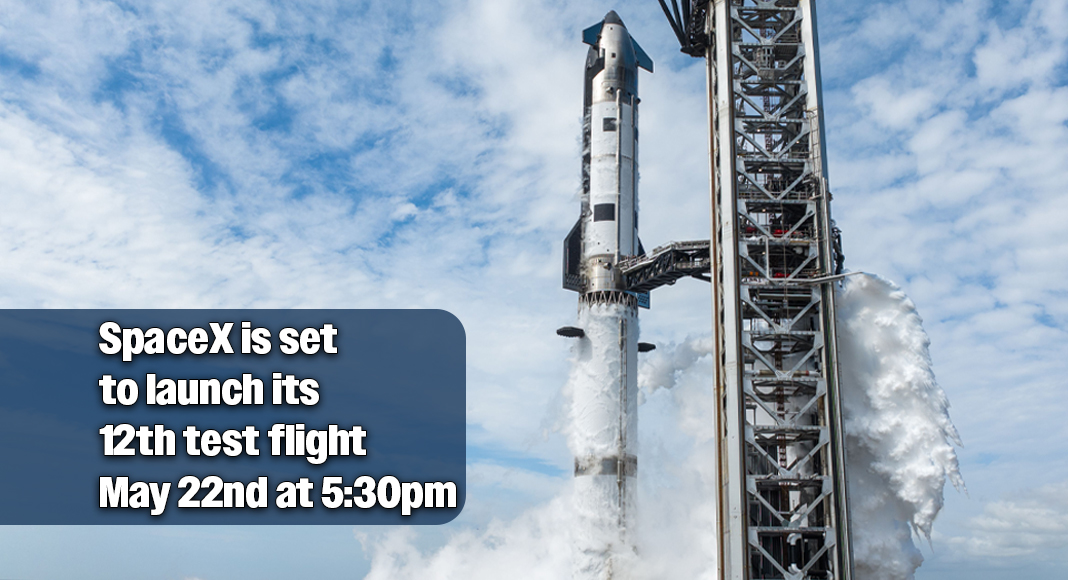
SpaceX is set to launch its 12th test flight on Friday, May 22nd at 5:30pm
You can watch the livestream at: https://www.youtube.com/watch?v=mhJRzQsLZGg



https://www.spacex.com/launches/starship-flight-12
SUPER HEAVY V3 CHANGE HIGHLIGHTS
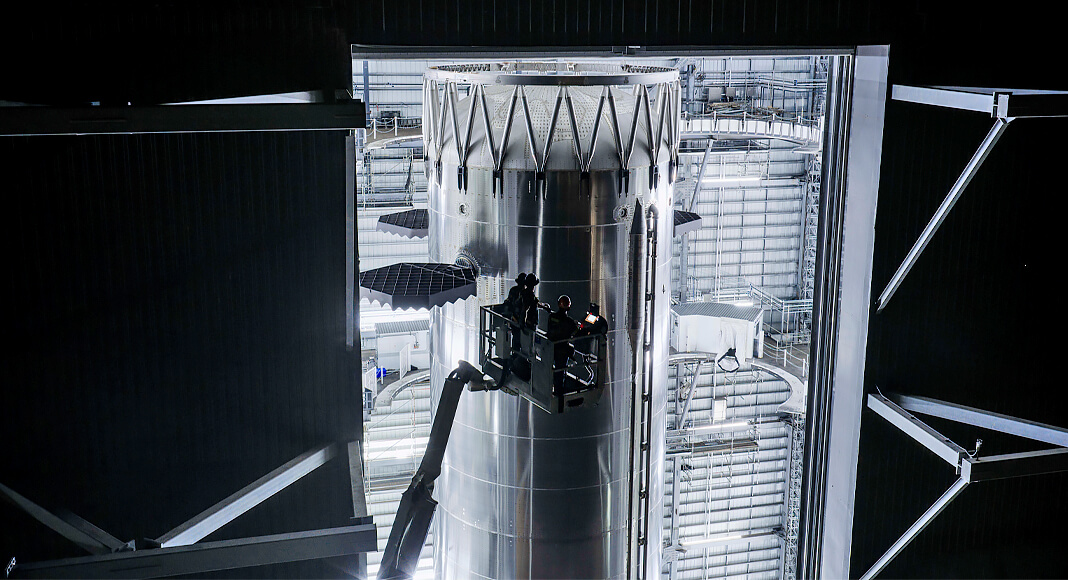
The Super Heavy V3 booster features several significant upgrades. The number of grid fins has been reduced from four to three, with each fin now 50% larger and significantly stronger. These fins include a new catch point and have been re-clocked on the booster to support vehicle lift and catch operations. They have also been lowered to reduce heat exposure from Starship’s engines during hot-staging. Additionally, the grid fin shaft, actuator, and fixed structure have been moved inside the booster’s main fuel tank for better protection.
An integrated hot stage replaces the previous single-use protective interstage. The forward dome of the booster fuel tank is now directly exposed to the Starship upper stage’s Raptor engines upon ignition, with the booster’s internal fuel tank pressure and a non-structural layer of steel protecting it during stage separation. And the actuators on the interstage that connect the ship and booster now retract after separation to further shield them from Raptor exhaust.
The fuel transfer tube, which channels cryogenic fuel from the main tank to the 33 Raptor engines, has been completely redesigned and is now roughly the size of a Falcon 9 first stage. This new design enables all 33 engines to start up simultaneously and faster, more reliable flip maneuvers.
The aft end thermal protection system has been redesigned, with propulsion and avionics systems now tightly integrated to coordinate the distribution of fluids, power, and networking to the 33 Raptor engines. Large individual engine shrouds have been eliminated, and shielding has been added to the surface area between engines and around the thrust vector control hardware on the inner 13 engines. The carbon dioxide fire suppression system has been removed following the deletion of the aft cavity and engine shrouds.
Finally, the booster has gone from a single quick disconnect, which is the primary path for loading fuel and oxidizer into the vehicle, to two physically separated connection points. This change provides additional redundancy between the pad and vehicle connections while allowing the supporting mechanisms to be smaller and less complex.
STARSHIP V3 CHANGE HIGHLIGHTS
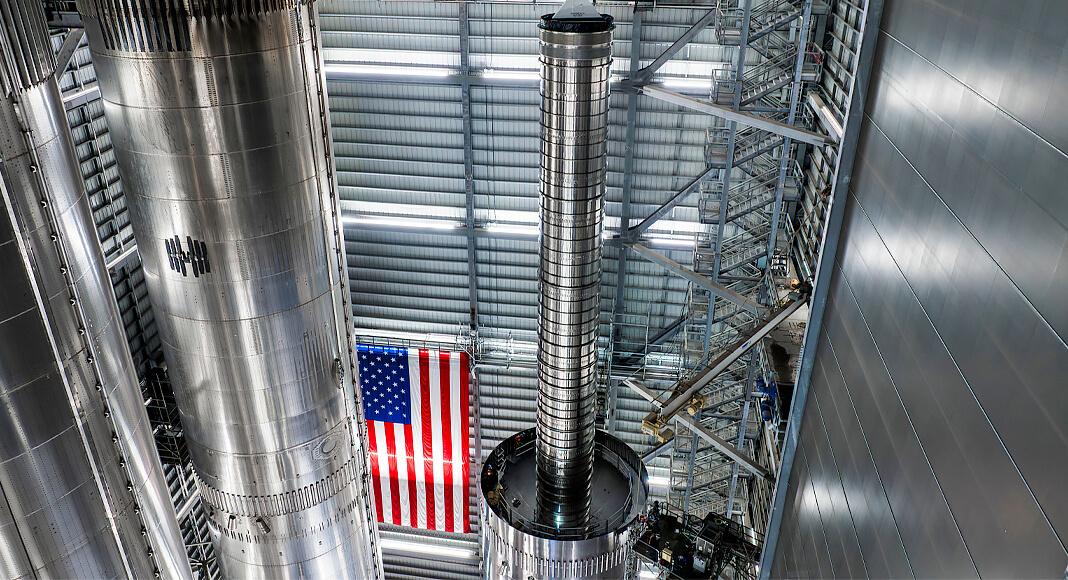
Starship V3 incorporates a clean-sheet redesign of its propulsion systems. These changes enable a new Raptor startup method, increase propellant tank volume, and improve the reaction control system used for steering while in flight. The propulsion updates also reduce contained volumes in the aft end of the vehicle that could trap propellant leakage.
Aft end fluid and electrical systems have been rerouted allowing for the deletion of individual engine shrouds and the large aft close-out volume, which previously required extensive environmental control. The aft flap actuation system has also been upgraded from two actuators per flap to a single actuator with three motors. This improves redundancy for return-to-launch-site operations while reducing mass and cost.
The Starlink PEZ Dispenser mechanism has been enhanced with new actuators and inverters, increasing deployment speed for each satellite.
Starship is now designed to be capable of long-duration flights with more efficient reaction control systems, isolation valves for high-pressure gases, 100% vacuum jacketing coverage of the header feed system, a high-voltage electrically actuated cryogenic recirculation system, and a dedicated system for managing cryogenic propellant interactions with the engines during extended coasts in space. Four docking drogues have also been added on the leeward side of the vehicles to enable docking with other Starships, along with propellant feed connections for ship-to-ship propellant transfer.
AVIONICS
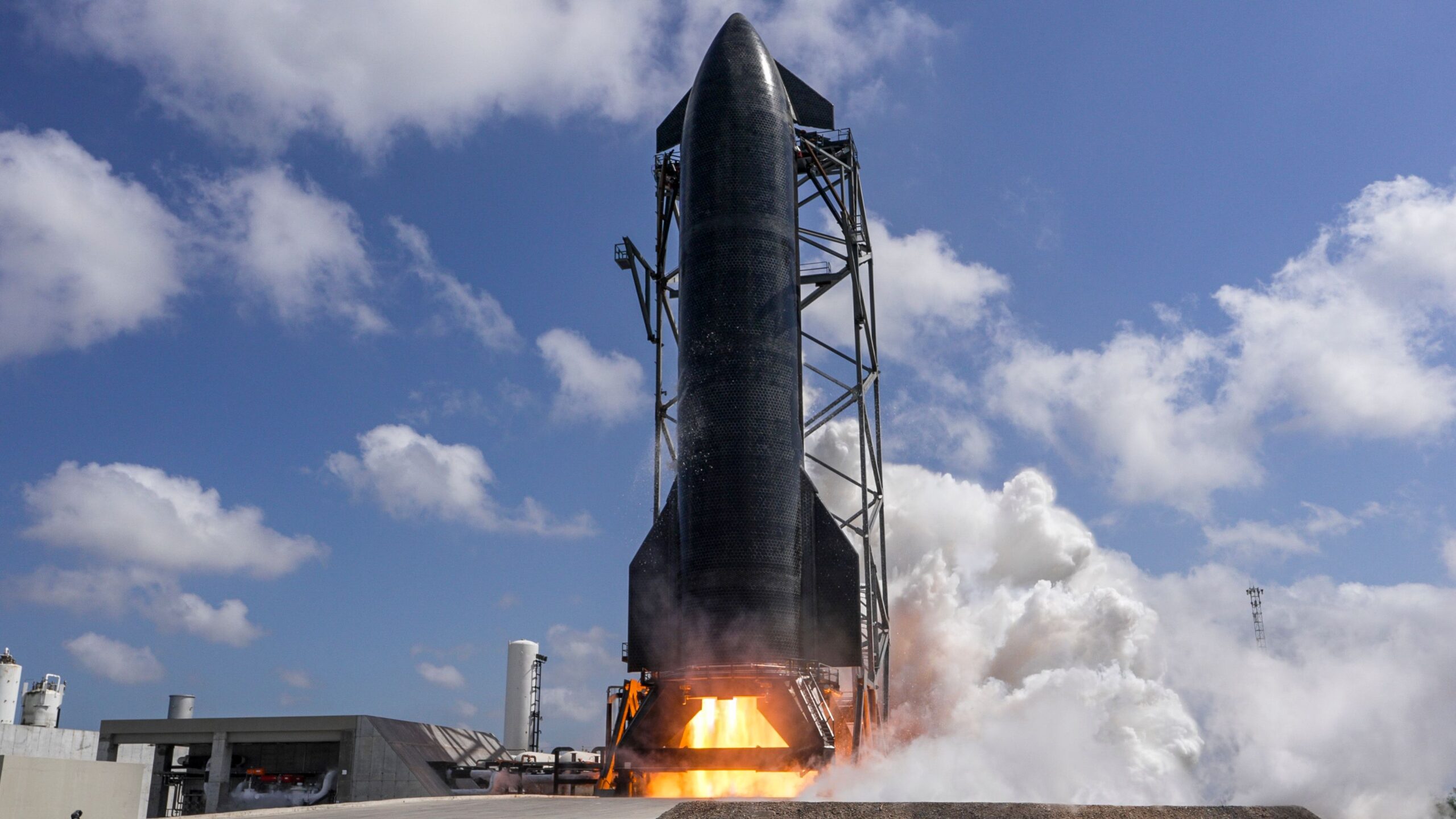
Starship and Super Heavy V3 will debut advanced avionics capabilities designed for high flight-rate, full reusability, and enhanced reliability. At the heart of the two vehicle systems, approximately 60 custom avionics units integrate batteries, inverters, and high-voltage electrical distribution into single assemblies, capable of delivering ~9MW of peak power across the vehicles with distributed fault isolation. The upgraded multi-sensor navigation is designed for precision autonomous flight with high redundancy across all phases of upcoming missions and environmental conditions. New precision radio frequency sensors for measuring propellant levels in microgravity should enable accurate propellant monitoring ahead of upcoming in-space propellant transfer operations. And finally, upgraded cameras will provide approximately 50 views to give comprehensive vehicle coverage while powered by 480Mbps of redundant high-speed and low-latency Starlink real-time connectivity.
RAPTOR 3 CHANGE HIGHLIGHTS
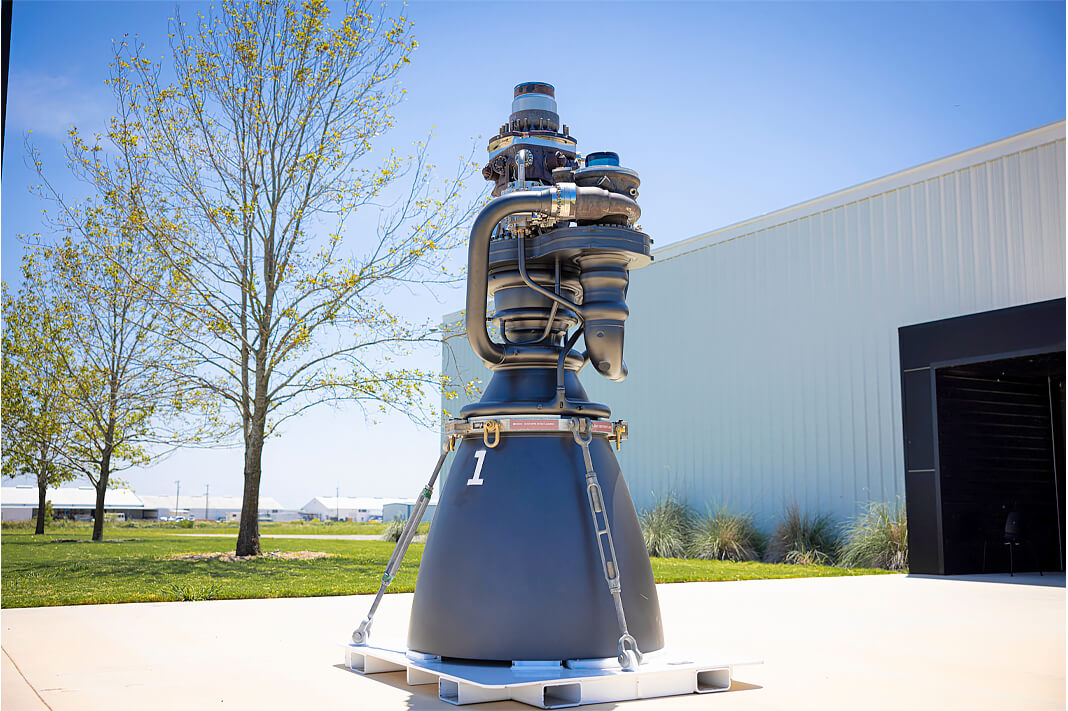
Raptor 3 engines deliver increased thrust, with sea-level variants now producing 250 tf (551,000 lbf) up from 230 tf (507,000 lbf), while vacuum engines produce 275 tf (606,000 lbf) up from 258 tf (568,000 lbf)
Sensors and controllers are now internally integrated and covered by engine thermal protection, eliminating the need for individual engine shrouds on both Starship and Super Heavy. All engine variants will also now feature a redesigned ignition system.
Mass of the Raptor sea-level engines has been reduced to 1,525 kg from 1,630 kg. Overall vehicle-level mass savings reach approximately 1 ton per engine through simplification of the engine itself, vehicle-side commodities, and supporting hardware.
STARBASE LAUNCH PAD 2 CHANGE HIGHLIGHTS
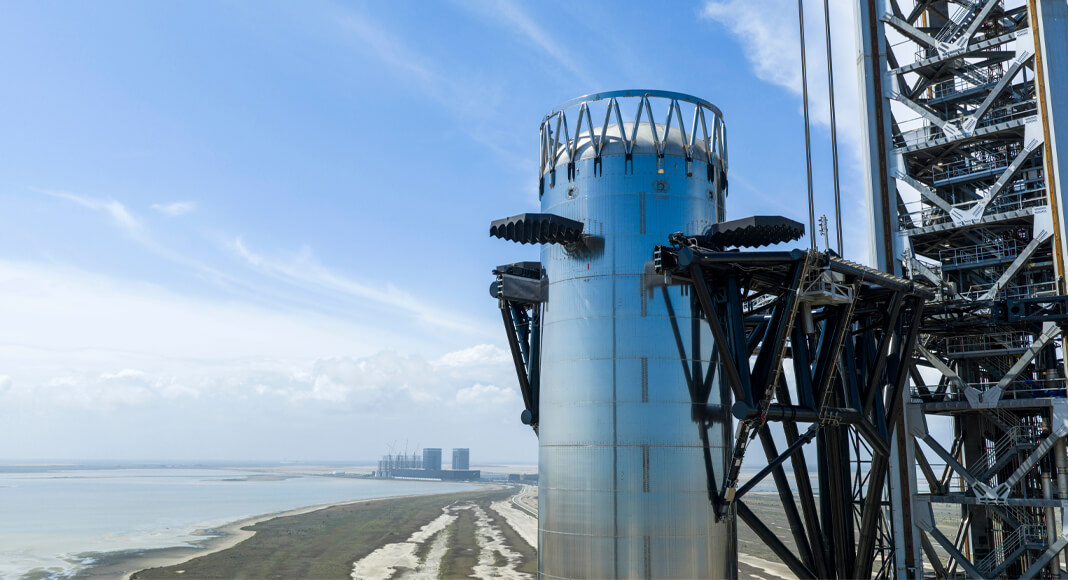
Flight 12 will mark the first launch from Pad 2 at Starbase. The propellant farm that stores the required commodities has been upgraded with increased storage capacity and significantly more pumps, enabling much faster vehicle filling for launch.
On the launch tower, the chopsticks are now shorter, allowing faster motion to better track vehicles during catch operations. Their main actuators have been changed from hydraulic to electromechanical to improve speed, redundancy, and reliability. The quick disconnect arm for loading propellant into the Starship upper stage has been strengthened, repackaged, and now rotates farther away from the rocket during launch.
The launch mount structure and hold-downs have been completely redesigned to greatly improve load sharing, throwback reliability, and protection during vehicle fly-out. Inside the mount, a new bidirectional flame diverter and top-deck flame deflector are designed to eliminate ablation and the need for refurbishment on these surfaces after launch. And the launch mount quick disconnects for Super Heavy propellant loading have been moved to the opposite side of the mount and split into separate methane and oxygen mechanisms. The various vent valves, isolation valves, and filters for booster fluid fill have been relocated into a hardened bunker on the side of the launch mount, designed to greatly reduce the distance to the rocket while isolating oxygen and methane systems into separate rooms for safety.
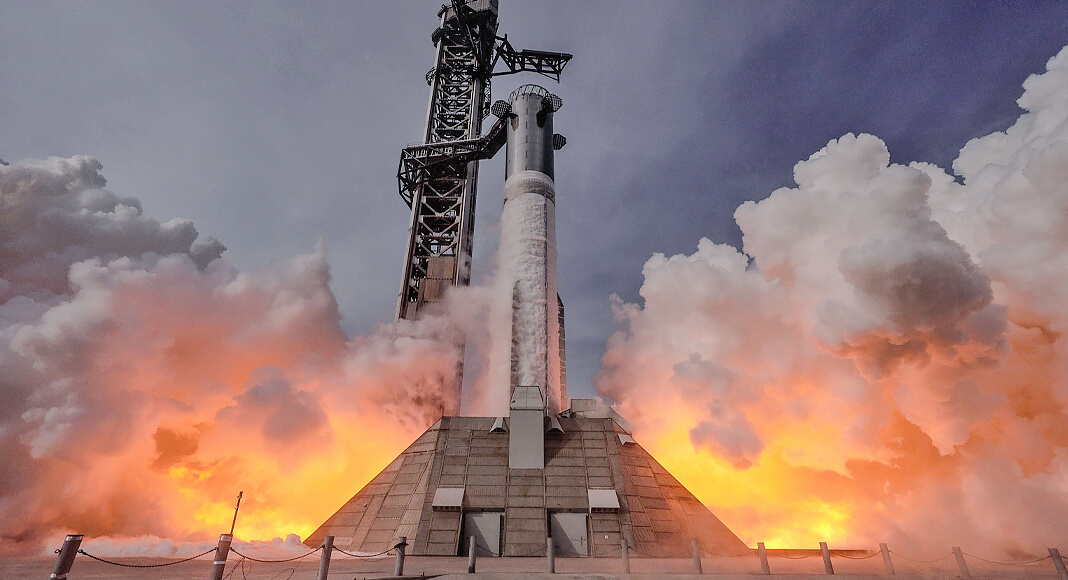
Together, these new elements are designed to enable a step-change in Starship capabilities and aim to unlock the vehicle’s core functions, including full and rapid reuse, in-space propellant transfer, deployment of Starlink satellites and orbital data centers, and the ability to send people and cargo to the Moon and Mars.
Information source: SpaceX