





Texas Border Business

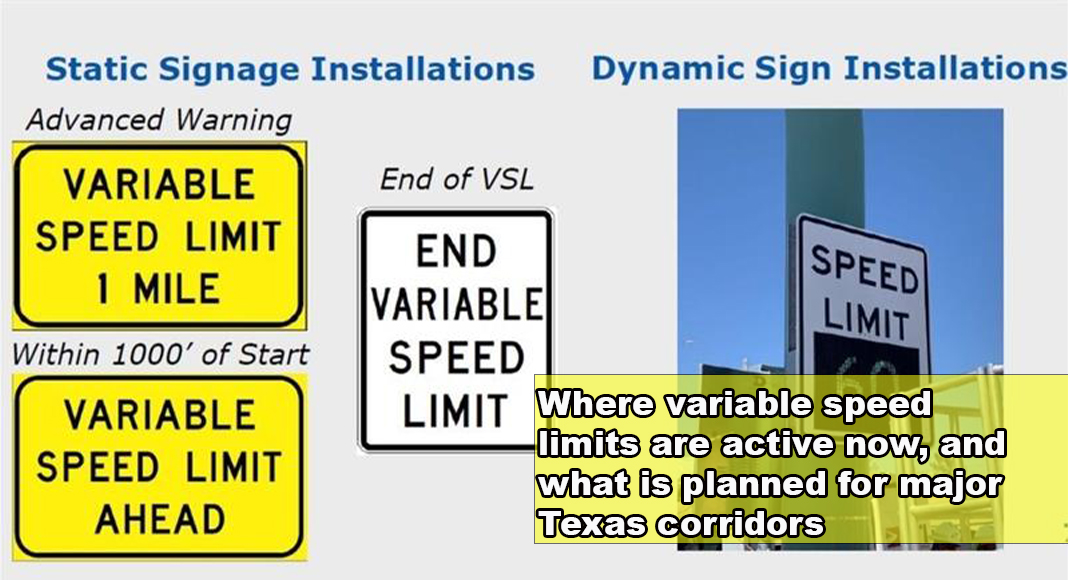
Texas has begun limited use of digital variable speed limits on some highways, following a change in state law that allows speed limits to change based on real-time conditions. These electronic speed limit signs can display different speeds depending on traffic, weather, construction, or safety concerns. According to the Texas Department of Transportation, variable speed limits are intended to “improve safety and traffic flow when conditions on the road change.”
In 2023, the Texas Legislature approved House Bill 1885, which gave the Texas Department of Transportation the authority to use digital or portable signs to temporarily lower posted speed limits. The law allows speed reductions of up to 10 miles per hour below the normal posted speed when conditions warrant it. The rule requires that changes be based on an engineering and traffic investigation and that drivers be clearly notified. TxDOT has said the goal is to “respond to congestion, crashes, weather events, or other conditions that affect safe travel.”
As of now, digital variable speed limits are active only in a small number of locations in Texas. One confirmed location is Interstate 35W in Fort Worth. In that corridor, electronic signs can change the posted speed when traffic slows or when weather conditions increase crash risk. Another active location is U.S. Highway 54 in El Paso, where variable speed limits are used on a section of the roadway leading toward Interstate 10. TxDOT has described these sites as early implementations under the new legal authority.

Outside of those areas, variable speed limits are not currently active on most major Texas highways. There are no confirmed active systems on routes connecting South Texas to San Antonio, Houston, or Dallas. This includes major corridors such as I-69 and I-2 in the Rio Grande Valley, I-35 between Laredo and San Antonio, I-10 toward Houston, and I-45 or I-35E leading into Dallas. TxDOT has not announced installation dates or specific plans for these corridors.
Transportation officials note that digital speed limits depend on existing technology. According to TxDOT and transportation researchers, variable speed systems work best where there is already extensive infrastructure, such as traffic sensors, cameras, and traffic management centers. TxDOT has stated that these systems are typically deployed “where real-time data is available to support safe and effective speed changes.”
When a variable speed limit sign is active and displaying a reduced speed, that speed is legally enforceable. TxDOT has emphasized that drivers are expected to follow the speed shown on the sign just as they would a traditional posted speed limit. When the signs are not active, the normal posted speed applies.
For now, drivers traveling from South Texas toward San Antonio, Houston, or Dallas should not expect to see digital variable speed limits in routine use. While the law allows statewide implementation, TxDOT has made it clear that expansion will depend on safety needs, funding, and available infrastructure. As the agency has explained, the program is being rolled out gradually and “will be expanded where it can provide clear safety benefits.”
Source: Texas Department of Transportation, Texas Legislature, House Bill 1885.