













Texas Border Business




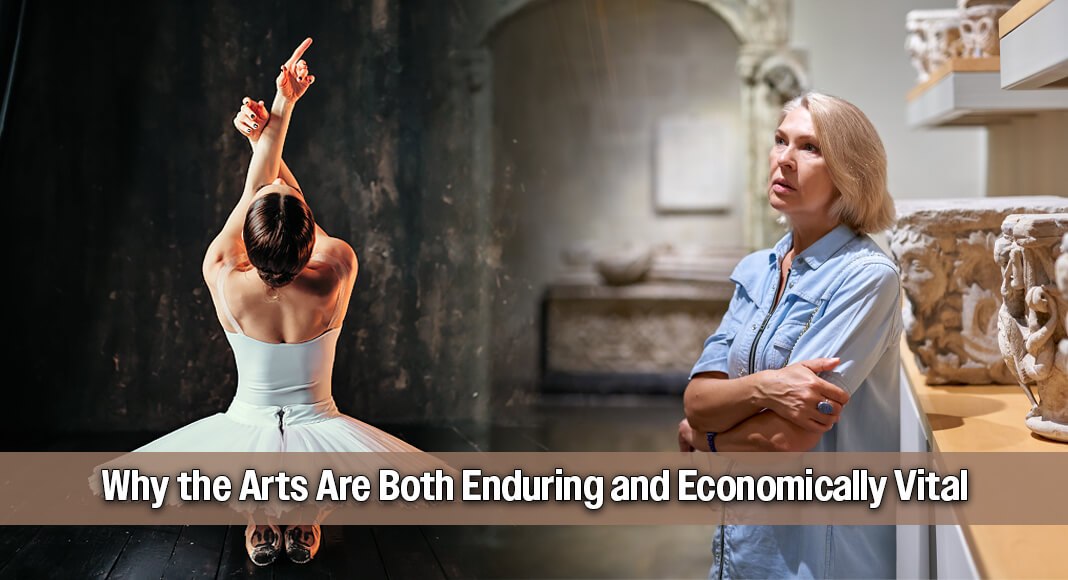
Ernest Hemingway once wrote that “A thousand years makes economics silly and a work of art endures forever…” In addition to being enduring, the arts are also economically imperative.
Decades ago, my firm produced a report regarding the economic effects of the arts. It has been used to support major initiatives and investments around the world and remains cited. It’s well worth revisiting the indisputable fact that the economic effects of the arts (whether museums, performances, education, or otherwise) are substantial.
In addition to operational spending, people visiting museums and performance venues spend money on hotels, meals, transportation, and retail items, leading to notable gains in business activity. Multiplier effects spread through the supply chain, leading to additional jobs and opportunities for local firms, increased business activity, and tax receipts.


The arts also represent a substantial economic sector with measurable contributions to employment and output, with almost 960,000 Texans employed in creative careers. About one in four visitors to the state participate in cultural tourism, tending to stay longer and spend more than others.
The arts also play a key role in urban and regional development. Cities with strong cultural infrastructure often experience increased economic activity and revitalization, as arts districts attract visitors and stimulate business expansion. In areas which feature multiple major venues, synergies can arise and offer a broader overall experience.
The real story, however, lies far beyond these obvious phenomena. Research indicates that arts education supports academic achievement while fostering imagination, creativity, and broader learning capacity. It is also correlated with positive social-emotional attributes.
Beyond education, the arts contribute to creativity, innovation, and workforce productivity. Creative thinking and innovation are crucial skills in a dynamic environment, and exposure to the arts can help develop these capabilities. Numerous studies demonstrate that participation in the arts is associated with higher levels of civic engagement, social connection, and cultural identity. This enhanced social capital contributes to economic stability by strengthening communities and encouraging civic participation. The spark that is ignited by exposure at an early age has repeatedly lit the fuse that ultimately ignited the flames of pathbreaking discoveries in a variety of arenas decades later.
Finally, the arts generate important health benefits that translate into economic gains. Research has shown that arts participation is linked to stress reduction, mental health improvement, and cognitive enhancement. These outcomes, in turn, contribute to higher productivity and reduced public health costs. The arts generate multifaceted benefits ranging from the obvious measurable spending to the subtle but far more profound effects that permeate our lives. Our work has shown that, when viewed in proper perspective, the creative sector is responsible for about 15% of the total economy and is critical to sustainability. Stay safe!
_____________________
Dr. M. Ray Perryman is President and Chief Executive Officer of The Perryman Group (www.perrymangroup.com), which has served the needs of more than 3,000 clients over the past four decades.