
















Texas Border Business




By Army Lt. Col. Michelle Lunato, U.S. Army Marksmanship Unit | US DOW
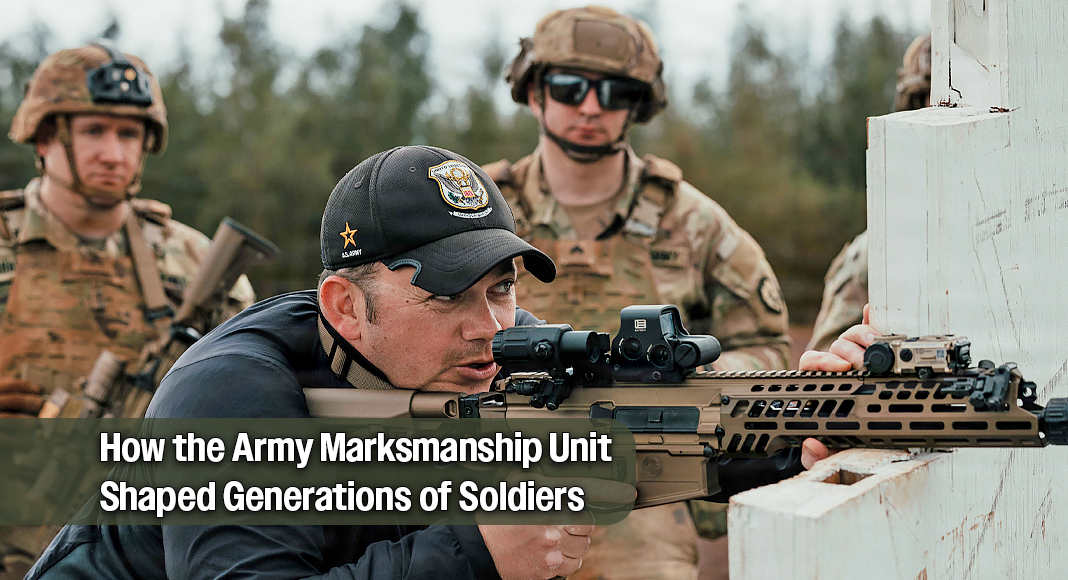
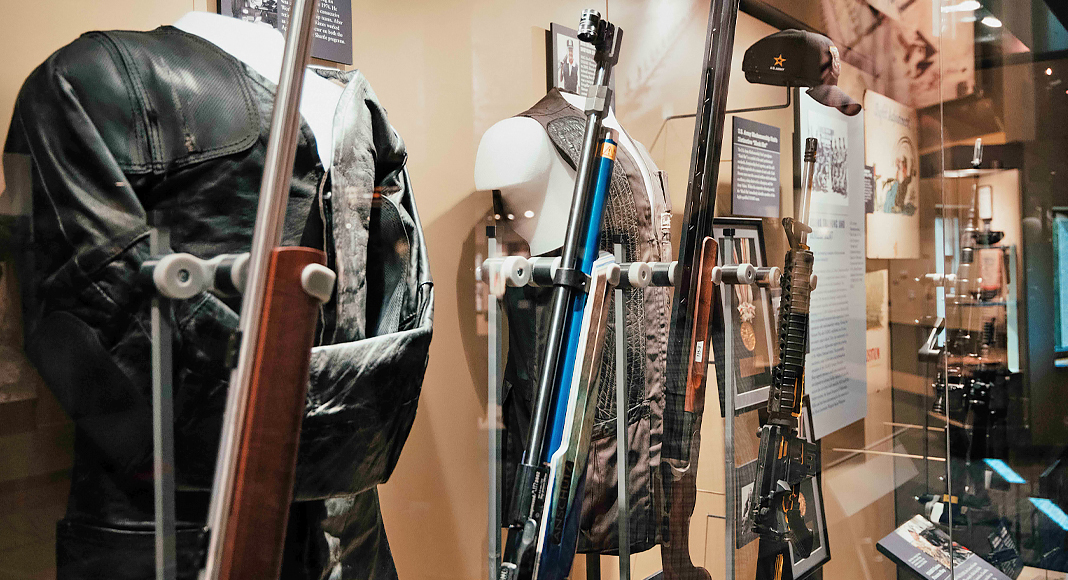
The U.S. Army Marksmanship Unit was officially established Feb. 16, 1956 — an event that would shape the trajectory of American marksmanship for generations.
Seventy years later, the unit stands as the Army’s premier authority on marksmanship training, small-arms expertise and competitive excellence. Its legacy is defined not only by medals and records, but also by its enduring impact on Army readiness, research, doctrine and lethality.



The unit’s founding purpose was clear from the beginning. In a Nov. 17, 1955, letter to Army Chief of Staff Gen. Maxwell D. Taylor, Army Gen. John E. Dahlquist, commander of the Continental Army Command, set the foundation for the unit’s creation.
“In proportion to its resources, Army leadership in the field of competitive marksmanship on national and international scales should be absolute and unquestioned,” Dahlquist wrote, adding that, at the time, there was a perception the Russian army could shoot as well as their Olympic team and could outshoot all other armies.
Dahlquist wrote that impression needed to be eliminated by the U.S. Army winning international rifle and pistol competitions.
As the unit developed, its mission expanded. In a Sept. 23, 1991, letter, Army Vice Chief of Staff Gen. Edwin H. Burba Jr. emphasized the importance of marksmanship.
“The proficient use of individual service weapons is the most important skill of the soldier,” Burba wrote. “The U.S. Army Marksmanship Unit is the [U.S. Army Forces Command] standard bearer for effective marksmanship training.”
That vision has guided the unit for seven decades, shaping it into the only organization of its kind within the Army. That founding vision quickly evolved into a broader mission that continues to define the unit today.
The unit’s competitive, training and research missions make it a singular asset. Its competitive teams serve as a real-world test bed, validating training techniques and materiel solutions that shape Army doctrine, small-arms development and lethality initiatives. Since the 1950s, the unit has supported major small-arms programs across the War Department, Justice Department and Department of Homeland Security, often providing technical expertise, hand-loaded ammunition and rapid development capability.
Supporting Research Across the Army
For more than 30 years, the unit has partnered with key Army research centers to produce several notable advancements, including:
6.8 mm reduced-range ammunition — cutting surface danger zones by 40–50%.
Sniper propellant testing — identifying reliable American-made alternatives during supply chain disruptions.
Shock-absorbing concrete testing — supporting shoot-house material evaluation.
These efforts, along with the unit’s contributions to the next-generation squad weapon, reinforce the unit’s role as a technical enabler for Army modernization. Beginning in 2012, unit engineers helped shape future small-arms requirements and delivered developmental cartridge concepts that informed the Army’s ballistic direction
Between 2019-2021, unit soldiers and civilians supported multiple phases of the next-generation squad weapon evaluation, including sampling, training support, mobility assessments, user feedback and fire-control system input. Today, the unit continues to support fielding and user training across the force.
Driving Innovation Through Competition
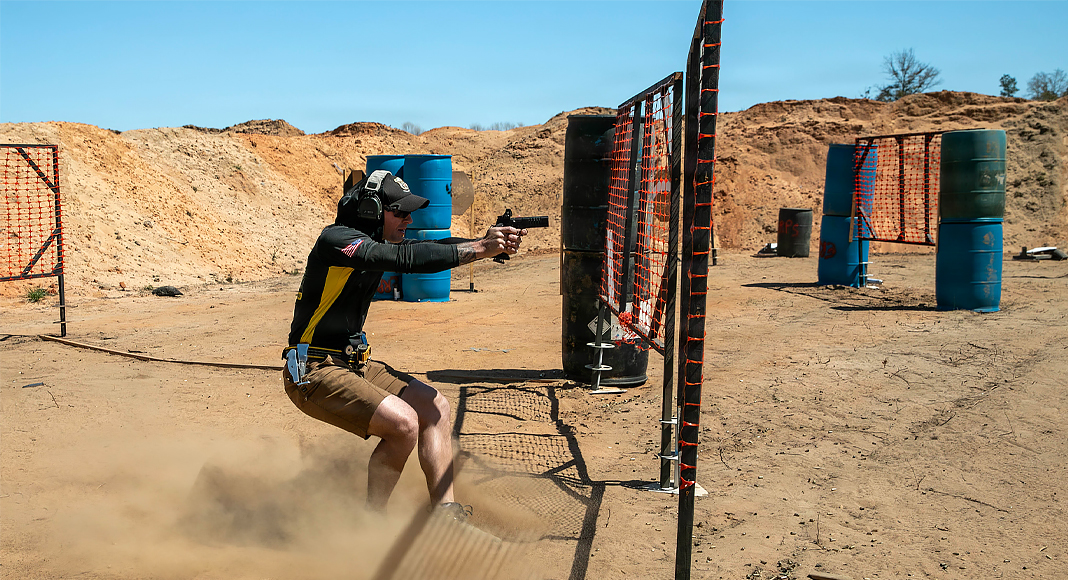
Competition has always been central to the unit’s identity. Beyond medals, these events serve as a proving ground for new ideas. Innovations first tested by unit soldiers have later appeared in the special operations community, including:
.277 USA and .264 USA cartridges — influencing the Army’s adoption of the 6.8 mm combat caliber.
Lightweight intermediate caliber cartridge rifle development — early versions produced by the unit.
.375 EnABELR sniper system — increasing first-round hit probability at extreme distances.
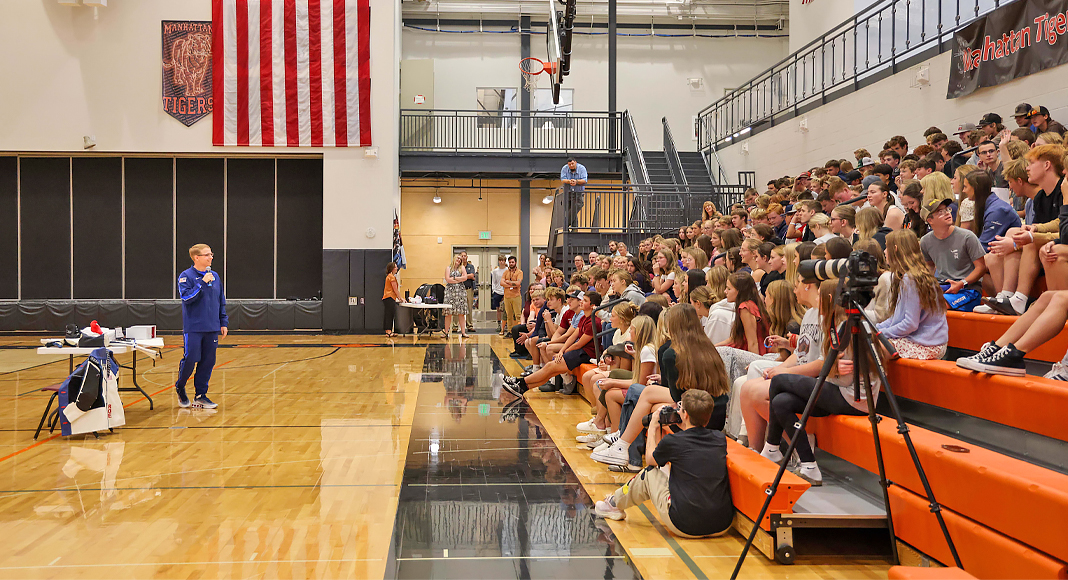
Another part of the unit’s mission is marketing, which involves conducting marksmanship clinics, supervising interservice shooting competitions, maintaining excellence in competition records, representing the Army in national and international events and supporting public engagements.
Training the Force
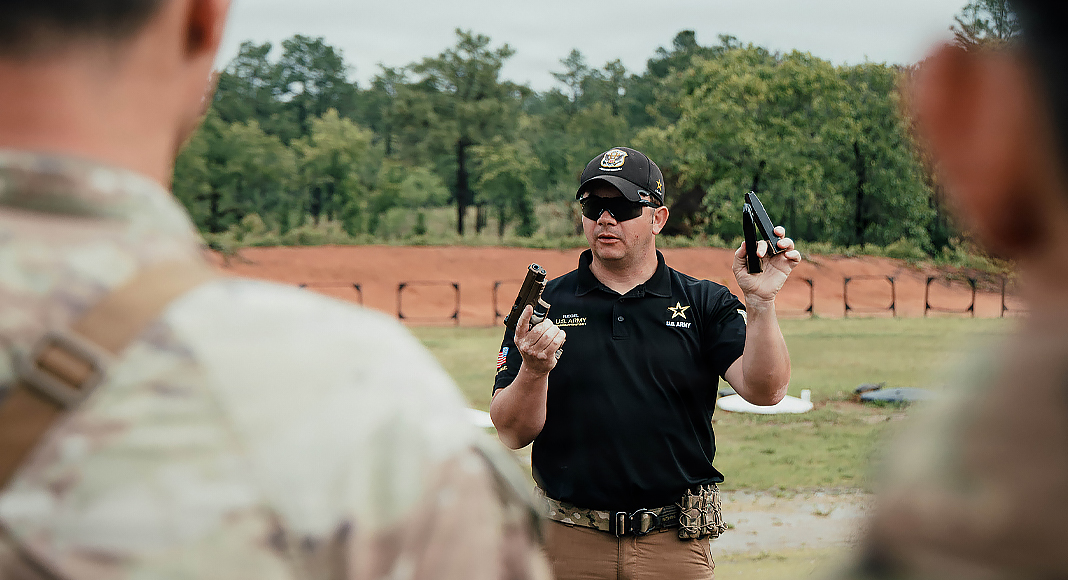
The unit’s most enduring contribution is training soldiers. Each year, the unit conducts about 80 training missions, providing hands-on instruction to more than 4,000 soldiers and influencing tens of thousands more. The training has led to 40% increases in lethal hit rates and 50% improvements in marksmanship fluency, delivered at a cost of about $200 per soldier.
In 2024, Marine Corps Col. James Rose, Marine Raider Regiment commanding officer, praised the unit’s support, noting its unmatched instruction and direct impact on sniper lethality.
Over the past three years, the team has worked with the Department of Tactics, Training and Doctrine to refine small-arms doctrine. The unit also authored the “Small Arms Gold Book,” a companion reference supporting the Integrated Weapons Training Strategy.
Advancing Soldier Lethality Through Science
Unit soldiers frequently serve as test subjects in biomechanical and physiological studies comparing novice and expert shooters. Recent findings showed expert shooters were 18% more accurate, 50% more stable and 35% slower in rotational movement.
These insights help shape training techniques across the Army.
From its founding in 1956 to its 70th anniversary, the unit has remained the Army’s premier authority on marksmanship. Its influence spans competitive shooting, soldier training, small-arms development, doctrinal refinement and cutting-edge research.
As the unit enters its eighth decade, its mission remains unchanged and more vital than ever: advancing marksmanship, empowering the warfighter and ensuring the Army maintains its competitive edge.