

















Texas Border Business



By Joey Gomez
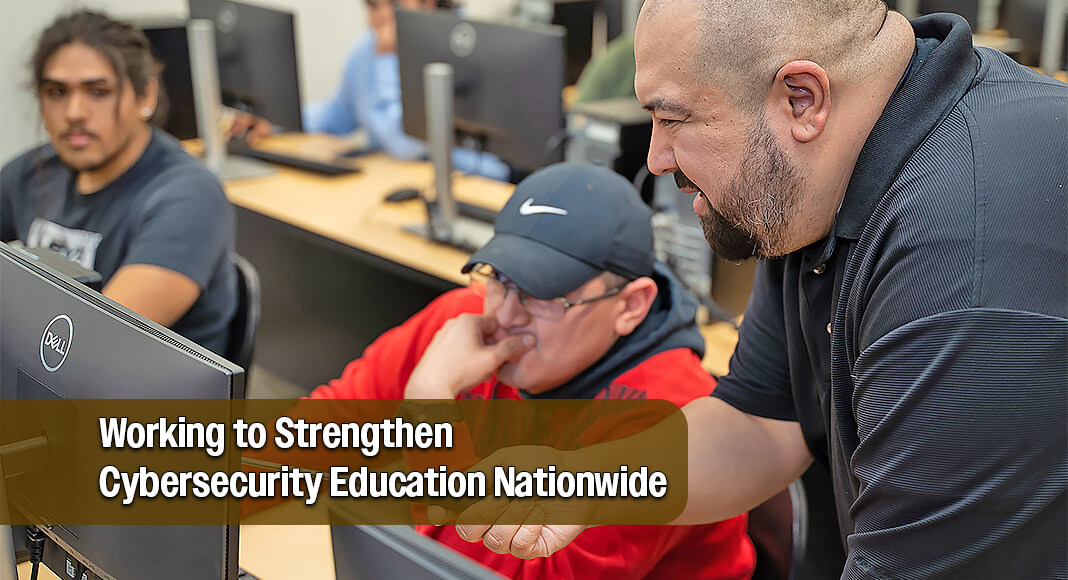
McALLEN, Texas – South Texas College’s Bachelor of Applied Technology Computer Information Technology (BAT-CIT) program has joined an elite group of institutions working to strengthen cybersecurity education nationwide.
STC’s BAT-CIT Program has earned national recognition as its upcoming Cybersecurity Clinic now joins the prestigious Consortium of Cybersecurity Clinics, a network that includes leading universities including Massachusetts Institute of Technology (MIT), University of California Berkeley, the University of Texas, National Taiwan University and many others.




Joining the Consortium is also set to broaden the reach of the college’s $467,000 National Science Foundation (NSF) Advanced Technological grant, which established the region’s first cybersecurity clinic to serve small businesses and nonprofit organizations at no cost.
Through the clinic, student teams supervised by faculty will conduct risk assessments, penetration testing, vulnerability analysis and incident-response planning for local organizations.
The effort is designed to protect the Rio Grande Valley’s digital infrastructure and prepare students for high-demand careers in cybersecurity.
“Joining the Consortium of Cybersecurity Clinics is a big step forward,” said BAT-CIT Department Chair Saeed Molki. “We can share best practices, use their development toolkits and learn from other universities that are already in their second or third year running clinics. It adds tremendous value to our department and STC.”
The Consortium provides its members with access to research, educational resources and mentorship opportunities that guide the creation of new cybersecurity clinics.
Molki said STC will benefit from resources such as the Clinic Development Toolkit, a national framework for implementing effective cybersecurity education models.
“To be a part of this network shows that we are operating on the same level of innovation and commitment as these top universities and it’s such an honor to represent the Rio Grande Valley in that space,” Molki said.
Matthew Nagamine, membership director with the Consortium of Cybersecurity Clinics, said STC now becomes part of a growing international community of cyber clinics committed to transforming cybersecurity education with service-based learning.
“We’re thrilled to welcome South Texas College to the Consortium of Cybersecurity Clinics. Their new clinic offers a powerful example of how two-year institutions can both strengthen the cybersecurity workforce and provide vital capacity building services to community organizations in the Rio Grande Valley,” Nagamine said. “STC’s successful NSF award further affirms the value and potential for the cybersecurity clinics model, and we hope it inspires more grant makers to follow suit.”
STC BAT-CIT Assistant Professor Nicholas Hinojosa, who helped lead the NSF grant proposal, said aligning with the Consortium has been a goal since the clinic’s conception.
“When we wrote the grant, one of my first objectives was to align our program with the leaders in cybersecurity clinic development,” Hinojosa said. “I had already been using their materials and attending their monthly meetings even before our clinic launched.”
Hinojosa said the Consortium fosters constant collaboration among member institutions through regular meetings, expert presentations and resource sharing.
With the endorsement finalized, STC will now appear on the Consortium’s national map of member institutions. Faculty have submitted the college logo and description for inclusion, which marks STC’s official entry into the collaborative network.
“Cybersecurity is strongest when you work with others,” Hinojosa said. “There’s no need to reinvent the wheel when another institution has already developed a useful tool or strategy. Through this network, we can exchange knowledge and bring proven practices directly to our community.”
The Cybersecurity Clinic is expected to begin serving the community by spring 2026, with recruitment already underway for both students and small businesses.
“Our goal is to expand access to cybersecurity education while helping local organizations stay protected,” Hinojosa said. “We’re proud to represent STC at this level and to build a stronger, safer digital future for our region.”
For more information on STC’s Cybersecurity Clinic visit www.southtexascollege.edu/academics/cybersecurity/clinic.html.