







Texas Border Business

Texas Border Business
Nearly a quarter-century has passed since the tragic events of September 11, 2001—but remembering still matters. As we begin this series of op-eds, it is worth examining why memory, reflection, and storytelling remain not just relevant but essential in preserving collective understanding and healing.
Memory is fragile—even for moments seared into history. A study tracking Americans’ recollections of where they were on 9/11 found that 40% misremembered essential personal details over time, due to memory evolving into a more coherent—but not always accurate—narrative. Yet, while personal memories blur, the public memory of the facts of that day remains remarkably resilient, reinforced by persistent media coverage.

This highlights two truths: first, that even deeply felt experiences can change over time; second, that intentional acts of remembrance—through archives, museums, and storytelling—are essential in maintaining both historical accuracy and emotional significance.
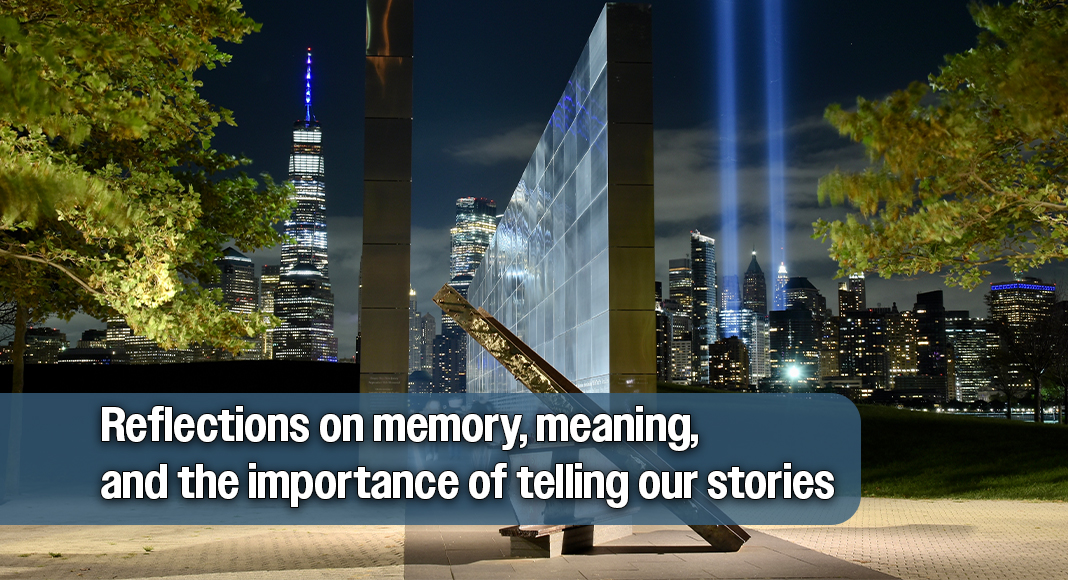
The physical and institutional traces of memory tell a similar story. The 9/11 Memorial at the World Trade Center, with its twin waterfall pools inscribed with victims’ names, stands as “absence made visible”—a deliberate effort to create space for reflection within a transformed cityscape. Meanwhile, the National Archives continues to safeguard official records—from the 9/11 Commission Report to presidential and FAA documentation—ensuring that future generations can access the raw materials of history.
This series aims to explore how memory sustains us, how it evolves, and how we choose to preserve it. Over the coming days, we will delve into the human stories—of grief and resilience—that refuse to fade; the transformations in policy, identity, and mental health that 9/11 set in motion; and how younger generations, many of whom were not yet born on that day, find their way into the story.
Why does this matter today, 24 years later? Because memory shapes identity. As the National Park Service puts it, “Many Americans remember a country before and a country after” — but for younger generations, there is only “a country after.” Remembering bridges that span, connecting citizens across time and experience.

Moreover, memory is a tool for healing and solidarity. Voices of September 11, an organization founded by families who met in grief, continues to provide a community and preserve memories through initiatives like the 9/11 Living Memorial—now part of the 9/11 Museum’s archives—comprising over 87,000 photos, videos, and keepsakes. These efforts underline how memory-making can foster resilience and transform grief into collective purpose.
In the days ahead, this op-ed series will trace the arc from personal recollections to national transformation to lasting legacy. We will examine how the emotional echoes of grief reshape mental health practice; how memorials both mark loss and offer paths forward; and how stories—of tragedy and heroism alike—continue to guide our national conscience.
For now, in the face of loss and time’s deletion, we remember. Because memory is not only about marking what happened—it is about defining what endures.
See related story: