















DHR Health, Texas A&M School of Law Legal Clinics Launch Unique Medical/Legal Partnership

Translate text to Spanish or other 102 languages!

- Advertisement -
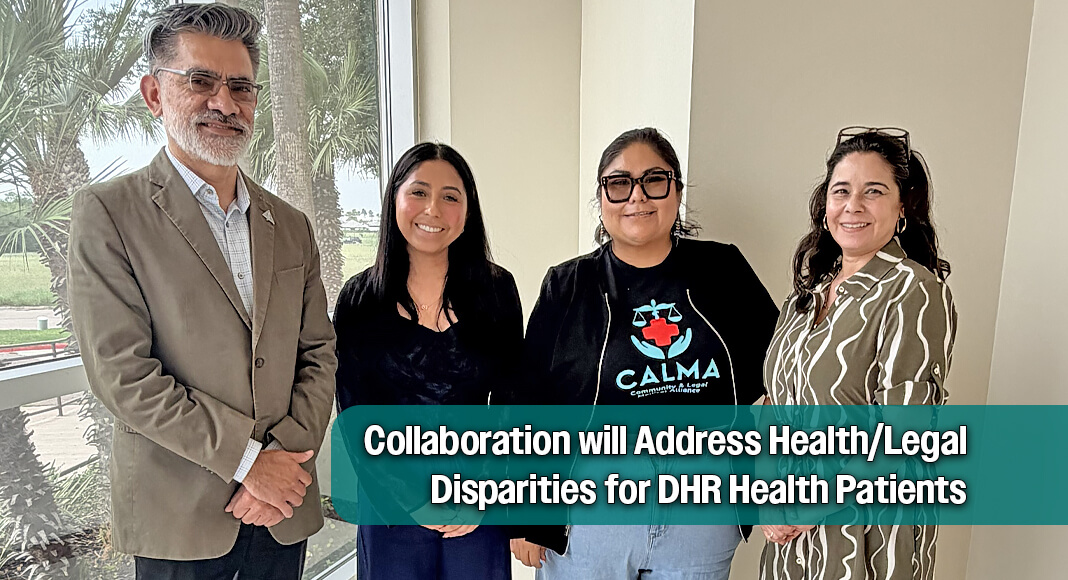
LEGAL HEALTH EMPOWERMENT: Members of the legal team that form the Community and Legal-Medical Alliance, known as CALMA, are pictured from left to right: Pablo J. Almaguer, Senior Attorney Fellow, Michelle Ramirez and Claudia Garcia, Legal Access Fellows, and Luz Herrera, Professor/Associate Dean for Experiential Education, Texas A&M University School of Law. This alliance will help patients overcome legal hurdles that affect their health, ensuring more holistic medical care for those in need. Courtesy image
LEGAL HEALTH EMPOWERMENT: Members of the legal team that form the Community and Legal-Medical Alliance, known as CALMA, are pictured from left to right: Pablo J. Almaguer, Senior Attorney Fellow, Michelle Ramirez and Claudia Garcia, Legal Access Fellows, and Luz Herrera, Professor/Associate Dean for Experiential Education, Texas A&M University School of Law. This alliance will help patients overcome legal hurdles that affect their health, ensuring more holistic medical care for those in need. Courtesy image
- Advertisement -

EDINBURG, Texas – DHR Health has partnered with the Texas A&M School of Law Legal Clinics to establish a unique medical/legal partnership that will help indigent patients, within its hospital system, who face legal issues outside the medical setting. The program, called CALMA (Community and Legal-Medical Alliance) will focus on helping patients, who meet certain income guidelines, to overcome legal barriers that impact their health. The goal of this program is not only to help patients but to strengthen DHR Health’s ability to deliver comprehensive care.

CALMA is supported by a moonshot grant from the Texas Access to Justice Foundation (TAJF) and managed by the Economic Justice Initiative (EJI) and Texas A&M University School of Law Legal Clinics. Attorneys, law students, and paralegals will provide free legal services to qualified patients in the areas of housing instability, public health benefits, advance care planning, and family law matters among others.

As DHR Health leadership explains, some patients who seek medical treatment face health inequities at home that often contribute to health-harming social needs.


- Advertisement -

Continue reading the full story at:

- Advertisement -
- Advertisement -
- Advertisement -

Latest News

More Articles Like This

- Advertisement -