







Texas Border Business

By Roberto Hugo González / Texas Border Business
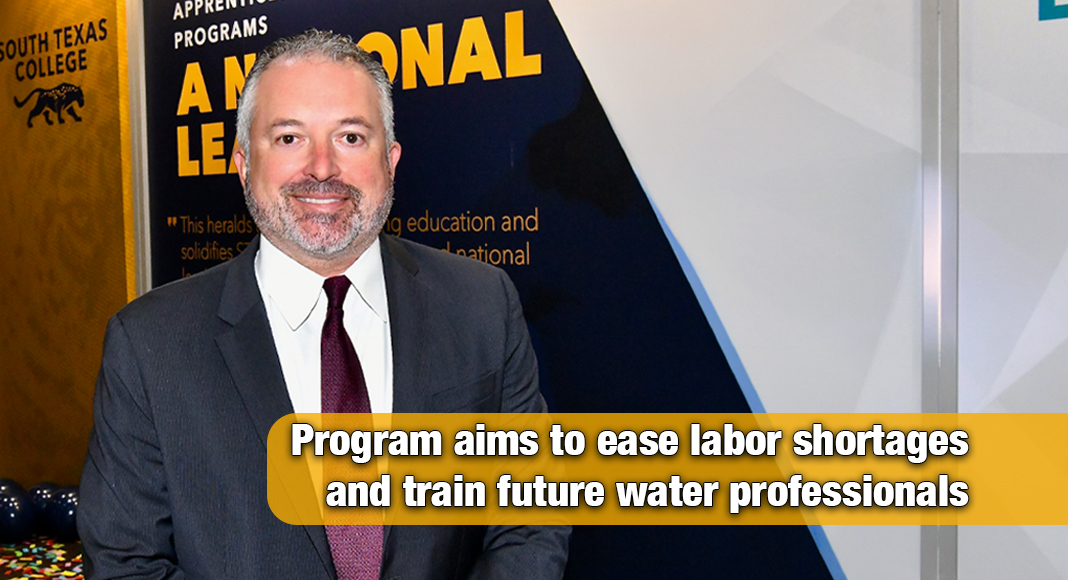
A workforce initiative is launching in the Rio Grande Valley amid water scarcity and labor shortages that are creating growing challenges for local communities. The information comes from an interview with Carlos L. Margo, Ed.D., Dean of the Center for Advanced Training and Apprenticeships Technology Campus at South Texas College. Organizers say recent droughts and a shrinking water supply in the Rio Grande have increased the need to protect resources and safely treat water for reuse.
Utilities across South Texas are also facing a shortage of qualified workers. Dr. Margo said there is “a lack of people interested in working in the field and a need for higher skill levels for incoming and entry-level water and wastewater employees.” The problem is expected to worsen as many current workers near retirement, with estimates showing 30 to 50 percent of the U.S. water workforce could retire within the next decade.

Without immediate action, the region could face serious consequences. Dr. Margo said that without training programs for current and future workers, the Valley could be “in a perilous position where these services will fail to meet the water needs” of the area.
South Texas College has been selected to lead training for the Skills for Sustainability initiative. The college plans to develop new water and wastewater technician programs, an area it does not currently offer. Margo said the goal is to create “rigorous, sustainable programs that lead to certifications” in partnership with industry, workforce groups, and the Texas Commission on Environmental Quality. Training is expected to begin by fall 2026, pending approval.
The Center for Advanced Training and Apprenticeships will align training with industry needs by working directly with employers. Dr. Margo said input from plant managers and other professionals helps “negate any gaps between education and industry needs.”
The initiative will also build on South Texas College’s network of more than 150 employers. Margo said these partnerships guide curriculum development and expanded training opportunities, while existing resources help support new programs.

A key component is the planned Level 1 Wastewater Operator Training program, an entry-level certification regulated by the Texas Commission on Environmental Quality. It will cover safety, mathematics, chemistry, and system operations, along with hands-on and internship training.
Practical experience is a major focus. Dr. Margo said, “90% of learning takes place while operating the heavy equipment,” underscoring the value of hands-on instruction. The program will also include training in heavy equipment used in water utilities and public works.
The initiative will train both current workers and new participants, including individuals from low-income communities. Margo said this approach addresses immediate workforce needs while building a long-term talent pipeline.
Initial funding will support the first group of trainees, but officials say the long-term benefit lies in creating scalable programs that continue beyond the grant. Communities in Hidalgo, Starr, Cameron, and Willacy counties are expected to benefit from a stronger, better-trained workforce.
Job placement is a central goal. Dr. Margo said all programs are designed to lead to employment or advancement, based on available job openings and career opportunities.
Organizers say success will depend on strengthening the workforce, improving water system reliability, and creating sustainable career pathways for Valley residents.