






Texas Border Business

Texas Border Business
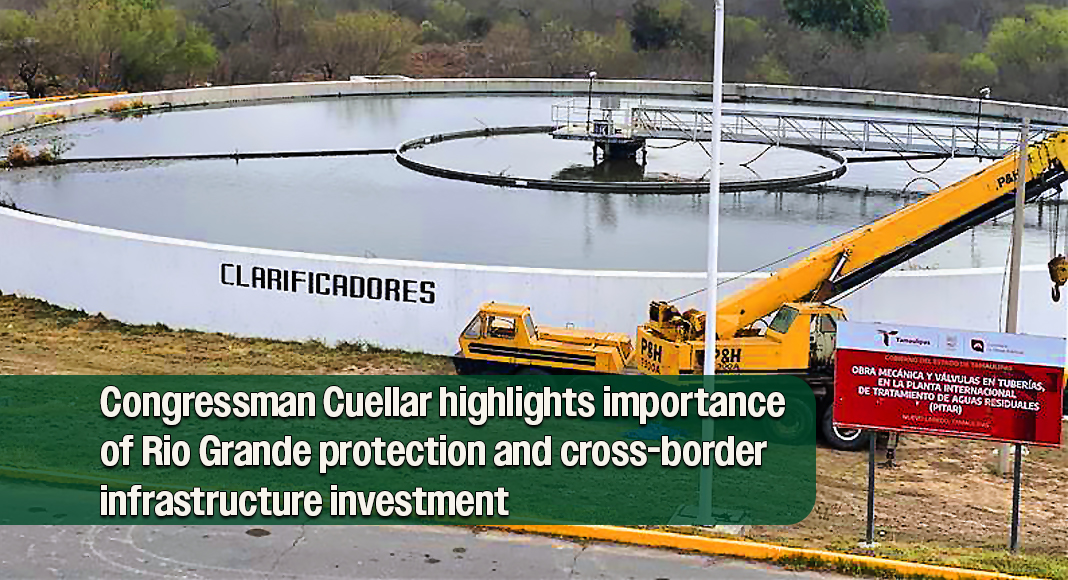
Nuevo Laredo, Tamaulipas — The North American Development Bank (NADBank), in partnership with the Municipality of Nuevo Laredo, the State of Tamaulipas, Mexico’s National Water Commission (CONAGUA), and the local water utility Comision de Agua Potable y Alcantarillado de Nuevo Laredo (COMAPA), held a groundbreaking ceremony for the rehabilitation of two sewer mains that are part of a large-scale wastewater project aimed at protecting communities on both sides of the border.
The project, known as the Comprehensive Wastewater Collection and Treatment Project, will benefit more than 400,000 residents. The rehabilitation efforts will focus on the Colector Ribereño and the Colector Donato Guerra. NADBank is providing $8 million in grants from its Border Environment Infrastructure Fund (BEIF), which is financed by the U.S. Environmental Protection Agency (EPA).

Nuevo Laredo Mayor Carmen Lilia Canturosas, NADBank Chief Environmental Officer Salvador López Córdova, Tamaulipas Secretary of Water Resources for Social Development Raúl Quiroga Álvarez, CONAGUA’s Regional Director of the Río Grande watershed Luis Carlos Alatorre, and representatives from COMAPA attended the event.
According to COMAPA, nearly 98% of homes in Nuevo Laredo are connected to its wastewater collection system, which spans approximately 407 kilometers (253 miles) of lines, along with 12 lift stations and 9.5 kilometers (5.9 miles) of force mains that deliver wastewater to the city’s treatment plants.
The broader wastewater project will rehabilitate and expand the collection system for more than 120,000 residential connections and double the treatment capacity of two of Nuevo Laredo’s three wastewater treatment plants. Once complete, it is expected to prevent the discharge of approximately 12.6 million gallons of untreated wastewater per day into the Rio Grande and surrounding groundwater, protecting drinking water supplies for downstream communities in both the United States and Mexico.
“This project is vital for border communities and for the downstream communities that rely on the Rio Grande,” said U.S. Congressman Henry Cuellar. “When we invest in cross-border infrastructure, we protect American families who depend on the river for drinking water. I am a strong supporter of the North American Development Bank and the critical projects that it helps develop. That is why I helped increase its capital reauthorization through the USMCA and have worked, through my role on the Appropriations Committee, to secure critical federal funding for infrastructure projects along the border. As a senior appropriator, I will continue to secure critical funding for projects that support our local communities.”

NADBank officials emphasized the long-term impact of the investment. “NADBank is proud to be part of this vital undertaking for the citywide rehabilitation of Nuevo Laredo’s wastewater system,” said López Córdova. “NADBank played a key role in structuring the infrastructure financing plan and coordinating with the different agencies that are collaborating to bring this project to reality. Over the next three years, the project will significantly reduce transboundary wastewater flows into the Rio Grande, which is essential for the long-term regional well-being and embodies the very purpose for which NADBank was established.”
The total project cost is estimated at $81.2 million. Funding sources include BEIF contributions, a commercial loan of up to $6 million, and $52.2 million in Mexican federal, state, and local funds, accounting for nearly 65% of the total. The International Boundary Water Commission also contributed financing.
Work on the wastewater rehabilitation system began in 2019, supported by municipal and federal funding through CONAGUA. Since then, NADBank has provided more than $650,000 in technical assistance for studies, assessments, and preliminary designs, supported by both Bank resources and the EPA.
The project represents a major step toward safeguarding public health, improving water quality, and strengthening cross-border cooperation in environmental infrastructure.