






Texas Border Business

Texas Border Business
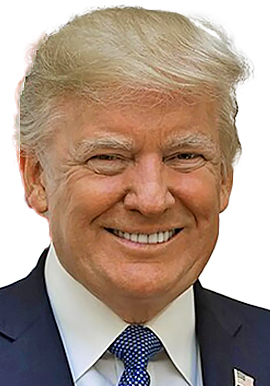
Since returning to the White House in 2025, President Donald J. Trump has announced a series of high-profile international trade and investment deals. These agreements are aimed at bolstering the U.S. economy through foreign investment and improved access to global markets for American manufacturers. Many of these arrangements involve reciprocal tariff reductions, investment pledges, and commitments to purchase American goods.
In July 2025, the U.S. finalized a major trade agreement with the European Union. According to a White House fact sheet, the EU has pledged over $600 billion in investments into the U.S. by 2028 and committed to purchasing $750 billion in U.S. energy exports, including liquefied natural gas and oil (whitehouse.gov). President Trump described the deal as “a historic realignment of fair trade” during a press event. In return, the U.S. agreed to a reduced 15% tariff rate on most EU imports, down from a threatened 30% rate.

A similar arrangement was reached with Japan. The U.S.–Japan Strategic Trade and Investment Agreement, finalized in late July, includes a $550 billion commitment from Japan toward U.S.-based investments and guarantees of increased purchases of U.S. automobiles and energy products (reuters.com). “This is a new era of partnership between the United States and Japan,” Trump said in Tokyo during the signing ceremony.
Other Asia-Pacific countries have also reached agreements with the U.S., including Vietnam, Indonesia, and the Philippines. These deals involved reducing or capping tariffs on their exports while increasing U.S. market access for agriculture, machinery, and defense products. In total, these arrangements are expected to account for tens of billions in added export opportunities for American industries (abcnews.go.com).
One of the more controversial but financially significant deals involved Nippon Steel’s $14 billion acquisition of U.S. Steel. Approved by the Trump administration in June 2025, the deal includes strict provisions. The U.S. government retains a “golden share,” giving it veto power over certain decisions. The agreement also mandates $2.4 billion in reinvestment into U.S. facilities, particularly in Pennsylvania (en.wikipedia.org). Trump called it “a win-win deal that keeps jobs here while attracting capital.”
In the Middle East, Trump’s May 2025 diplomatic mission yielded significant commitments. Saudi Arabia pledged up to $600 billion in U.S.-bound investments, much of it directed toward infrastructure, technology, and defense. Additionally, Qatar Airways finalized a deal to buy up to 210 Boeing jets, a transaction valued at around $96 billion. The United Arab Emirates signed a $1.4 billion agreement with U.S. firms to develop military technologies and artificial intelligence infrastructure (en.wikipedia.org).

Independent analysts have noted the scale and ambition of these deals but have also pointed to uncertainties about implementation timelines and the enforceability of investment pledges. As Axios reported, “many of these agreements are frameworks or memoranda of understanding and could take years to materialize” (axios.com). Similarly, AP News highlighted that “while Trump’s global strategy is attracting capital, the long-term effects on inflation and domestic industries remain to be seen” (apnews.com).
Still, the administration views the agreements as fulfilling its core promise of putting American interests first. “We are resetting global trade to benefit American workers, not foreign bureaucrats,” Trump declared during a July press briefing.
As the Aug. 1 deadline approaches for Trump’s proposed “reciprocal tariff” framework, many of these deals are being touted as early evidence of that policy’s effectiveness. According to The New York Post, “Trump has momentum heading into the tariff deadline after back-to-back deals with Europe and Asia” (nypost.com).
These agreements collectively signal a shift toward more bilateral and transactional trade models, with the Trump administration favoring negotiated outcomes that combine market access with hard-dollar commitments. Whether this new model delivers long-term economic gains will depend on how fully these deals are implemented in the months and years ahead.