





Texas Border Business

Texas Border Business
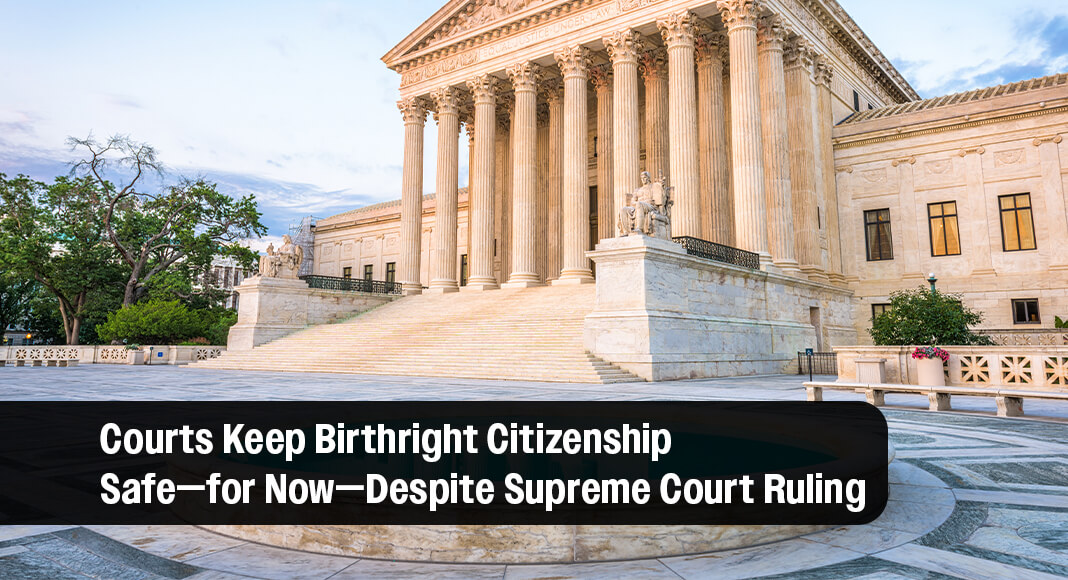
On June 27, 2025, the U.S. Supreme Court made a big change to how lower courts can stop government actions. In the case Trump v. CASA, Inc., the Court ruled 6–3 that judges can no longer issue “nationwide” or “universal” injunctions—orders that block a law or policy for everyone in the country. Instead, court orders can only protect the people who are directly part of the lawsuit.
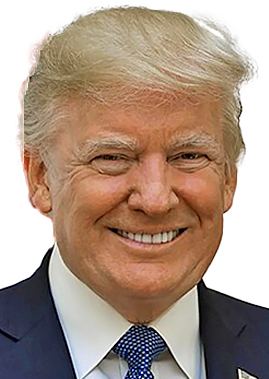
This case is tied to Executive Order 14160, which President Donald Trump signed on January 20, 2025. The order tries to take away automatic U.S. citizenship for children born in the United States to certain noncitizen parents. For more than 150 years, the 14th Amendment has been understood to give citizenship to “all persons born or naturalized in the United States” if they are under U.S. jurisdiction. The administration says that the rule should not apply to children of parents who are here illegally or on certain temporary visas.

The Supreme Court didn’t decide whether the order is constitutional—it only changed the rules about how lawsuits can block it. Justice Sonia Sotomayor, in her dissent, warned that “today’s ruling narrows the tools available to protect constitutional rights” but added that people can still challenge the order through class-action lawsuits, where a group represents everyone in the same situation.
That’s exactly what happened. On July 10, 2025, in Barbara v. Trump, a federal judge in New Hampshire blocked the executive order for all members of a certified class of people who would be affected. The judge explained that because everyone in the class faced the same harm, the order had to apply to the whole group.
Then on August 8, 2025, another federal judge in Maryland, Deborah Boardman, issued what Reuters called “the fourth court order blocking the birthright citizenship directive nationwide.” Her decision also came through a class action, which is still allowed under the Supreme Court’s new rules. She wrote that enforcing the order “would irreparably harm the rights of children who are, under the Constitution, entitled to citizenship under their birth in this country.”
On June 27, 2025, after the Supreme Court restricted the use of nationwide injunctions, the ACLU declared:
“Ultimately, we will vindicate the 14th Amendment’s fundamental promise that ensures every child born on U.S. soil is recognized as a citizen of this country from the moment they are born, regardless of their race, parentage, or which state they live in.”
And on July 10, 2025, when a federal court in New Hampshire granted class-action certification to block the executive order, ACLU speakers emphasized similar themes:
“This ruling is a huge victory and will help protect the citizenship of all children born in the United States, as the Constitution intended,” said Cody Wofsy.
As of August 13, 2025, the executive order cannot be enforced. Babies born in the U.S. are still recognized as citizens at birth, no matter their parents’ immigration status. But the fight isn’t over—the question of whether the order is legal will likely end up back at the Supreme Court.
However, University of Michigan law professor Leah Litman has indeed spoken publicly about the Supreme Court’s ruling in Trump v. CASA, Inc. (June 27, 2025) and its implications. In a June 29, 2025, interview with Hilary Golston on FOX 2 Detroit, she said:
“The Supreme Court just took away what has been lower courts’ most effective and potent tool to hold the administration accountable to the law and to enforce the law against the administration — that is the nationwide injunction.” She added that the only fallback option—class-action lawsuits—may themselves face hurdles, because the Court “has rejected class action theories” in a series of prior cases.