







Texas Border Business

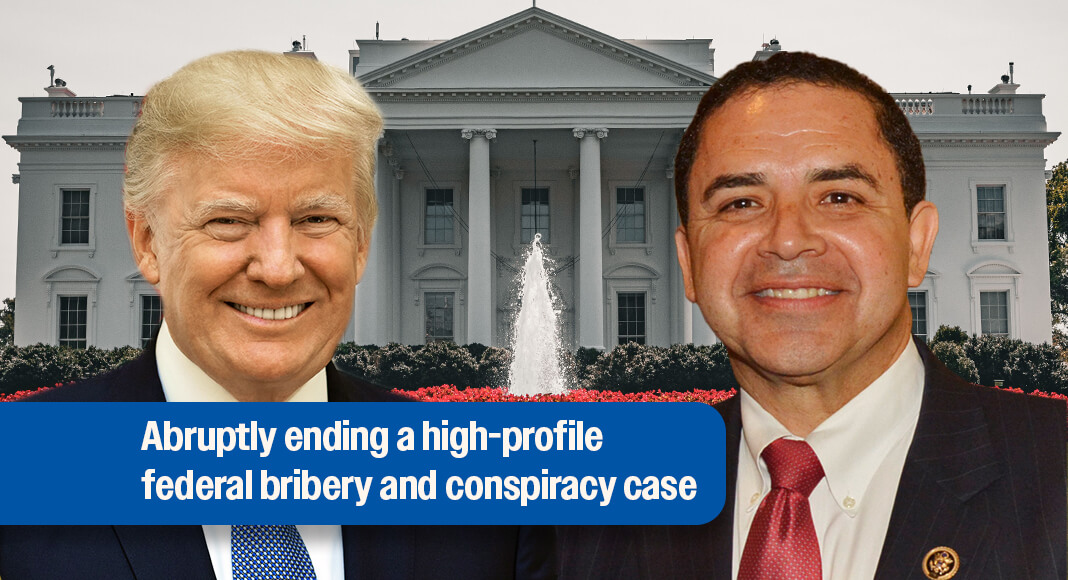
On December 3, 2025, President Donald J. Trump announced a full and unconditional pardon for Texas Representative Henry Cuellar and his wife, Imelda Cuellar — abruptly ending a high-profile federal bribery and conspiracy case against them.
Background: The Charges Against Cuellar
- A federal grand jury indicted Cuellar and his wife in May 2024 on multiple counts, including bribery, money laundering, conspiracy and acting on behalf of a foreign government. Prosecutors alleged the couple accepted roughly $600,000 from a Mexican bank and an energy company tied to Azerbaijan between 2014 and 2021 in exchange for influencing legislation and delivering favorable speeches.
- Cuellar, a longtime Democrat representing a South-Texas district along the border, has maintained his innocence — saying his congressional actions were in the interest of his constituents.
- The trial had been scheduled for April 2026, though several charges had already been dropped.
Trump’s Rationale: “Weaponized” Justice and Political Motivation

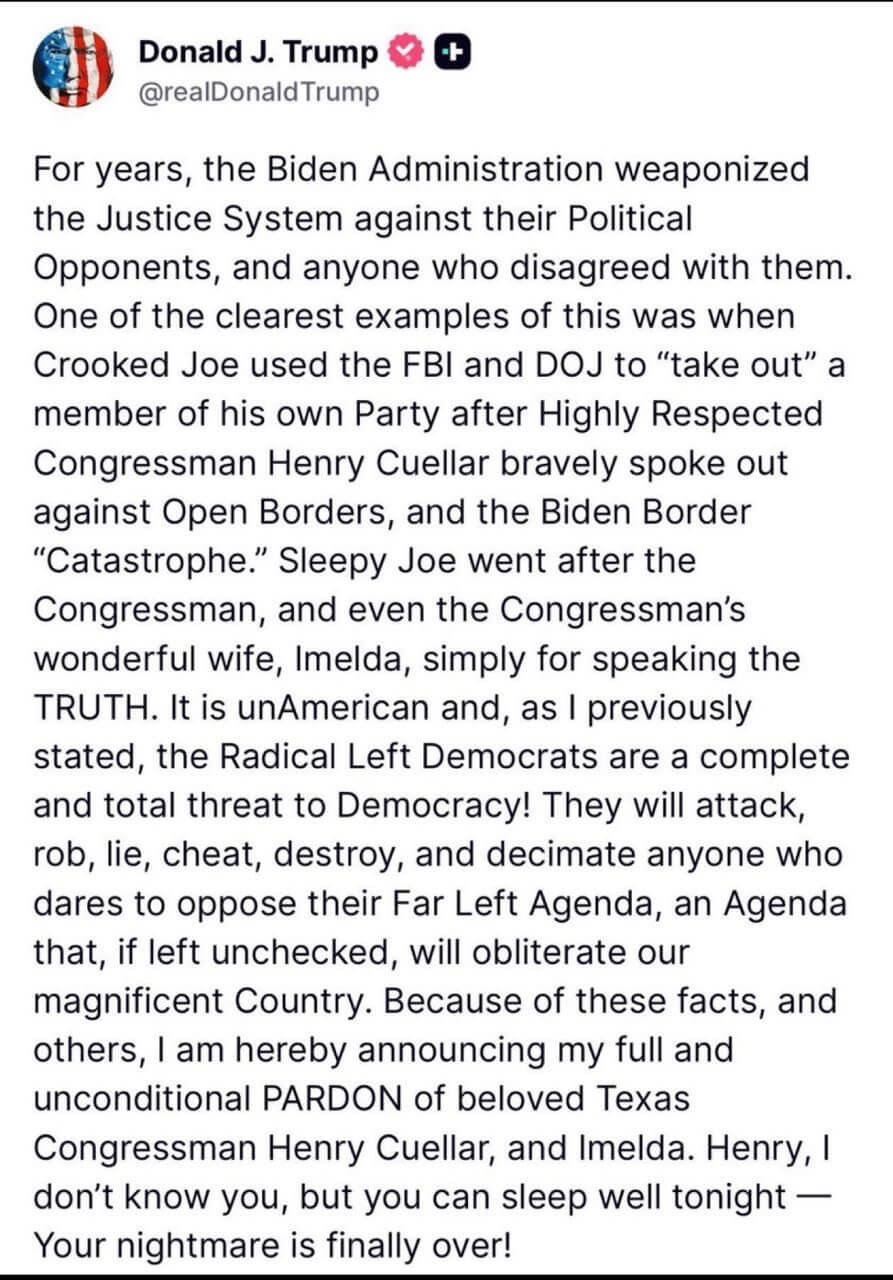
In a social-media post, Trump framed the pardon as a response to what he described as the “weaponization” of the justice system under the prior administration. He claimed Cuellar and his wife were targeted not for wrongdoing — but for dissenting on border and immigration policy.
- Trump accused the previous administration of using federal agencies to go after Cuellar “simply for speaking the TRUTH.”
- “Henry, I don’t know you, but you can sleep well tonight — your nightmare is finally over,” Trump wrote.
- The pardon — covering both Cuellar and his wife — eliminates the possibility of prosecution and ensures their federal criminal case is closed.
Observers note this is a rare instance of a Republican president granting clemency to an active Democratic member of Congress — particularly one facing serious corruption charges.
Reactions, Implications, and What Comes Next
- Cuellar responded by expressing relief and gratitude, saying the pardon allows him to move forward and focus on representing his district.
- Some political analysts warn that the pardon may deepen concerns over the politicization of the justice system, especially when high-profile cases involve parties across the aisle.
- Legal experts also highlight that, while the pardon absolves criminal liability, it may not shield against any future civil or congressional ethics investigations tied to the underlying allegations.
- In the broader context of his second term, the pardon continues a pattern of aggressive use of clemency power by Trump — one that critics argue undermines accountability and the rule of law.
The pardon of Henry Cuellar — a Democrat and long-serving congressman — by a Republican president, in the face of serious corruption charges, represents a striking moment in U.S. politics. Whether viewed as a corrective to justice gone political, or as a troubling example of executive power overriding legal process, the decision will likely fuel debate over the limits of presidential pardons and the independence of the justice system.
Related: