






Texas Border Business

Texas Border Business

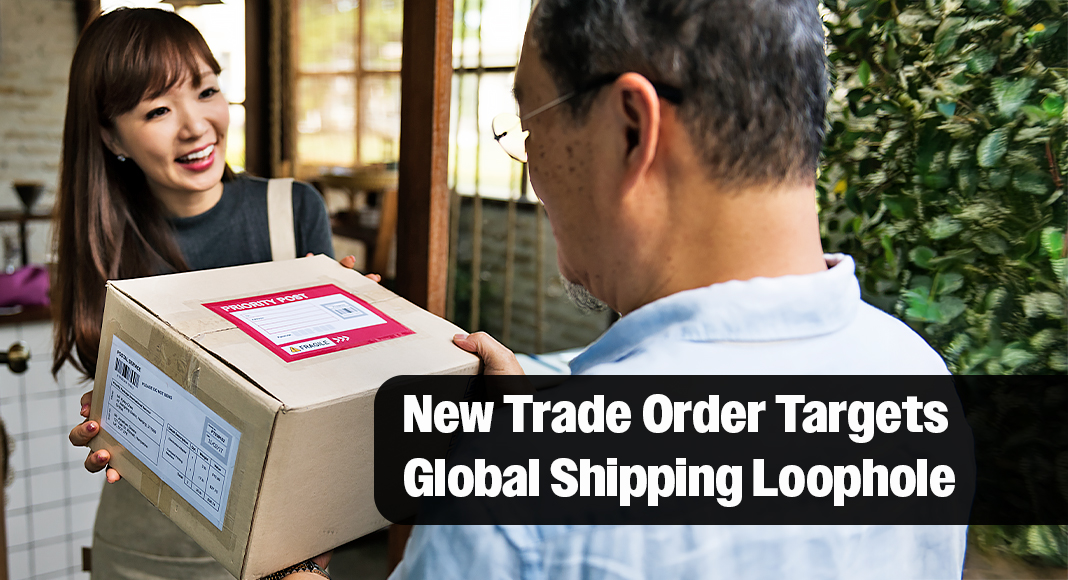
President Donald J. Trump has signed an executive order ending duty-free treatment for low-value imports, a move the White House says is aimed at protecting U.S. national security, public health, and the economy. The order, announced July 30, 2025, suspends what’s known as the “de minimis” exemption for commercial shipments entering the United States, which has allowed most packages valued under $800 to avoid paying import taxes.
“For too long, foreign shippers have exploited the de minimis privilege to flood our country with dangerous drugs, counterfeit goods, and other products that undermine American workers and businesses,” the fact sheet stated. “President Trump is taking action to close this catastrophic loophole.”

Shipments that arrive through the international postal system—like those from government-run postal services—will be taxed based on one of two systems. First is an “ad valorem” duty, which applies a percentage tariff based on the product’s value and country of origin. Second is a flat “specific duty,” ranging from $80 to $200 per item, depending on the country’s trade classification under U.S. law. However, the flat-rate option will only be allowed for six months. After that, all international postal shipments must use the percentage-based duty method.
The executive order does not affect personal exemptions. American travelers returning from abroad can still bring back up to $200 in personal items duty-free, and individuals can continue to receive gifts worth $100 or less without paying taxes.
The decision is expected to have a major impact on global shipping companies like FedEx and United Parcel Service (UPS), which handle large volumes of low-value international shipments. According to the administration, these companies have benefited from the de minimis rule because it has allowed them to bring goods into the country with minimal inspection and without customs fees. That advantage will now be eliminated.

This change could increase delivery costs for businesses that rely on overseas fulfillment centers and for consumers who purchase directly from foreign retailers. “Packages entering the United States using the duty-free de minimis exemption are typically subject to less scrutiny than traditional imports,” the fact sheet explained. “However, the packages can pose health, safety, national, and economic security risks.”
The White House cited explosive growth in the number of de minimis shipments as one of the reasons for the policy shift. Between 2015 and 2024, the volume of such shipments rose from 134 million to over 1.36 billion annually. U.S. Customs and Border Protection (CBP) currently processes more than 4 million de minimis packages every day.
The administration also pointed to widespread abuse of the exemption by bad actors. “Enforcement data consistently shows that de minimis shipments account for the majority of all cargo enforcement actions,” the White House said. In fiscal year 2024, 90% of all cargo seizures were tied to de minimis shipments, including 98% of narcotics seizures, 97% of intellectual property theft cases, and 77% of health and safety violations.
President Trump has previously taken steps to tighten control over these types of shipments. In May, he suspended the de minimis rule for packages coming from China and Hong Kong, which account for a majority of these imports. The newly signed “One Big Beautiful Bill Act” will permanently eliminate the statutory basis for de minimis exemptions by July 1, 2027. However, the President said he is acting now due to national emergencies related to fentanyl trafficking and the country’s growing trade deficit.
“President Trump is acting more quickly to suspend the de minimis exemption than the law requires, to deal with national emergencies and save American lives and businesses NOW,” the fact sheet declared.
While praised by some domestic manufacturers and labor groups, the move is likely to increase pressure on global e-commerce platforms, international sellers, and logistics providers. Companies that depend on fast, low-cost international shipping may need to revise their pricing, operations, and customs compliance strategies to adjust to the new regulations.