








Texas Border Business

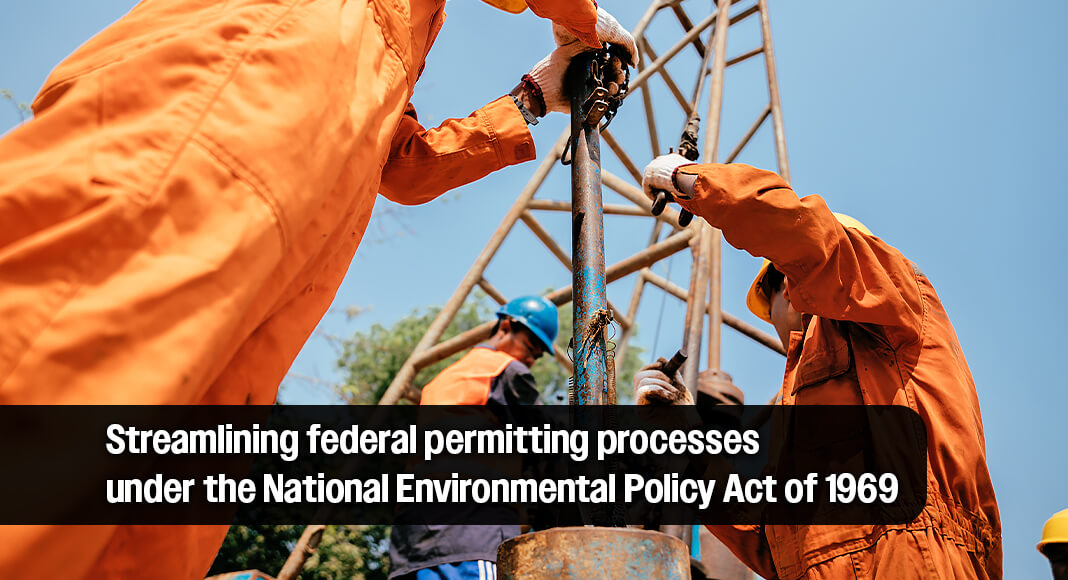
AUSTIN, Texas – The Texas Independent Producers and Royalty Owners Association (TIPRO) lauded passage of H.R. 4776, The SPEED Act, in the U.S. House of Representatives. This legislative effort, supported by TIPRO, will streamline federal permitting processes under the National Environmental Policy Act (NEPA) of 1969.
The following statement can be attributed to Ed Longanecker, President of TIPRO:

“On behalf of our nearly 3,000 members, TIPRO applauds the passage of H.R. 4776 in the U.S. House of Representatives. Comprehensive permitting reform is a strategic imperative for our country and industry. Without it, America’s energy sector, particularly oil and natural gas, cannot operate at the pace or scale needed to meet domestic needs, support allies abroad, or ensure long-term affordability for consumers. For too long, federal infrastructure approvals have languished in bureaucratic limbo, with critical energy projects delayed by years due to duplicative reviews, inconsistent agency coordination, and open-ended legal challenges.

Permitting paralysis has real-world consequences. American families feel it at the gas pump. Manufacturers see it in elevated energy costs. And communities waiting for the economic benefits of infrastructure development, including jobs, tax revenue, and improved local services, watch opportunity pass them by. In addition, the coming AI revolution, with the need to power massive data centers across the country, will drive further demand for American natural gas. When domestic production is throttled, imports from less regulated producers fill the gap, increasing global emissions and undermining U.S. environmental standards.
For the oil and natural gas industry, comprehensive permitting reform is mission critical. It unlocks investment, accelerates innovation, strengthens national security, and ensures that the United States remains a reliable energy partner to the world. At a time when energy reliability and affordability are top concerns for working Americans, we strongly encourage expedited consideration in the U.S. Senate to help reshape the federal permitting process for energy infrastructure.”
Additional TIPRO analysis:
The SPEED Act: Reforming Federal Permitting to Accelerate Economic Development
The Standardizing Permitting and Expediting Economic Development (SPEED) Act, formally designated as H.R. 4776, represents a bipartisan legislative effort to streamline federal permitting processes under the National Environmental Policy Act (NEPA) of 1969. Introduced on July 25, 2025, by Rep. Bruce Westerman (R-AR), the chairman of the House Natural Resources Committee, and cosponsored by Rep. Jared Golden (D-ME), the bill aims to reduce bureaucratic delays that have long hindered infrastructure, energy, and economic projects across the United States. By addressing inefficiencies in environmental reviews, the SPEED Act seeks to foster economic growth, enhance energy security, and support critical developments such as transmission lines, data centers, and manufacturing operations, while maintaining core environmental safeguards.
Key Provisions of the SPEED Act
The SPEED Act modifies NEPA to expedite approvals without eliminating environmental oversight. Notable provisions include:
- Standardizing Review Processes: The bill redefines “major federal actions” to exclude designations based solely on federal funding and exempts actions already reviewed under equivalent federal, state, or tribal environmental laws.
- Setting Deadlines: It imposes strict timelines for environmental assessments and impact statements, typically limiting reviews to one to two years, to prevent indefinite delays.
- Limiting Judicial Review: Lawsuits challenging NEPA compliance must be filed within 150 days of final agency action, and courts are directed to remand cases for correction rather than halting projects entirely. This provision also restricts standing to parties who submitted comments during the public review process, curbing frivolous or politically motivated litigation.
- Enhancing Agency Coordination: The legislation requires better interagency collaboration and focuses reviews on “proximate” effects directly caused by the project, excluding speculative or unrelated impacts.
These reforms are designed to balance environmental protection with economic imperatives, particularly in sectors like mining, energy production, and AI infrastructure, where permitting delays have historically increased costs and deterred investment. Supporters argue that the bill will unlock domestic resources, reduce reliance on foreign supply chains, and create jobs.
The SPEED Act is particularly vital for the oil and natural gas industry, where protracted NEPA permitting processes have significantly impeded exploration, infrastructure development, and overall energy security. Over the past five decades, NEPA has evolved into a complex framework burdened by court rulings, executive directives, and agency interpretations, resulting in unpredictable delays that deter investment, stifle innovation, and increase project costs. For oil and gas exploration, these delays have stalled federal leasing and project approvals, limiting access to domestic resources and exacerbating reliance on foreign imports, which undermines national energy independence.
In terms of infrastructure, the bill addresses barriers to constructing essential facilities such as pipelines, liquefied natural gas (LNG) export terminals, and drilling operations. Permitting bottlenecks have historically prevented timely market access for crude oil and natural gas, leading to higher flaring rates and inefficient resource utilization. By imposing reasonable timelines, reducing frivolous litigation, and streamlining interagency reviews, the SPEED Act enables faster development of these projects, ensuring they are delivered on budget and supporting more efficient production methods. This is crucial for meeting growing domestic and global energy demands, particularly amid rising needs from sectors like artificial intelligence and manufacturing.
On energy security, the legislation promotes the expansion of reliable, affordable American energy supplies, generating jobs and tax revenues while potentially reducing global emissions by displacing higher-emission foreign alternatives. Overall, by cutting red tape while preserving environmental protections, the SPEED Act positions the oil and natural gas sector to contribute more effectively to national security, economic growth, and a stable energy grid.
Senate action in 2025 remains uncertain and unlikely, however reform could gain traction in 2026 as part of larger legislative packages, such as energy security or infrastructure bills, amid partisan debates on environmental policy. Advocates are pushing for Senate consideration, emphasizing the bill’s role in national security and economic competitiveness. If enacted, the SPEED Act could significantly reshape federal permitting, potentially accelerating projects critical to AI development and domestic manufacturing in the coming years.
Information source: Texas Independent Producers & Royalty Owners Association (TIPRO)