







Texas Border Business

Texas Border Business

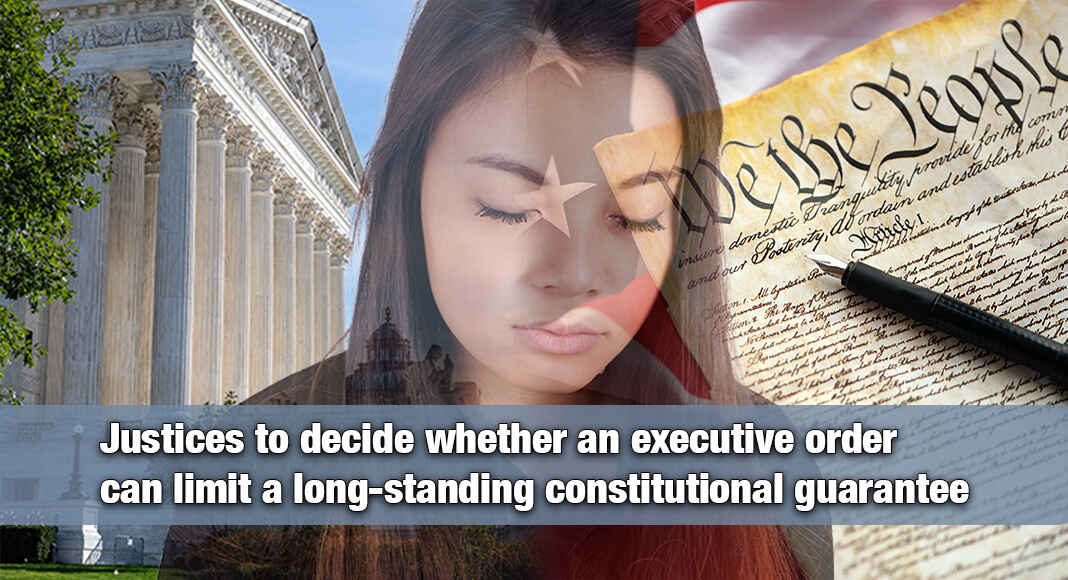
On December 5, 2025, the Supreme Court agreed to review the constitutionality of President Donald Trump’s executive order, which directs federal agencies to deny automatic U.S. citizenship to children born in the United States if neither parent is a U.S. citizen or lawful permanent resident. The order, signed on January 20, 2025, challenges what courts have long understood the 14th Amendment’s Citizenship Clause to mean.
For more than a century, that clause has been read to grant citizenship to nearly all children born on U.S. soil. Lower courts blocked Trump’s order several times, saying it likely violates constitutional protections. In June 2025, the Supreme Court limited lower courts’ ability to issue nationwide injunctions against the policy, a procedural win for the administration. Still, the Court did not decide whether the order itself was lawful.

Now that the Supreme Court has agreed to hear the case, the justices will determine whether birthright citizenship can be restricted through an executive order. Their ruling could reshape one of the country’s oldest guarantees of citizenship.
The debate over birthright citizenship has intensified amid new legal challenges, raising questions about whether the constitutional guarantee could be applied retroactively. The principle itself stems from the Fourteenth Amendment, ratified in 1868, which states that “all persons born or naturalized in the United States, and subject to the jurisdiction thereof, are citizens.” That interpretation was reinforced in 1898 when the Supreme Court ruled in United States v. Wong Kim Ark that a man born in the U.S. to non-citizen immigrant parents was a citizen under the amendment. Under these long-standing rules, anyone born on U.S. soil since 1868—unless falling under narrow exceptions such as the children of foreign diplomats—is considered a citizen at birth.
Questions about retroactivity have surfaced as courts review President Trump’s executive order seeking to limit future claims to birthright citizenship. Legal experts note that the order applies only to births after 2025 and does not attempt to strip citizenship from people already born under the existing law. Because birthright citizenship is constitutionally guaranteed, retroactive removal would require amending the Constitution, not issuing an executive order. Courts that have halted the policy’s implementation have not suggested any retroactive effect, and there is no legal precedent that would extend or revoke citizenship for births before the Fourteenth Amendment took effect.