







Texas Border Business

By Roberto Hugo González / Texas Border Business
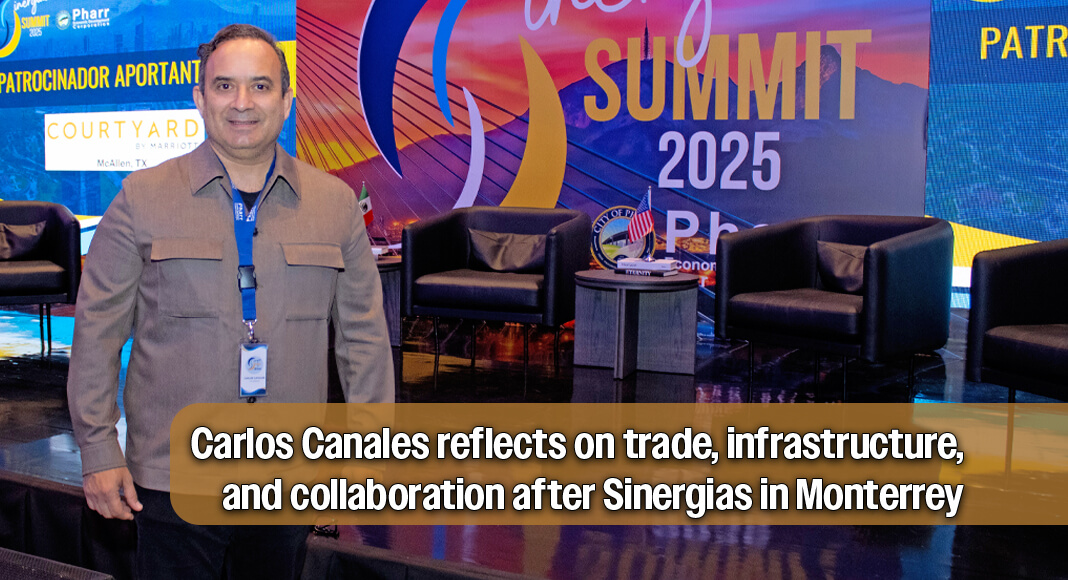
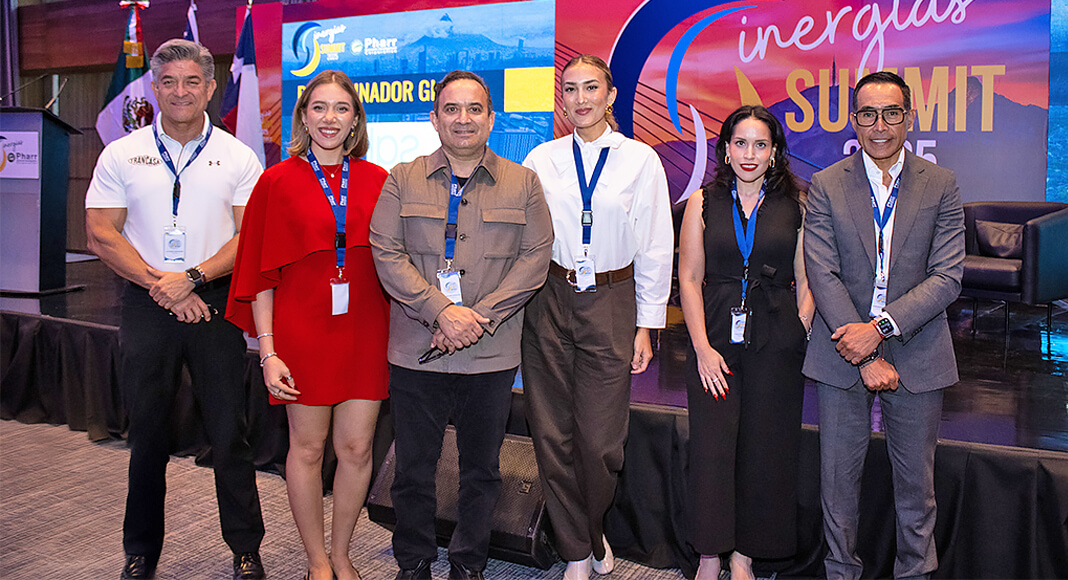
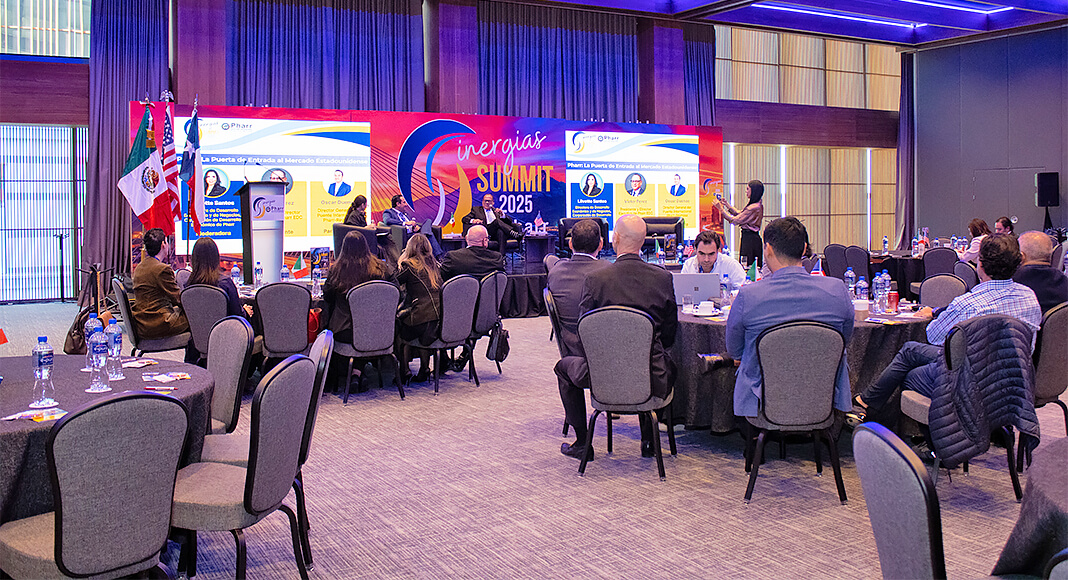
The Sinergias Summit 2025 in Monterrey, Mexico, brought together public and private sector leaders to discuss the future of cross-border trade between Texas and Mexico. Victor Perez, CEO and President of the Pharr Economic Development Corporation, developed the initiative. Among the panelists was Carlos Canales, founder and CEO of TCA Logistics and owner of TRANCASA, a fully integrated transportation and logistics operator based in the Rio Grande Valley.
Canales said a key opportunity to strengthen the Texas–Mexico border region is to understand how each port of entry operates. “When we talk about the Texas–Mexico border region, it’s essential to understand the crossing policies at each port, as they vary,” he said. Some ports specialize in cold-chain freight, while others specialize in general cargo or perishables.

He emphasized that the origin and destination directly affect efficiency. “The origin matters a lot, and so does the final destination,” Canales said, noting that different crossings offer different transit-time advantages. He cited the shift of produce crossings from Arizona to Pharr. “Years ago, everything crossed through Arizona; today, it crosses through Pharr,” he said. “Why? Because you save almost a day and a half of transit time.”
Canales described his companies as operating under a model of direct control. Through TCA Logistics, he manages technology-driven warehousing and distribution for food, medical supplies, and technology products. Through TRANCASA, he oversees transportation operations. “Because we own the infrastructure and manage the processes ourselves, we’re able to act with urgency and precision,” he said.
Technology was another primary focus at Sinergias. Canales said transportation companies must evolve. “You can’t run transportation the way it was done years ago,” he said. “Companies now require more technology to reduce headcount, operate leaner, lower operating costs, and increase profitability.” He added that technology must be integrated into all transportation operations.
Supply chain resilience was also discussed. Canales explained that TRANCASA and TCA Logistics combined transportation and logistics services to remain competitive. “That combination created a hybrid model,” he said. Under this approach, TRANCASA provides equipment and technology while working with owner-operators. “This strategy has allowed us to stay competitive in today’s global market, where cost efficiency is crucial,” he said.
Collaboration between government and industry was highlighted during the summit. Canales referenced comments by Texas State Representative Terry Canales on infrastructure improvements. “On the U.S. side, the infrastructure is already being built so that once freight exits the bridge, it connects directly into a loop that will improve transit times,” he said. He noted that current trips from the Pharr or Anzaldúas Bridge to Edinburg can take over an hour. “In logistics, time is everything,” he said.
Nearshoring was widely discussed, but Canales offered a different view. “I believe more in friendshoring,” he said. Rather than relying on new clients, his companies expanded services for existing ones. “We didn’t just offer transportation—we started offering unloading services, inventory control, raw-material handling, and management of finished goods,” he said. He added that long-term clients now occupy many warehouses. “That was possible thanks to strong long-term relationships,” he said.
Infrastructure investments were another priority. Canales highlighted the Pharr Bridge City Business Park’s proximity to the bridge. “We are just half a mile from the Pharr Bridge,” he said, noting that the city is expanding the bridge with two additional lanes. He estimates full operation by May 2026, doubling capacity. “Currently, trucks spend 3 to 4 hours waiting to cross,” he said. “During off-peak hours, they’ll be able to cross in ten minutes.”
Sustainability and workforce development were also addressed. Canales said his companies reduce emissions by operating trucks no more than 5 years old and are exploring natural-gas vehicles. On talent, he stressed balance. “Talent doesn’t come ready-made—you have to build it,” he said, adding that experienced professionals are essential to guide younger workers.
Looking ahead, Canales said summits like Sinergias reinforce long-term vision. “People must know who you are, what you do, and where you operate,” he said. He expressed confidence in North America’s future. “Mexico, the U.S., and Canada will continue driving the global economy,” he said, adding, “Fast and disorderly growth always backfires.”