








Texas Border Business

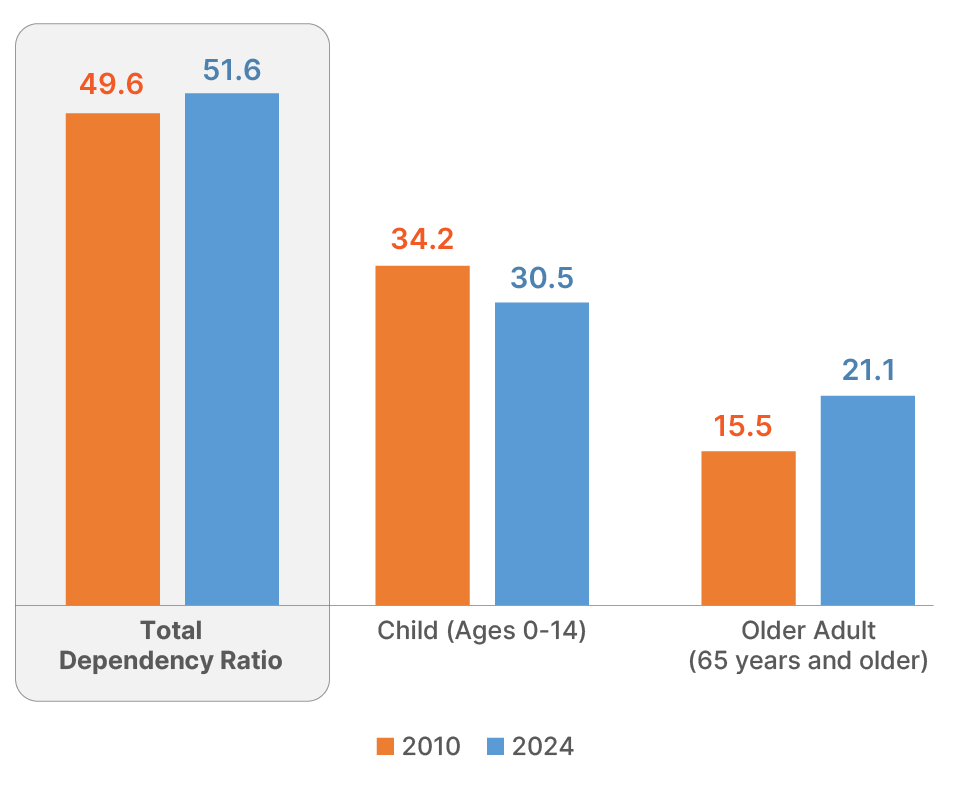
According to the Texas Demographic Center, Texas is experiencing a notable demographic shift as its population ages, a trend reflected in the rising dependency ratio across the state. Between 2010 and 2024, the state’s dependency ratio increased significantly, reaching 51.6 in 2024. This means that for every 100 working-age individuals (ages 15–64), there were approximately 52 dependents—children under 15 and adults aged 65 and older. In other words, many working-age adults are caring for both children and senior family members.
The primary driver of this change has been the rapid growth of the older adult population, which is expanding more quickly than the working-age population. This shift has important implications for the state’s economy, healthcare system, and social services, as a larger share of the population requires support without contributing directly to the labor force.
Age Dependency Ratios in Texas, 2010 – 2024

Age Dependency Ratios in Texas by County, 2024
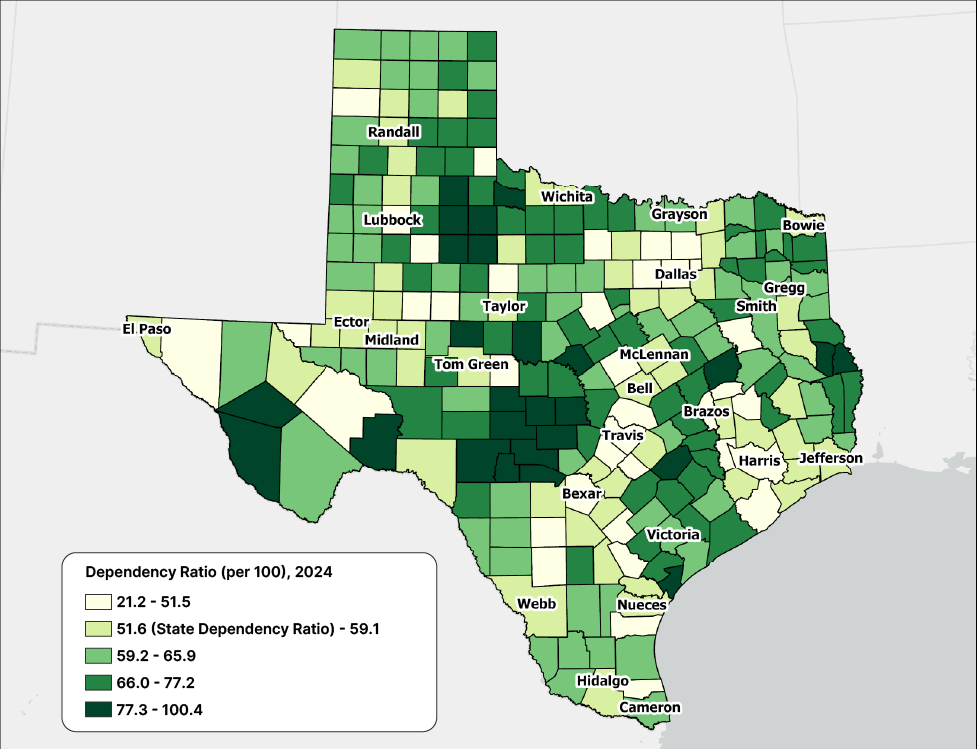
The impact of aging is not uniform across Texas. Counties west of I-35 tend to have the highest dependency ratios, indicating a greater proportion of dependents relative to workers in these areas. These regional disparities suggest that some communities may face more acute challenges in supporting aging populations, particularly in terms of healthcare access, transportation, and caregiving resources.
As Texas continues to grow and age, policymakers and local leaders will need to consider targeted strategies to address the needs of older adults, while also ensuring that the working-age population is equipped to sustain economic productivity and care for dependents.
Age Dependency Ratios in Texas by County, 2024
Information source: Texas Demographic Center. https://www.demographics.texas.gov