








Texas Border Business

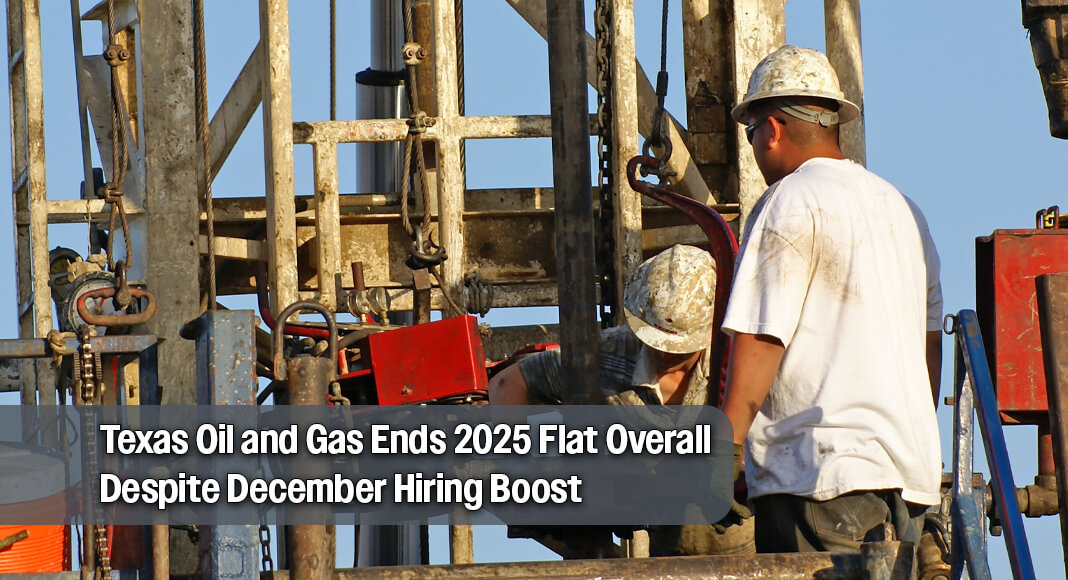
AUSTIN – Citing the latest Current Employment Statistics (CES) report from the U.S. Bureau of Labor Statistics (BLS), the Texas Independent Producers and Royalty Owners Association (TIPRO) highlighted new employment figures for the Texas oil and natural gas industry. According to TIPRO, employment in the Texas upstream sector increased between November and December 2025, with oil and natural gas extraction jobs rising by 500 to 70,200 (+0.7 percent m/m), while support activities employment grew by 1,500 to 133,200 (+1.1 percent m/m). Combined upstream employment increased by 2,000 jobs to 203,400 (+1.0 percent m/m), reported TIPRO.
From January to December 2025, employment in the Texas upstream sector showed early gains followed by later fluctuations, noted TIPRO. Oil and Gas Extraction added a net 2,000 jobs (+2.9 percent), reaching a peak of 70,200 in June, July, and December, driven by robust Permian production despite market pressures. Support Activities employment recorded a net loss of 2,100 jobs (-1.6 percent), with a February–May surge (+2,800) partially offset by mid-year declines (-3,400 in June–July) and subsequent volatility, reflecting rig count reductions and service sector adjustments. Combined, the sectors ended essentially flat, with a net change of -100 jobs (-0.05 percent), reaching 203,400 by December and underscoring the industry’s critical yet volatile role in sustaining Texas’ energy workforce.
TIPRO’s workforce data continues to indicate strong job postings for the Texas oil and natural gas industry in December, but analysis revealed a continued decline in Q4 driven by lower oil prices, industry consolidation and ongoing efficiency gains, which allow companies to maintain or increase production with reduced hiring activity. According to the association, there were 7,887 unique industry job postings in Texas during the month of December compared to 8,619 in November, and 2,957 new job postings added during the month. In comparison, the state of Pennsylvania had 2,839 unique job postings in December, followed by California 2,400, Ohio 2,050, and Illinois 1,985. TIPRO reported a total of 54,284 unique job postings nationwide during the month of December within the oil and natural gas industry, including 20,251 new postings.

Among the 19 specific industry sectors TIPRO uses to define the Texas oil and natural gas industry, Support Activities for Oil and Gas Operations led in the ranking for unique job listings in December with 1,780 postings, followed by Gasoline Stations with Convenience Stores (1,559), Petroleum Refineries (660) and Crude Petroleum Extraction (536). The leading four cities by total unique oil and natural gas job postings were Houston (1,911), Midland (533), Dallas (329) and Odessa (279), said TIPRO.
The top four companies ranked by unique job postings in December were Love’s (670), Energy Transfer (281), ExxonMobil (280) and Baker Hughes (193), according to the association. Of the top ten companies listed by unique job postings in December, four companies were in the services sector, three in the gasoline stations with convenience stores category, two midstream companies and one fully integrated oil and natural gas company. Top posted industry occupations for December included maintenance and repair workers general (299), heavy and tractor-trailer truck drivers (291), and retail salespersons (279).
Top qualifications for unique job postings in December included valid driver’s license (1,434), commercial driver’s license (CDL) (224) and tanker endorsement (139). TIPRO reports that 38 percent of unique job postings had no education requirement listed, 34 percent required a bachelor’s degree and 29 percent required a high school diploma or GED. There were 1,952 advertised salary observations (25 percent of the 7,887 matching postings) with a median salary of $52,100. The highest percentage of advertised salaries (32 percent) were in the $75,000 to $500,000 range.
Additional TIPRO workforce trends data:
- A list of unique job postings by state in December can be viewed here.
- A sample of industry job postings in Texas for December can be viewed here.
- The top three posting sources in December included www.indeed.com (2,921), www.simplyhired.com (2,049) and www.dejobs.org (1,040).
Even though the industry’s tax impact has declined slightly in more recent months as a result of shifting market conditions and falling oil prices, TIPRO adds, tax contributions by the state’s oil and natural gas industry still are significant and continue to provide funding for important state services and programs that include public education, road and highway construction, first responders and much more. According to recent data from the Texas comptroller’s office, in December, Texas energy producers paid $394 million in state oil production taxes. Notably, Texas producers also in December paid $169 million in additional state natural gas production taxes.
Moreover, in Q4 of 2025, the U.S. oil and natural gas sector demonstrated strong operational resilience, achieving record production levels that reinforced America’s position as the world’s leading energy supplier. West Texas Intermediate (WTI) crude oil averaged approximately $59.65 per barrel during the quarter, contributing to a full-year average near $65 per barrel. Domestic operators drove annual crude production to a historic high of 13.6 million barrels per day, led by continued efficiency gains in the Permian Basin despite a declining rig count. Prices faced persistent downward pressure from abundant global supply and moderated demand growth.
Texas producers played a pivotal role in 2025, contributing approximately 42–43 percent of U.S. crude oil production at an average of around 5.8 million barrels per day (with monthly peaks reaching 5.9 million barrels per day), underscoring the state’s unmatched leadership amid persistent market headwinds. Natural gas markets showed a meaningful rebound late in the quarter, with Henry Hub prices averaging about $3.52 per million British thermal units for the year, a 56 percent increase from 2024 lows, driven by seasonal heating demand and proactive supply management that helped meet winter needs effectively. Texas natural gas production reached record levels, estimated at nearly 13.6 trillion cubic feet annually, underscoring the state’s critical supply contributions.
Several factors shaped these market dynamics. Record U.S. production and OPEC+ output increases created a well-supplied global market, while demand growth slowed to around 850,000 barrels per day due to economic normalization, trade uncertainties and softer consumption in key regions. Geopolitical conditions provided little upward support, and seasonal inventory builds added temporary downward pressure on WTI. For natural gas, winter weather preparations and demand surges offered significant relief, though abundant supply growth limited the magnitude and duration of price gains.
Early indicators for Q1 2026 show continued challenges for domestic producers. WTI crude oil hovered around $60 per barrel through much of January amid persistent global surplus conditions but has risen sharply in recent days to around $64–$65 due to heightened geopolitical tensions involving Iran and associated supply disruption concerns. U.S. oil production remains near 13.6 million barrels per day but is showing early signs of a near-term plateau, with modest declines anticipated as operators maintain disciplined capital allocation in response to lower price realizations and margin compression.
Natural gas prices moderated below $3.50 per million British thermal units following a Q4 2025 rally, though extreme cold associated with Winter Storm Fern drove sharp, short-term spikes at Henry Hub in late January 2026. Looking ahead, Q1 2026 is expected to feature a slight softening, with Henry Hub averaging around $3.40 per million British thermal units amid assumptions of milder weather and supply that remains well-aligned with demand. For the full year 2026, the annual average is projected to stay near $3.50 per million British thermal units, essentially flat with 2025 levels, as production growth largely matches moderate demand increases. Although colder-than-normal weather and events like Winter Storm Fern have delivered short-term price relief through elevated demand, the longer-term outlook is strengthening, with increased electricity consumption from data centers and rising LNG exports expected to support higher utilization and more durable demand growth beyond weather-related fluctuations.
The following statement can be attributed to Ed Longanecker, president of TIPRO:
“Texas producers have once again proven their ability to deliver essential energy reliably even under sustained market pressure. As the cornerstone of U.S. production, Texas continues to lead through innovation, cost discipline and a steadfast focus on operational excellence. The current environment demands careful resource management and realistic expectations. Federal policies that prioritize domestic energy expansion, expedite permitting and eliminate unnecessary regulatory obstacles will be critical to maintaining investment momentum, protecting jobs and ensuring affordable energy for American families and businesses. TIPRO is dedicated to advancing those priorities on behalf of our members and the state.”
Information source: Texas Independent Producers and Royalty Owners Association (TIPRO)