








Texas Border Business

By Roberto Hugo González / Texas Border Business
Raymondville, Texas – A McAllen, Texas, family connected to the McAllen High School Mariachi Oro program was released from immigration detention on March 9, 2026, after members of Congress from both parties contacted federal authorities about the case.
The family, identified as the Gámez-Cuéllar family, includes parents Luis Antonio Gámez and Emma Guadalupe Cuéllar and their children Antonio Yesayahu Gámez-Cuéllar, 18; Caleb Gámez-Cuéllar, 14; and Joshua Gámez-Cuéllar, 12. The family lives in McAllen, Texas.

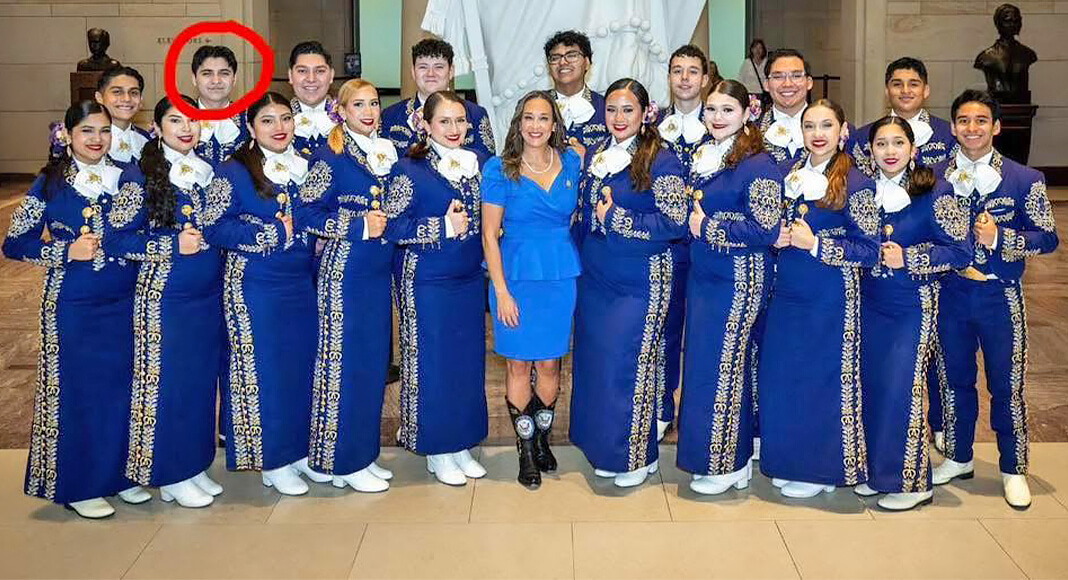
Antonio Gámez-Cuéllar is a senior at McAllen High School and first-chair trumpet in the Texas All-State Mariachi ensemble. He and his younger siblings are members of the school’s Mariachi Oro program, a nationally recognized student mariachi ensemble that has performed at venues including the White House and Carnegie Hall.
On June 10, 2025, U.S. Rep. Monica De La Cruz hosted the Mariachi Oro students in Washington. De La Cruz wrote on Facebook that day, “I had the honor of hosting the talented McAllen High School Mariachi Oro today in DC! Wow! What a performance! They brought me to tears!” The performance took place at the Rayburn House Office Building. U.S. Rep. Joaquin Castro also participated in the event.

According to reports about the immigration case, the Gámez-Cuéllar family migrated to the Rio Grande Valley in 2023 after leaving San Luis Potosí, Mexico. They entered the United States through the CBP One asylum appointment system and began pursuing an asylum claim while living in McAllen.
Their immigration case required them to attend periodic check-ins with federal authorities while the asylum process continued.

On Feb. 25, 2026, the family attended a scheduled appointment with immigration officials. During the appointment, agents from U.S. Immigration and Customs Enforcement took the family into custody. ICE operates under the U.S. Department of Homeland Security, while the earlier CBP One entry system is administered by U.S. Customs and Border Protection.

Family members and advocates said the detention occurred even though the family had complied with immigration reporting requirements while awaiting their asylum proceedings.
After the detention, family members were separated into two different immigration facilities in South Texas.
Antonio Gámez-Cuéllar, who is 18, was held at the El Valle Detention Facility in Raymondville, Texas, an adult immigration detention center.
His parents and two younger brothers were held at the South Texas Family Residential Center in Dilley, Texas, a large federal family detention facility that houses migrant parents and children.
The detention became widely known on March 7 and March 8, when relatives and community members publicized the case. Supporters held demonstrations outside the Raymondville detention facility, drawing attention to the fact that two members of the Mariachi Oro program were unable to participate in school activities and competitions.
Several lawmakers publicly questioned the detention. Members of Congress contacted immigration authorities and asked federal agencies to review the case.
Among those involved were De La Cruz, a Republican who represents Texas’ 15th Congressional District, and Castro, a Democrat representing Texas’ 20th District. U.S. Rep. Vicente Gonzalez was also among the lawmakers who raised concerns.
Lawmakers said the family was seeking asylum and that no criminal charges had been reported in connection with the case.
Between March 8 and March 9, members of Congress contacted officials at ICE and the Department of Homeland Security and visited detention facilities as part of efforts to secure the family’s release.
On March 9, Antonio Gámez-Cuéllar was released from the Raymondville detention facility. His parents and younger brothers were released from the Dilley family detention center the same day.
Lawmakers confirmed the release after visiting the facility.
The Gámez-Cuéllar family was held under civil immigration detention, which is used during immigration enforcement and court proceedings rather than criminal prosecution.
Their asylum case remains pending in immigration court.
The case received national attention because the detention occurred during a routine immigration appointment and involved student musicians from a high-profile school mariachi program. Community protests, media coverage, and statements from members of Congress drew scrutiny to the detention.
As of March 9, all five family members had been released from immigration detention while their immigration case continued.