







Texas Border Business

By David Diaz / Texas Border Business
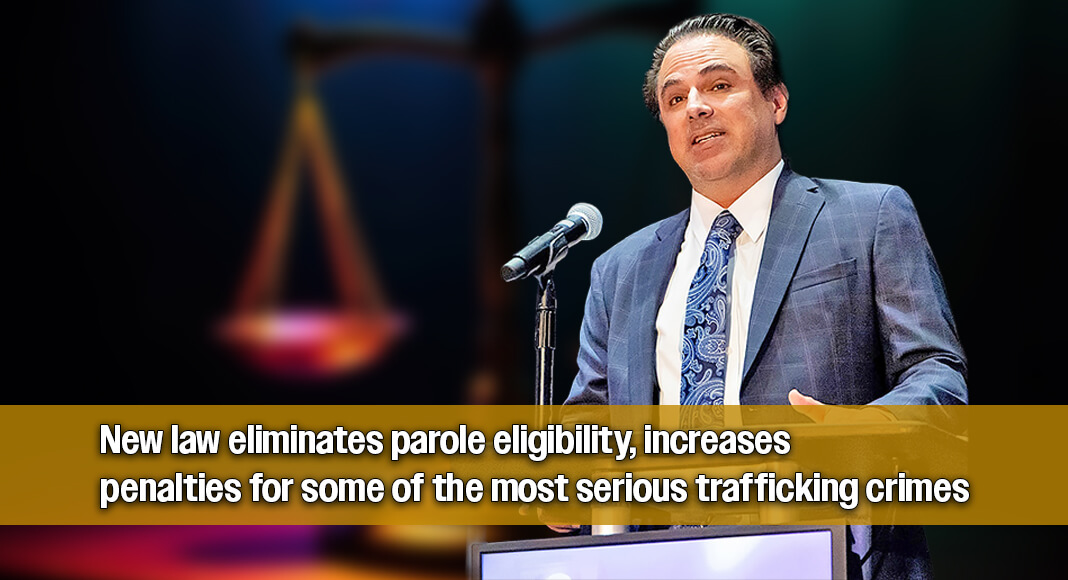
Texas lawmakers have enacted sweeping legislation to ensure that individuals convicted of trafficking children and people with disabilities will no longer be eligible for parole, marking one of the state’s strongest actions yet against human trafficking.
House Bill 2306, coauthored by Rep. Terry Canales of Edinburg and authored by Rep. Denise Villalobos of Robstown, took effect Sept. 1, 2025. The law removes parole eligibility for offenders convicted of trafficking children or disabled individuals, placing those crimes among the most serious offenses under Texas law.

“Before the passage of this measure, people convicted of trafficking offenses had to serve at least half of their sentence, or 30 years, whichever is minimum,” Canales said. “The sentencing is 25 years to life, so a convicted human trafficker could have served as little as 12 years and get released on parole.”
Under the new law, offenders convicted of trafficking a child or a person with disabilities for labor or sexual exploitation must serve their full sentence without parole. The statute also applies to individuals who profit from trafficking operations or cause victims to engage in sexual acts.
Human trafficking in Texas is defined as the use of force, fraud, or coercion to obtain labor or commercial sex. The crime includes both adult and child trafficking and does not require proof that a victim was transported.
The bill was sponsored in the Senate by Sen. Tan Parker of Flower Mound and received bipartisan support. Survivor advocates played a central role in advancing the legislation.
Lawmakers cited research from the U.S. Department of Justice showing high recidivism rates among individuals convicted of sexual exploitation and trafficking of minors, with some studies estimating reoffense rates as high as 70 percent.
House Bill 2306 was one of two major anti-trafficking measures passed in 2025. The second, Senate Bill 1212, raised all human trafficking offenses to first-degree felonies. That bill was authored by Sen. Angela Paxton and sponsored in the House by Rep. Helen Kerwin.
Gov. Greg Abbott signed both bills into law at a ceremony at the Governor’s Mansion. “We want to ensure that we do all we can so that human traffickers never walk the streets of Texas again,” Abbott said.
A first-degree felony in Texas carries a sentence of five to 99 years in prison and a fine of up to $10,000. Supporters of the legislation say the changes ensure traffickers serve their full sentences and better protect victims.