







Texas Border Business

Texas Border Business
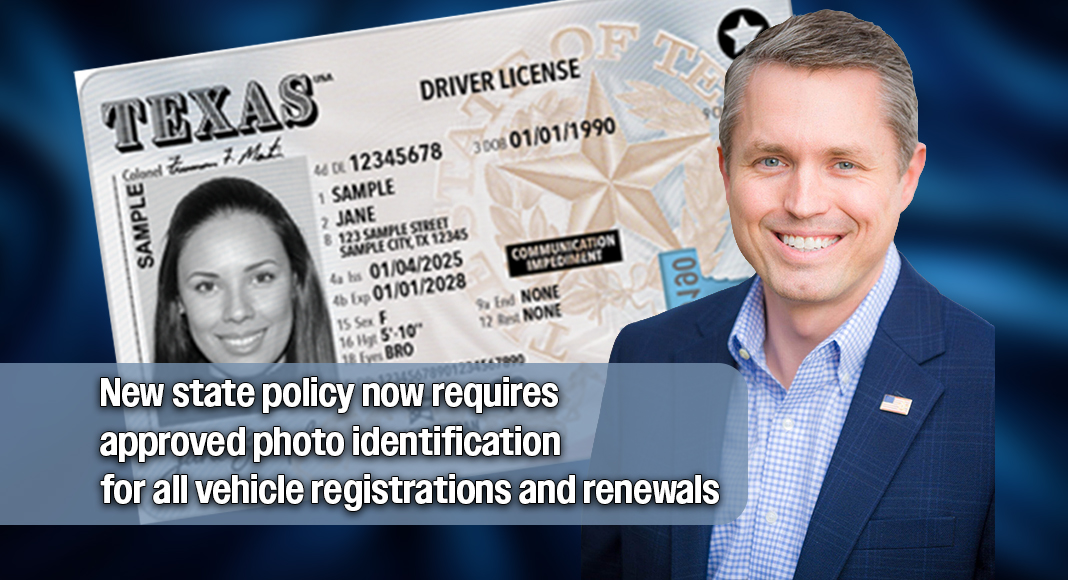
The Texas Department of Motor Vehicles has implemented a new requirement mandating that all vehicle owners present an approved form of photo identification when registering a vehicle or renewing an existing registration. The policy was communicated to county tax offices on Nov. 18 and took effect immediately, according to the agency. The San Antonio Express-News first reported the change.
On Nov. 19, licensed vehicle dealers were also notified that customers must show approved photo identification at the time of sale. A DMV spokesperson said the updated guidance is “intended to ensure the validity of identification documents required as part of the state’s vehicle registration process.”

The list of accepted IDs provided by the DMV includes a Texas driver’s license, an unexpired U.S. passport, a Texas License to Carry, and identification issued by the U.S. military, the Department of Homeland Security, U.S. Citizenship and Immigration Services, and the Department of State.

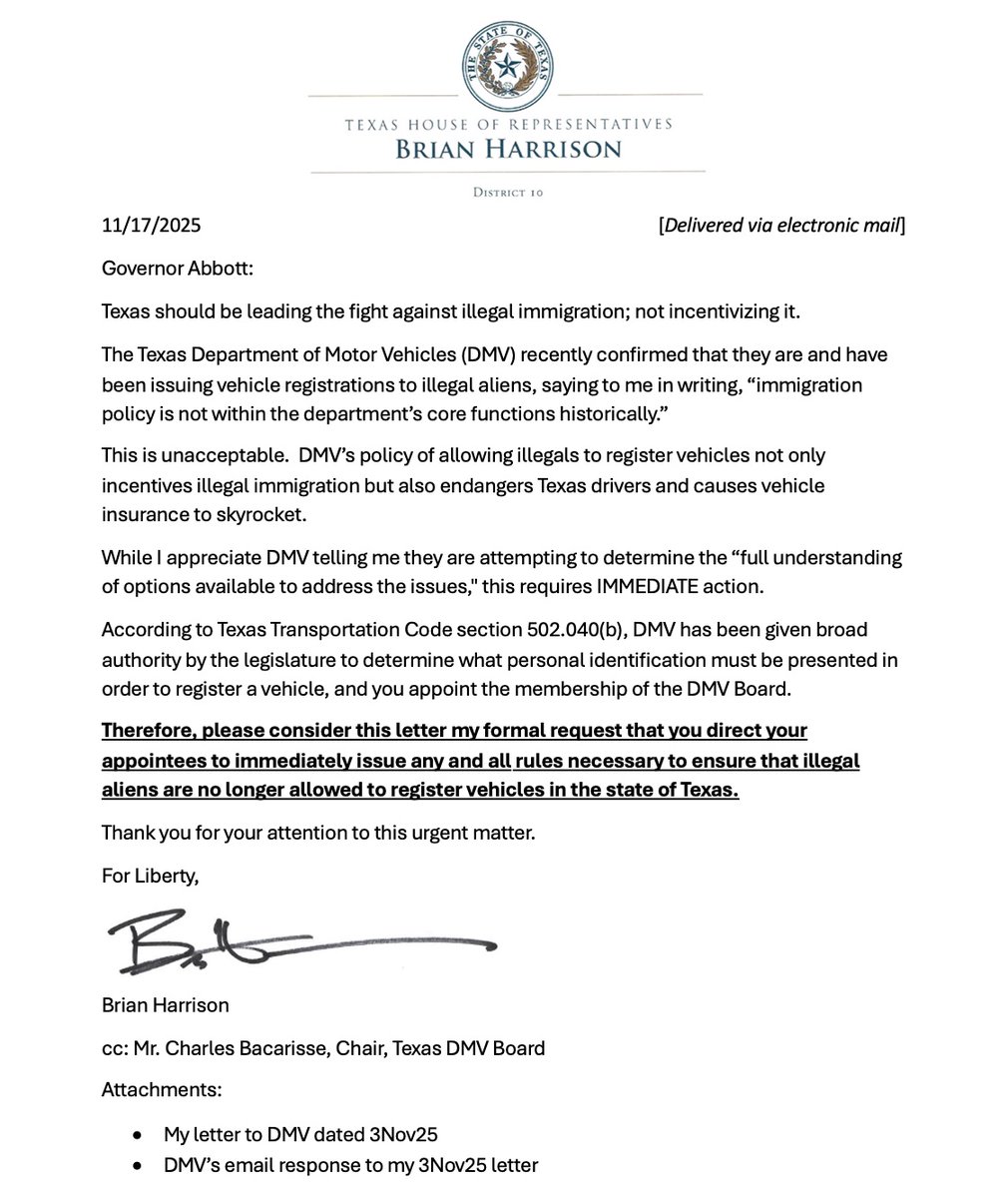
State Rep. Brian Harrison, R-Midlothian, has publicly called for stricter registration rules in recent weeks. Harrison said he had raised concerns to state officials and sent letters to the DMV and the governor’s office before the announcement. He also said he believes the change will reduce what he described as safety and insurance problems on Texas roads. See the letter below.
An estimated 1.7 million undocumented immigrants live in Texas. Some immigration advocates said the new requirement creates uncertainty for people who do not possess one of the approved IDs.
Monica Rodriguez, who operates a title and insurance agency in Austin, said her office has been receiving numerous inquiries about the policy. “The calls are flooding in with people just asking questions,” she said.

Emily Heger, a Texas A&M law professor and director of the university’s Immigrant Rights Clinic, wrote in an email that the shift could affect groups such as asylum applicants and individuals with expired DACA protections, noting that some of these individuals have lived in the U.S. for a long time and hold work authorization.
Alycia Castillo, associate director of policy for the Texas Civil Rights Project, said the organization is hearing concerns about the implications for drivers who may become unable to renew registrations under the new requirements.
Monica Rodriguez, Emily Heger, and Alycia Castillo made their comments to the Texas Tribune.
Read the letter below:
See related stories: