






Texas Border Business

By Roberto Hugo González / Texas Border Business
McAllen, Texas -A strategic binational meeting organized by COSTEP, Council for South Texas Economic Progress, brought together higher education leaders from South Texas and Northern Tamaulipas to strengthen academic collaboration, workforce alignment, and regional economic development. The Binational Higher Education Advisory Council meeting took place on December 3, 2025, at the Cambria Hotel near the McAllen Convention Center in McAllen, Texas.
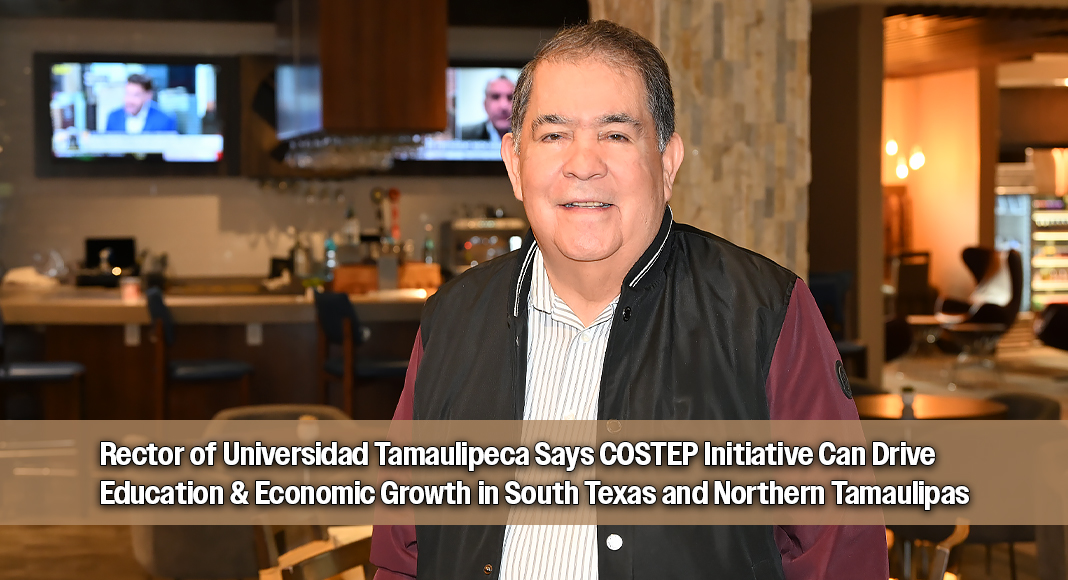
Among the participants was Oscar Uvaldo Aguilera Rodríguez, founder and rector of Universidad Tamaulipeca. Aguilera Rodríguez said he has served as rector for 30 years and founded the university in Reynosa, Tamaulipas. The institution is headquartered in Reynosa and operates additional campuses in Río Bravo and Matamoros. He also serves as president of a consortium representing 18 universities in Tamaulipas.

Aguilera Rodríguez described the COSTEP meeting as strategic and highly positive for both sides of the border. “This is really very good,” he said. “It is going to create a development process for municipios in Tamaulipas and for Rio South Texas and the surrounding municipalities. It is going to be something very positive.”
The meeting outlined the creation and purpose of the Binational Higher Education Advisory Council, a collaborative initiative designed to formally connect universities with industry across the U.S.–Mexico border. The effort focuses on aligning academic programs with labor market needs, particularly in sectors such as automotive and advanced manufacturing, while promoting student mobility, shared data systems, and coordinated planning. Organizers described the meeting as an essential step toward building a talent-driven, cross-border workforce ecosystem.
When asked whether it is realistic to coordinate education and workforce planning across such a large binational region, Aguilera Rodríguez said it is feasible. “Yes, definitely,” he said. “There are many universities on both sides of the border.” Speaking as president of the consortium, he added, “We are 18 universities, and we will have the capacity to do it.”
Aguilera Rodríguez also shared the history of Universidad Tamaulipeca, which he said was founded in response to limited higher education options in Reynosa three decades ago. At the time, many students were forced to travel to Monterrey to study. “People made many sacrifices,” he said. “Sometimes families went without food so their children could have a chance to study.”
He said the university was created to give local students access to higher education without leaving their community. “We started Universidad Tamaulipeca 30 years ago with four degree programs,” Aguilera Rodríguez said. “Now we have more than 30 programs.”
He mentioned psychology and law among the degrees offered and said they are essential to the development of the city, the state of Tamaulipas, and the country. He confirmed the institution has always been called Universidad Tamaulipeca and said the name was chosen intentionally. “We wanted it to go directly to the heart of the people of Tamaulipas,” he said.
Aguilera Rodríguez said this was his first direct participation with COSTEP, although he noted that his son had previously been involved in discussions with the organization. “This is the first time I was personally invited to come and see the planning,” he said.
He closed by thanking the organizers of the meeting and emphasizing its regional importance. “This is a step toward developing the Rio South Texas area with Northern Tamaulipas,” Aguilera Rodríguez said. “It is something wonderful, and we are going to be able to bring both countries together to grow our young people and our communities.”