





Texas Border Business

Texas Border Business
The Supreme Court of the United States is set to hear arguments on April 1, 2026, in a case that could reshape how citizenship is granted in the United States. The dispute centers on a January 20, 2025 executive order issued by Donald Trump that seeks to limit automatic citizenship for certain children born on U.S. soil.
According to the Court’s public docket, the case, Trump v. Barbara, has been scheduled for oral argument after the justices agreed to review it in late 2025. The executive order at issue would deny citizenship to some children born in the United States if their parents are in the country unlawfully or on temporary status. Court filings state that the policy would apply to births occurring more than 30 days after the order’s effective date.

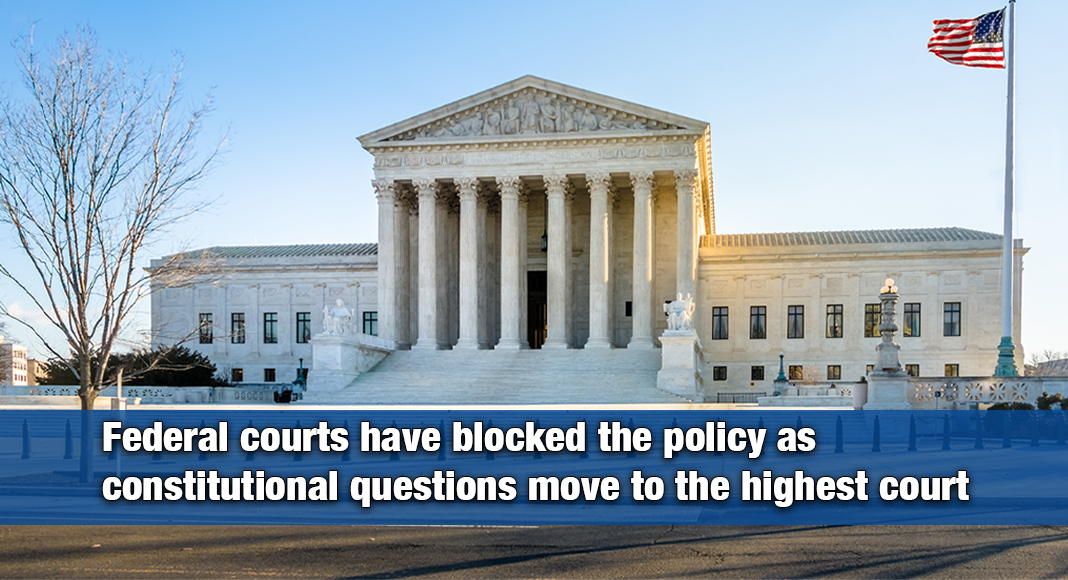
As of now, the policy has not taken effect. Multiple federal courts have blocked enforcement while legal challenges proceed. The Associated Press reported that the restrictions “have never taken effect,” noting that judges at different levels have ruled against the order. Legal analysis published by SCOTUS blog states that “all lower courts that have weighed in so far have ruled the order unconstitutional.”
The case focuses on the Citizenship Clause of the Fourteenth Amendment to the United States Constitution, which declares that all persons born in the United States and subject to its jurisdiction are citizens. Opponents of the executive order argue that this language has long been interpreted to guarantee citizenship to nearly all individuals born in the country, citing the precedent set in United States v. Wong Kim Ark. In that decision, the Court held that a child born in the United States to non-citizen parents was a citizen under the Constitution.
Supporters of the administration’s position argue that the phrase “subject to the jurisdiction thereof” has been interpreted too expansively and should exclude certain categories of individuals. Reporting from Reuters indicates that the administration contends the current understanding of the clause does not reflect its original meaning.
The stakes of the case are significant. Reuters reported that the outcome could affect “hundreds of thousands of U.S.-born children each year” if the policy were ultimately upheld. For now, however, birthright citizenship remains unchanged while the Supreme Court considers the arguments.
The upcoming hearing marks a pivotal moment in a long-running legal and political debate. A final decision from the Court is expected later in its term, which typically concludes in late June. Until then, the existing interpretation of the Constitution continues to govern how citizenship is granted at birth in the United States.