







Texas Border Business

By Roberto Hugo González
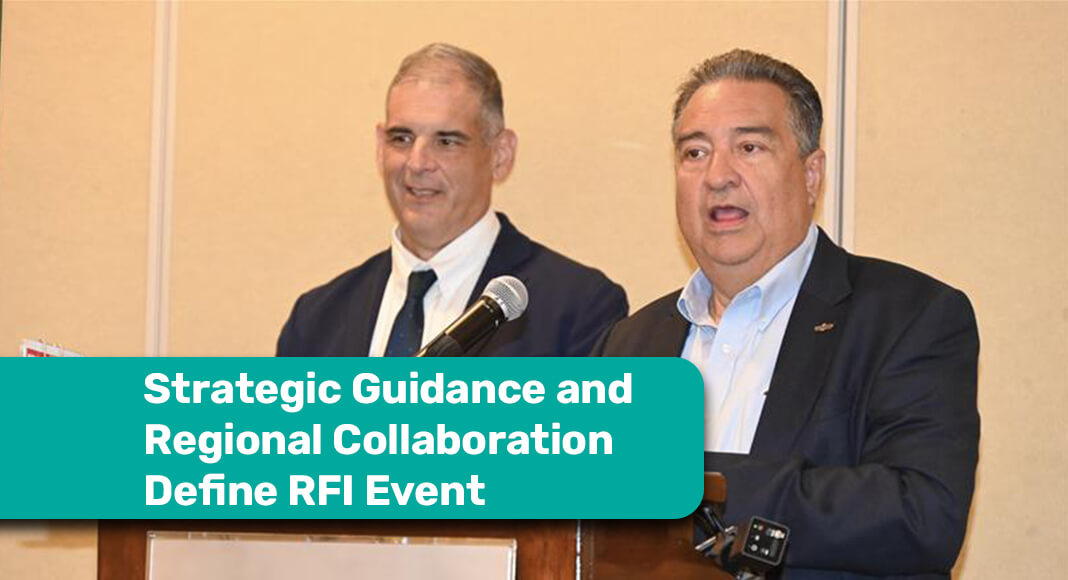
The “Request for Information Best Practices” event held on August 5, 2025, in Harlingen, Texas, offered economic development leaders across South Texas a crucial opportunity to better understand the RFI process and how to compete for financial investment. Organized by the Council for South Texas Economic Progress (COSTEP), the event featured presentations from both the public and private sectors. It attracted a strong showing of regional leaders, EDCs, and board members eager to elevate their approach to project attraction.
At the core of the event was the essential role RFIs play in economic development. Site selectors and state officials alike emphasized that a well-executed RFI can determine whether a community gets considered—or overlooked—for significant business investment. Yet many regions, particularly in South Texas, are underrepresented in the statewide pipeline. COSTEP CEO Adam Gonzalez addressed this head-on, noting, “We simply aren’t submitting enough RFIs… But that shouldn’t discourage us.” Instead, he positioned the issue as a challenge that regional leaders can meet through coordination and readiness.

Gonzalez’s remarks reflected a deep understanding of the economic development landscape. He provided context by referencing both infrastructure gaps and opportunities for growth, emphasizing the need for persistent participation. “Even if we don’t land a specific project, just participating in the process helps create awareness of the assets we have in the region,” he said. His call for unity was particularly resonant: “The South Texas region stretches quite far—even up to San Antonio and down to El Paso.” The message was clear: collaboration is essential if communities want to compete at a higher level.
Rick Carrera, Director of Economic Development at COSTEP, was the event’s logistical lead and a driving force behind its success. While his on-stage contributions were minimal by design, Carrera played an essential role in execution. From managing coordination with the Governor’s Office to securing high-value speakers such as Sean Ferguson and Michael Camden, Carrera ensured that the day ran smoothly and the content was focused.
The recommendations offered by Ferguson and Camden were not only well-received but widely viewed as actionable. Ferguson, representing the Governor’s Office of Economic Development and Tourism, walked attendees through the full lifecycle of an RFI—from intake to site selection—and clarified the importance of providing complete, accurate, and deadline-sensitive submissions. He emphasized the necessity of clearly naming a local EDO contact in all submissions and discouraged the use of hyperlinks due to reliability concerns. “We don’t want to show favoritism to any one community,” Ferguson explained. “We want everyone to have the same chance to put forward a competitive site.”
Michael Camden, speaking from the perspective of a private site selection consultant, echoed many of those points while adding insights into how communities are ranked behind the scenes. “Every RFI is a chance to build or damage your brand,” he stated, underlining the stakes of even a single response. He emphasized the importance of responsiveness, data accuracy, and having site and community profiles ready to go. “We need specifics,” Camden said. “Nobody’s going to read a 40-page booklet on quality of life.”

Attendees were particularly receptive to Camden’s advice on preparing internal processes in advance. He urged communities to run mock RFI submissions, clarify stakeholder roles, and ensure that internal communication does not become a barrier to participation. “The EDO should be the quarterback,” he explained. “If that role is vacant or unclear, opportunities can slip away without anyone knowing.”
For this event, Gonzalez focused on setting the strategic context and outlining the region’s challenges, while Carrera concentrated on facilitating the program and coordinating with key stakeholders. Their combined efforts helped ensure the event stayed organized and focused, allowing attendees to engage with practical content and leave with a more informed view of the RFI process.