








Texas Border Business

By Veronica Salinas
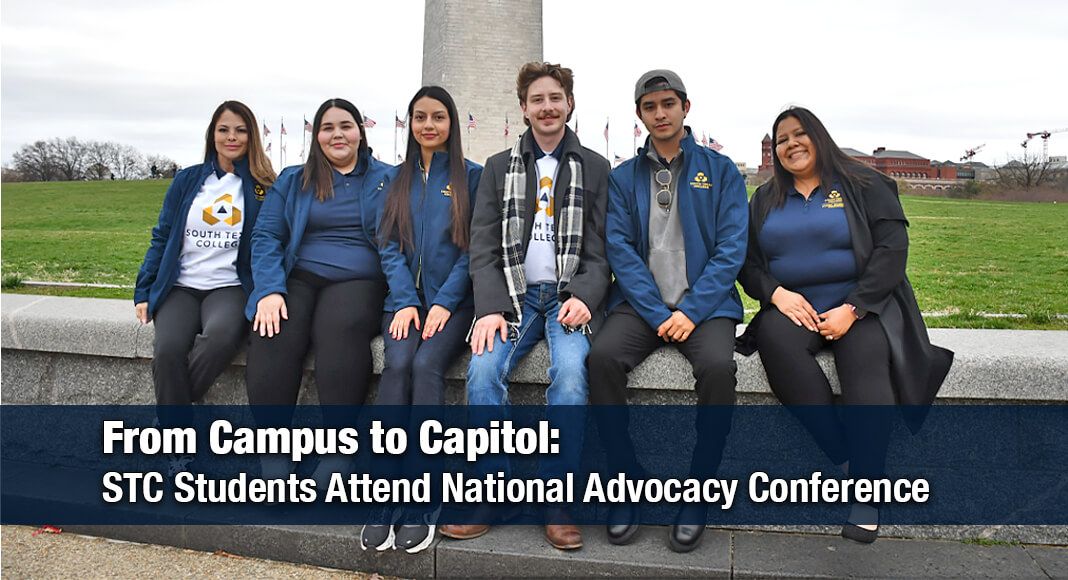
Student leaders from South Texas College (STC) traveled to Washington, D.C. to participate in the National Student Advocacy Conference, where they joined community college representatives from across the country to champion issues impacting student success.
Hosted by the American Student Association of Community Colleges (ASACC), the conference brought together student leaders from community colleges nationwide to discuss policies affecting higher education and student persistence. Throughout the event, students participated in advocacy training, policy discussions and meetings with federal representatives to share their experiences and highlight the needs of today’s community college students.

During their visit, members of STC’s Student Government Association (SGA) met with staff from the offices of U.S. Representatives Monica De La Cruz, Henry Cuellar and Vicente Gonzalez to present priorities important to STC students.
=Key issues addressed were expanding federal support for students’ basic needs such as food, housing and childcare, increasing funding for mental health services and student support programs, strengthening workforce and Career and Technical Education (CTE) pathways, supporting adult learners and expanding access to Pell Grants to improve affordability for community college students.
STC Dean of Student Affairs Pablo Hernandez said the experience provides students with an important opportunity to participate in national conversations about higher education.
“This opportunity is providing SGA students with a chance to express some of their concerns with = government leaders,” Hernandez said. “It allows them to engage local legislators and representatives at the national level to help implement positive changes in higher education.”
Jose Peña, Student Activities and Wellness specialist at the Mid-Valley Campus accompanied the delegation and said the conference provided students with a firsthand look at how advocacy can shape policy.
“The students participated in a once-in-a-lifetime experience where they met with community college leaders from across the United States, learned about student advocacy and how a bill becomes law and walked to the offices of our U.S. representatives to present STC student priorities and request funding necessary for student success,” he said.
Peña added that student advocacy plays a vital role in shaping education policy.
“College student advocacy matters at this level because students are the closest to the challenges that shape their education,” he said. “When students speak up on campus, at a local meeting or in Washington, D.C., they bring real experiences that help leaders improve policies on financial aid, mental health support and student success. Advocacy also builds confidence, leadership skills and civic awareness by empowering students to represent their communities and create meaningful change.”
For Mid-Valley Campus SGA President Irania Juarez, the experience was both meaningful and empowering.
“Going to historical places and realizing that our voices do matter made the experience purposeful,” Juarez said. “We were able to share our personal stories and represent students with similar experiences. When we share our stories, it helps shape the decisions being made.”
Juarez said she plans to bring what she learned back to campus.
“I want to encourage other students to use their voices and get involved,” she said. “Student voices are very important at the national level because we are the ones affected by the decisions being made. When students are included, the conversations become more representative and equitable.”
Noe Garcia, SGA President at the Health Science Professions Campus, said the opportunity to represent fellow students was both exciting and rewarding.
“I was really happy with the opportunity STC gave us to represent our fellow students and classmates and voice their concerns,” Garcia said. “It was a great experience, and we learned a lot speaking with the representatives.”
As they return to campus, STC’s student leaders say the experience strengthened their commitment to advocacy and leadership. By sharing their stories and perspectives at the national level, the students helped ensure that the needs of community college students remain part of the ongoing conversation shaping the future of higher education.