







Texas Border Business

By Roberto Hugo González / Texas Border Business
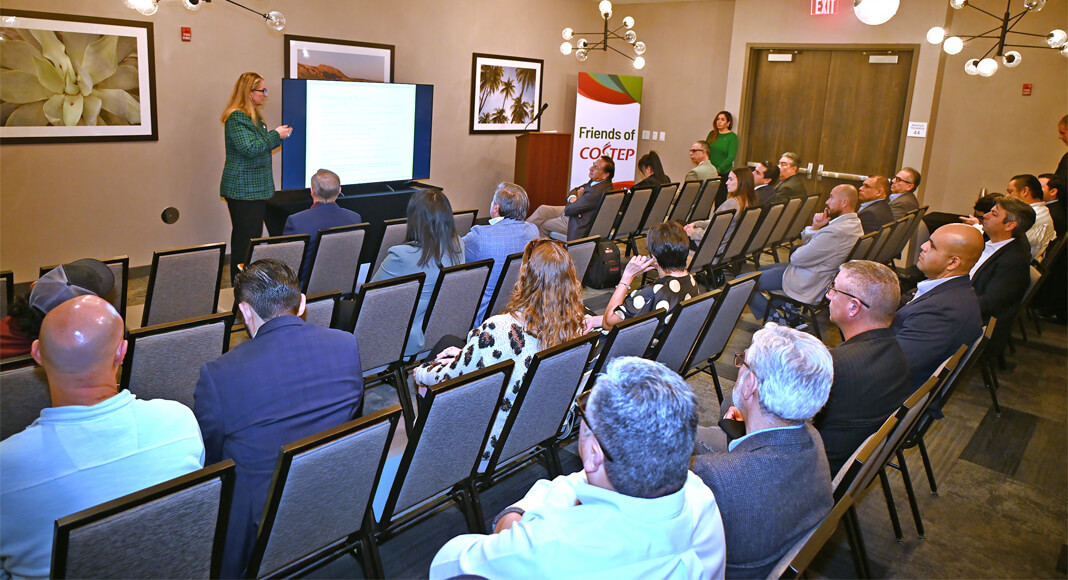
COSTEP, The Council for South Texas Economic Progress, hosted a regional gathering focused on the future of North American competitiveness amid growing uncertainty about continental trade policy. The event, titled Advancing North American Competitiveness: A NASCO Update, took place on December 16 at the Cambria Hotel Convention Center in McAllen and drew about 40 attendees from across the Rio South Texas Region.
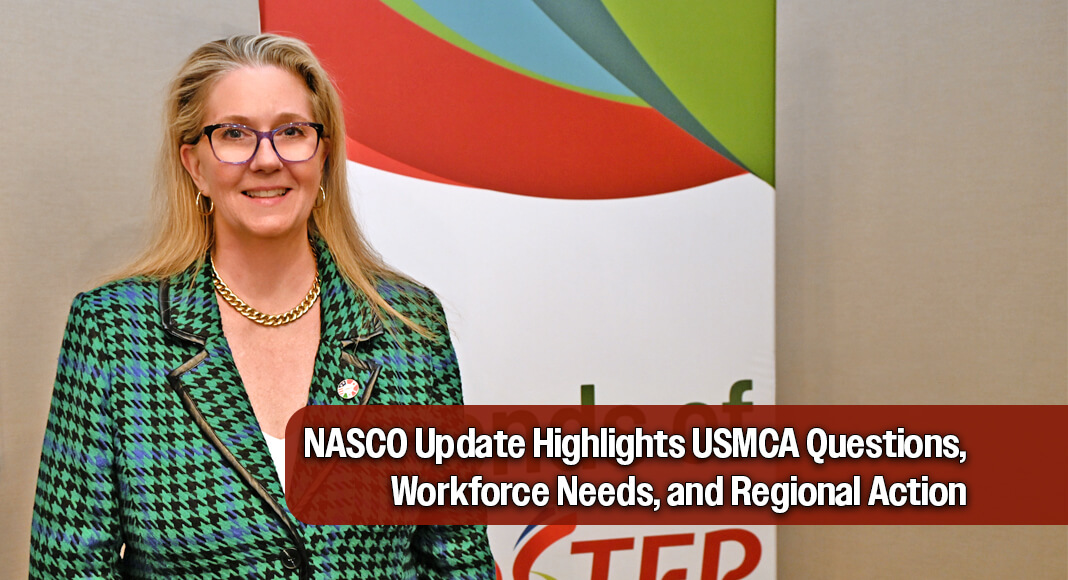
COSTEP and its partners welcomed Tiffany Melvin, president of the North American Strategy for Competitiveness, for a detailed briefing on the state of North American trade, supply chains, and workforce development. The meeting brought together economic development leaders, business representatives, and public officials, followed by a Christmas reception.

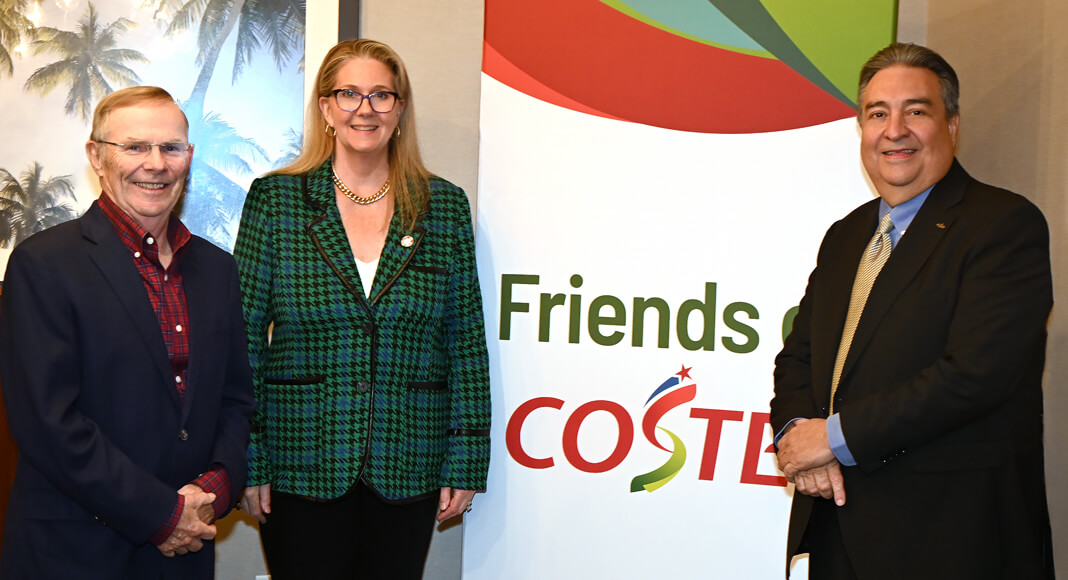
Adam Gonzalez, president and CEO of COSTEP, played a central role in convening the discussion and underlined the organization’s commitment to keeping South Texas leaders informed and engaged on issues that directly affect the regional economy. COSTEP’s leadership has worked to connect local stakeholders with national and international partners, an effort reflected in the organization’s recent membership in NASCO.
Melvin opened her presentation by stressing NASCO’s long-standing belief in a strong, integrated North American economy. “We believe very much in the vision of North America,” she said. “North America is already the greatest continent on earth, but other continents and other trading regions are hot on our heels with investments in technology and in freight corridors. And so, we have got to keep our lead.”
A key focus of the discussion was the deep integration of supply chains across Canada, the United States, and Mexico. Melvin said that trade between the three countries is not simply about finished goods crossing borders. “Sixty to seventy percent of what the United States imports from Canada and Mexico are manufacturing inputs for U.S. manufacturing,” she said, noting that this reality makes North American competitiveness a shared challenge.
That interdependence is why NASCO strongly supports maintaining the U.S.-Mexico-Canada Agreement as a trilateral pact. Melvin addressed uncertainty surrounding the agreement’s scheduled 2026 review, acknowledging that its outcome remains unclear. “I think if anyone tells you they know the answer to that question, they’re not being truthful,” she said. “I don’t think anybody knows.”
The uncertainty, she explained, creates anxiety for businesses and communities that rely on cross-border trade. Still, it also highlights the importance of preparation and cooperation at the state and local levels. Melvin said that even as federal trade policy remains unsettled, sub-national entities can continue to make progress. “While federal trade policy is hanging in the balance, there’s a lot that can be done at the subnational level,” she said.
Workforce development emerged as another central theme. Melvin described skilled labor shortages as a shared problem across North America and outlined NASCO pilot programs focused on training and credentialing workers in manufacturing and logistics. She cited studies showing that properly trained workers can significantly improve productivity and reduce costs for employers.
COSTEP and the team hosting the discussion reflected a mission to ensure South Texas remains competitive and informed during a pivotal moment for North American trade. By bringing national voices like Melvin to the region, COSTEP continues to position itself as a connector between local priorities and continental economic trends.
Melvin closed on a note of cautious optimism, encouraging continued collaboration across borders and levels of government. “There is still great reason for optimism,” she said, emphasizing respect and cooperation as North America navigates an uncertain trade landscape.