







Texas Border Business

When tariffs are imposed, importers pay the tax upfront — but in most cases, they quickly pass that cost along to consumers through higher prices. Over time, those higher prices allow businesses to recover, or even fully offset, the tariff’s costs.
That’s why reimbursing importers after the fact raises serious concerns.
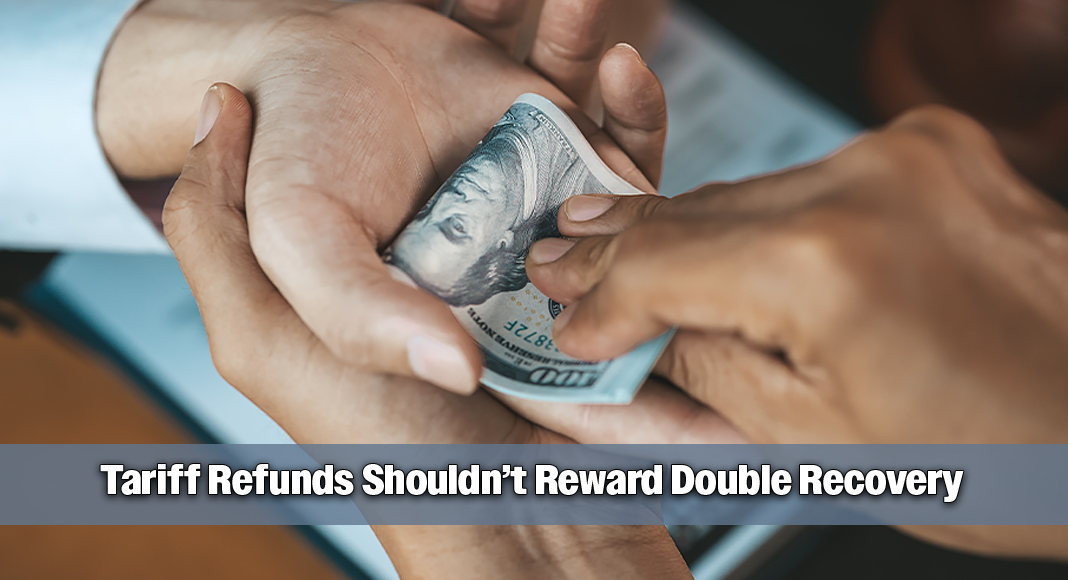
If a company has already raised prices to offset a tariff and consumers have already absorbed that added cost at the checkout counter, then reimbursing the importer effectively creates a double recovery. The business recoups the tariff through higher prices and then receives repayment from the government — meaning taxpayers ultimately foot the bill twice.

At its core, this becomes a question of fairness and fiscal responsibility.
Consumers rarely receive automatic refunds when prices rise due to tariffs. There is no systematic mechanism that tracks who paid more for goods and ensures they are made whole if a tariff is later lifted or refunded. In reality, once prices increase, they often remain elevated even after the underlying cost pressure disappears. This phenomenon — sometimes called price “stickiness” — means that savings are not always passed back down the supply chain.
If reimbursements are issued without safeguards that require consumer relief, they risk becoming windfalls for importers rather than serving as corrective economic policy.
A more responsible approach would be one of the following:

• Do not reimburse tariffs once the cost has already been passed to consumers.
• Tie reimbursements to mandatory price reductions or documented consumer credits.
• Direct relief efforts toward consumers or small businesses that demonstrably bore the cost.
Public funds should be used carefully and transparently. Reimbursing importers who have already recovered their costs through higher prices undermines public trust and raises legitimate concerns about corporate accountability.
If tariffs were intended as policy tools — whether for trade leverage or economic protection — then the financial consequences should not be retroactively socialized after businesses have already adjusted their pricing.